Innovasjon
What did it take to develop the first inverter power source?
6. juli 2017
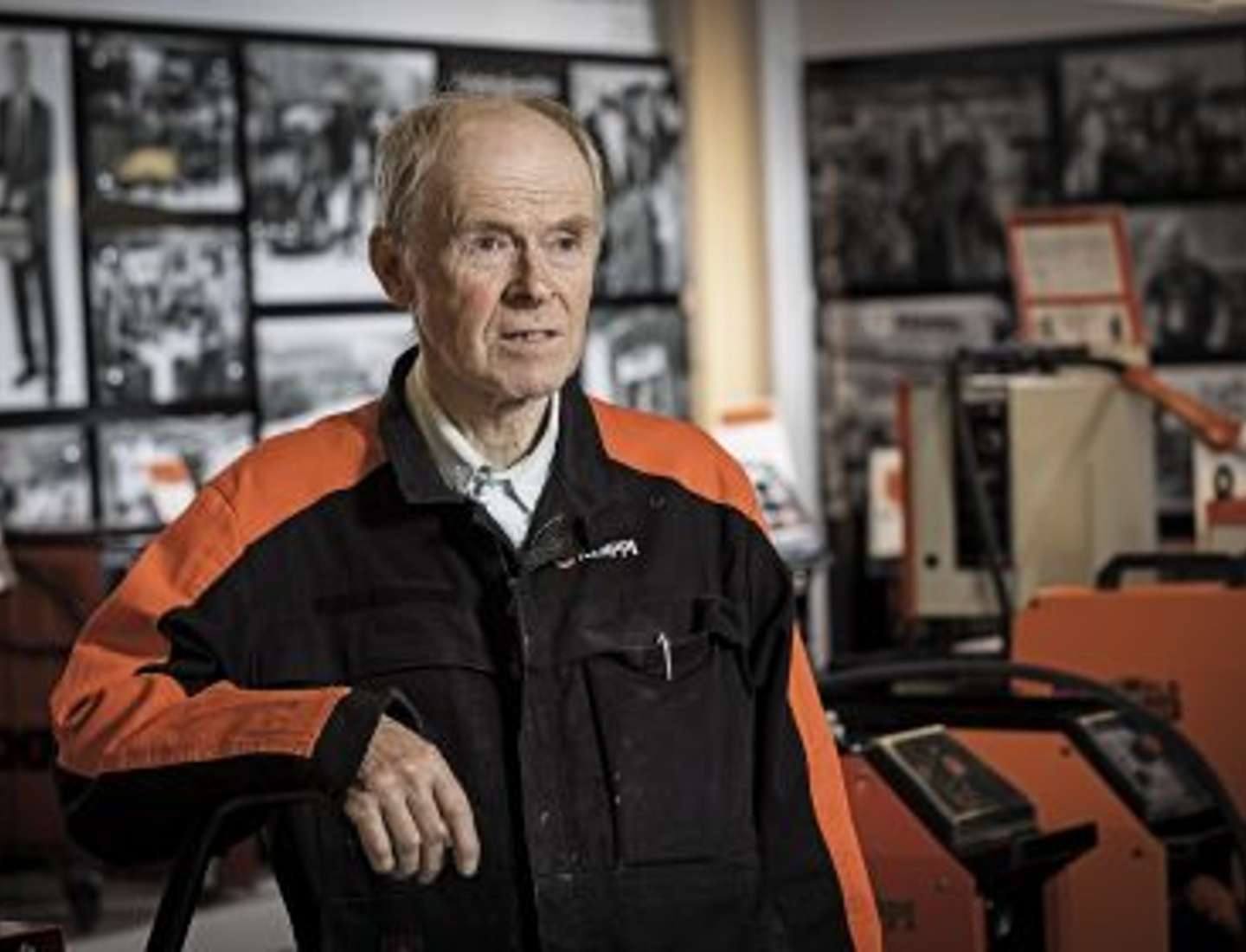
In 2017, it has been 40 years since the inverter power source was developed. We sat down with Tapani Mäkimaa, an original member of the development team, and discussed what makes Kemppi a pioneer in its field, year after year.
Kemppi marketing
Joining the accelerating welding industry
Mäkimaa started out as a trainee and summer employee at Kemppi in 1970. At the time, Kemppi already was a well-established welding machine provider in Finland. The company internationalized quickly, and, for an engineer of semiconductor physics from Otaniemi (today Aalto University of Technology), this meant a strong basis for product development. After finishing his time as a conscript in the Finnish Army, Mäkimaa combined forces with Martti Kanervisto when the performance of traditional technology just wasn’t enough for the needs of the accelerating welding industry.
“We began to consider solutions where you’d switch to higher frequency already at the mains voltage level. The thought was simple, but making it happen with the technology of that time seemed impossible. So we pondered which component would be reliable and efficient enough for the needs of industrial production,” says Mäkimaa.
Inverter power source - or converter?
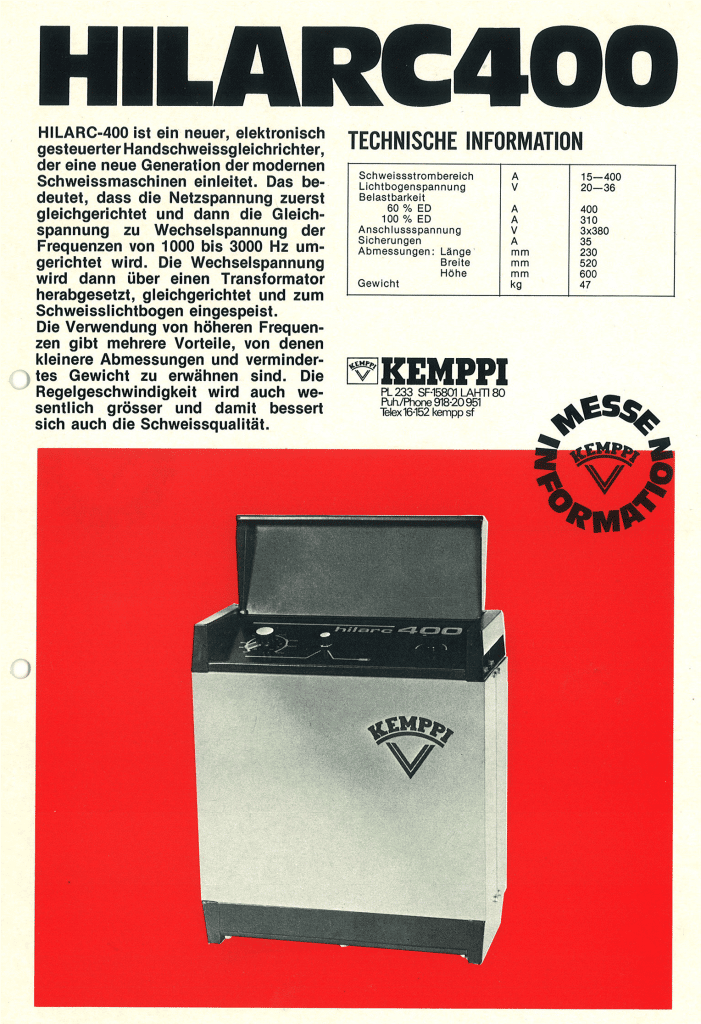
“The switch affects the control of the arc in a fundamental way. Even today, it’s the muscle of the machine that does the work, for instance, in computers, televisions, home appliances and chargers. At first, the new switches were tested in small series of a few dozen machines that made a whining noise in use. This naturally wasn’t a problem in a workshop environment, but for us it wasn’t a good enough result. The new switch was introduced for the first time in the HILARC400 demo machine at the Essen Welding Fair in Germany in 1977,” recalls Mäkimaa.
“Many component manufacturers threw in the towel, but Kemppi was determined to carry on.”
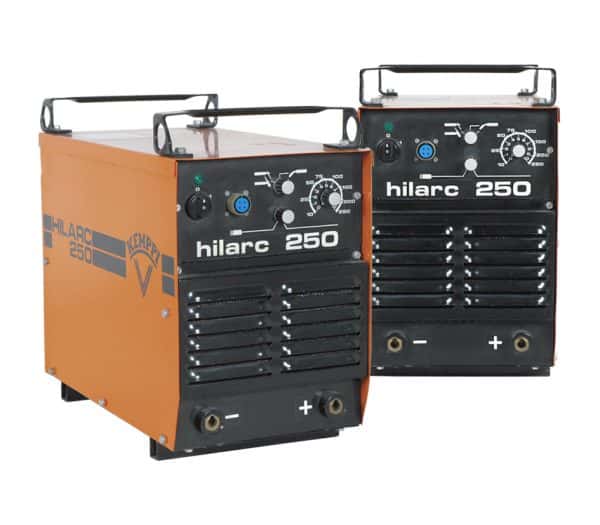
“’Inverter’ was chosen as the name because it’s short and easy to remember. We found a technique that works in all welding methods,” continues Mäkimaa. “The first multi-functional inverter power source HILARC250 was launched in Stockholm a year later. Product development continued with optimizing costs, leading to comprehensive examination and development of details.
Today, the inverter power source has been established around the world, and it is the dominating power source technology in welding.”
Recipe from a pioneer
A huge number of experiments were performed at the start. Product development is not a matter of faith. It has to be based on knowledge and deduction. Up until now, product development has focused on unraveling the hindrances to work.
Mäkimaa summarizes the trend: “Going forward, more and more work will be done on how to make these contraptions simpler, both from the user and technology perspective. The human isn’t going anywhere. Robots do what they’re told. A human being interprets based on welding expertise and information received. And new things are always born of joy!”
The 40th anniversary of the first inverter power source will be celebrated at Schweissen und Schneiden, one of the largest exhibitions in the welding industry, in Dusseldorf in September 2017. Once again in Germany, Kemppi will prepare to challenge the conventional and present new and innovative welding solutions for the needs of future welding.

Kemppi marketing
Kemppi marketing
Kemppi marketing aims to evoke discussion on the transformation of modern welding and bring you the latest stories from within the global welding industry, told by true experts in their respective fields.
Flere blogginnlegg
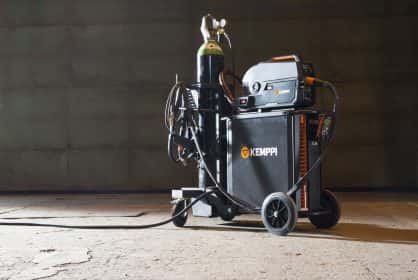
Behind the scenes: The development of X8 MIG Welder
Creating a new product for industrial users is both a long journey and exciting adventure. In his LinkedIn Pulse post, Kemppi's User Experience Manager Jussi Kapanen recalls the beginning of an ambitious R&D project, when the team was tasked with the target of creating the best MIG welding system in the world, to be loved by users in 2017.
Innovasjon
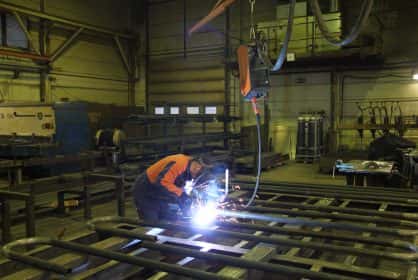
50 years of partnership between a man and a welding machine
In the 1960s, there was a huge shortage of professional welders in Finnish growth centers. That is why Keijo Olkoniemi, whose career as a welder has lasted for almost 50 years, trained to become a welder, a profession which has offered him challenges throughout his career. ”I remember when they said at the dockyard in Hietaniemi, Helsinki that you can bring a train full of skillful employees, and we will hire them all,” Olkoniemi says, laughing.
Mennesker

Welder, dare to dream
All innovations start with a dream. Whether it is the dream of a welder or an engineer, technology will always need visionaries who are able to see beyond the ordinary. The welding industry’s orientation is firmly forward, and a lot has happened even in the past few decades.
Innovasjon
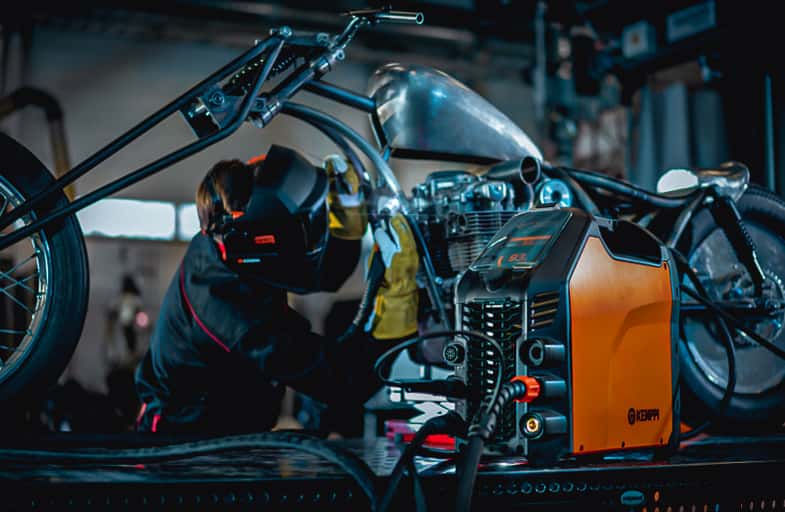
How Rapid Welding and Kemppi Built a Partnership That Lasts
Rapid Welding has worked with Kemppi since the company opened in 1990. Co-founder and Managing Director Roy Edwards highlighted the principles behind that 36-year partnership, from choosing the right welding solution and supporting equipment throughout its life to addressing the skills shortage and finding the right place for automation and laser welding.
Automatisering av sveising, Manuell sveising, Sveise-ABC
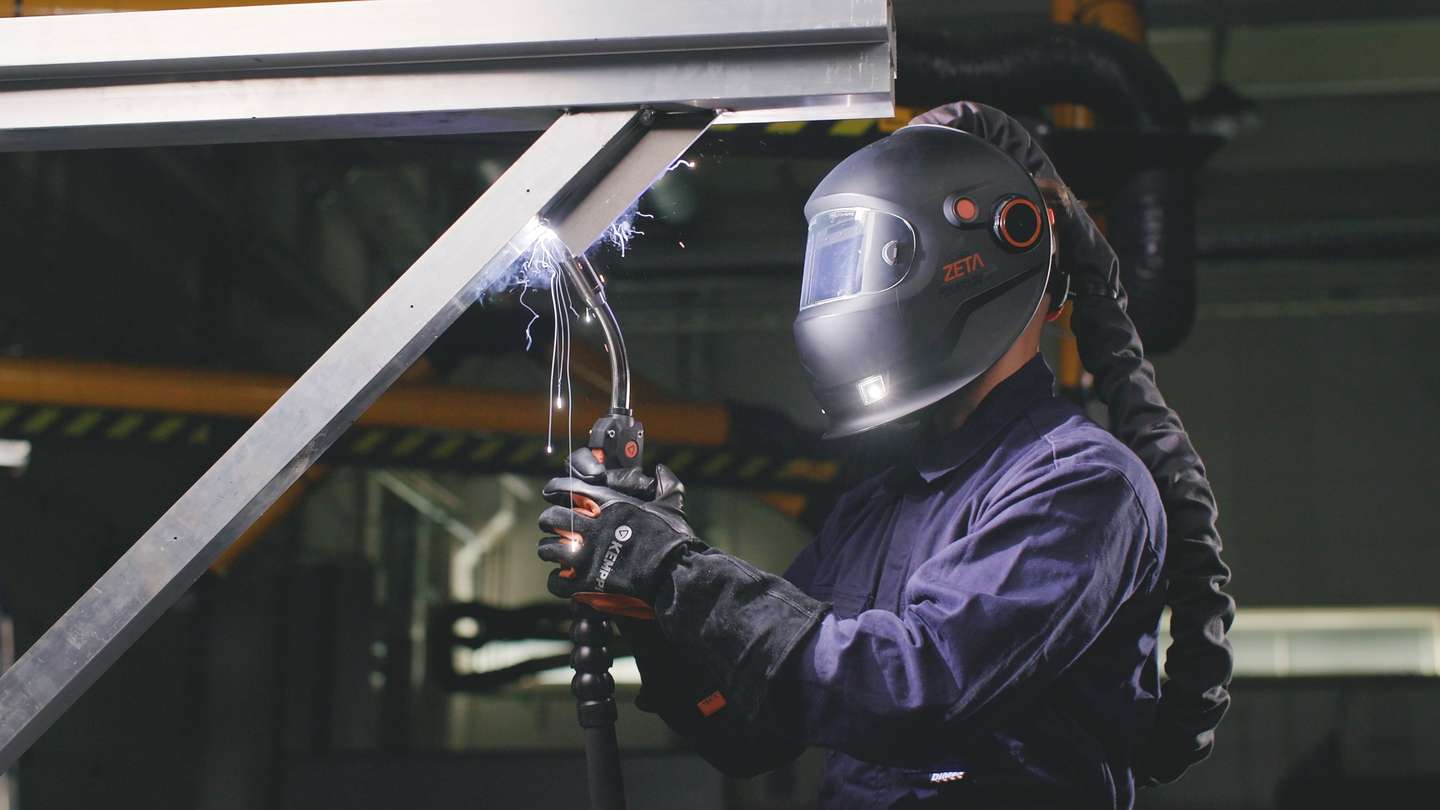
Safety that keeps up with welders' challenges and changing risks
Welding safety has become increasingly demanding. The hazards at the arc remain constant, but modern working conditions mean exposure can accumulate over longer shifts and in tighter indoor spaces. As a result, welding PPE needs to be treated as both protection for the welder and proof of compliance. At Kemppi, welding safety PPE is designed and validated in practice through clear requirements, welder-led feedback, and verified compliance with EU PPE Regulation 2016/425, CE marking processes, and relevant EN standards.
Sikkerhet, Sveise-ABC
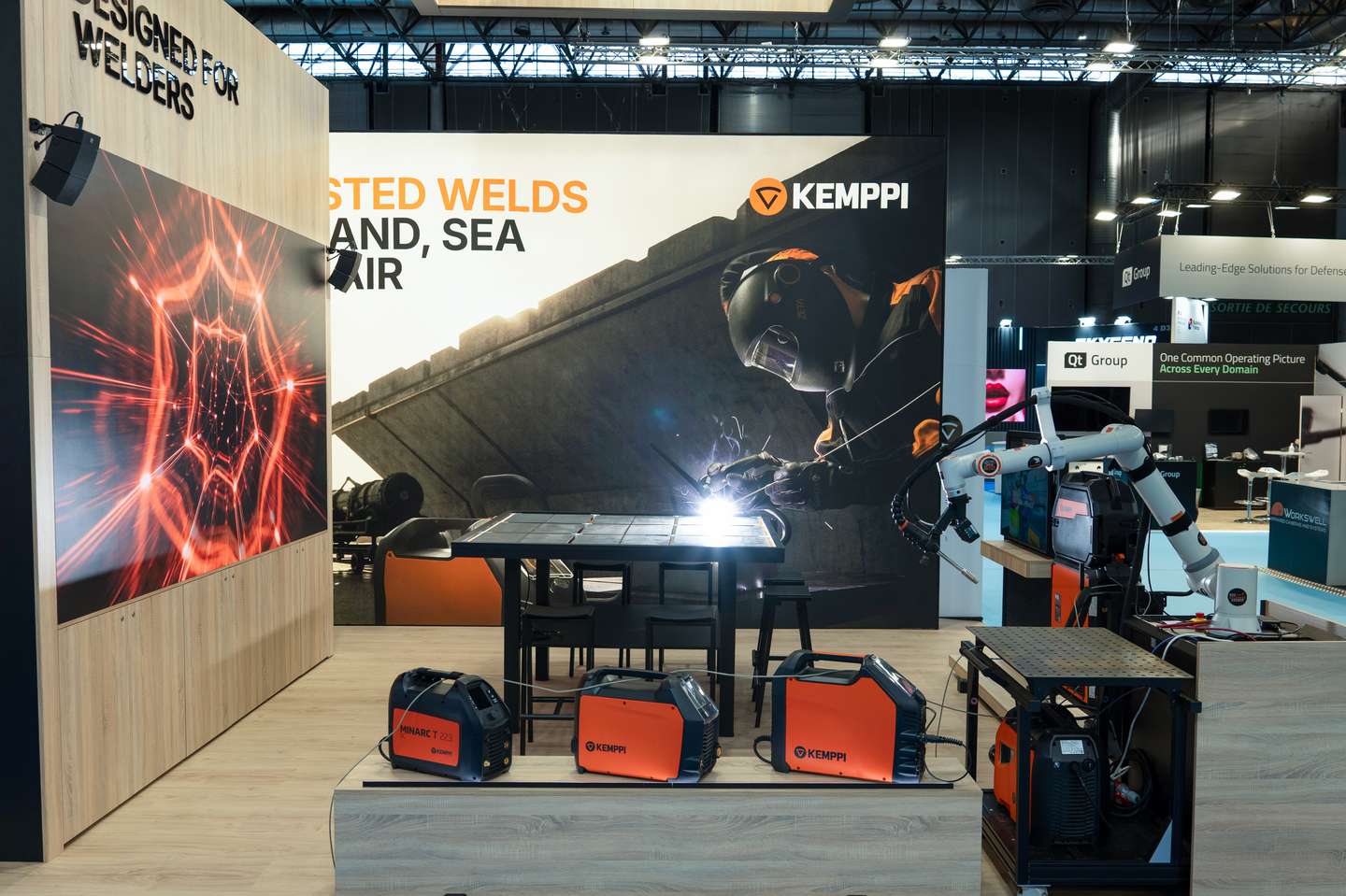
Eurosatory 2026 And the Future of Defence Manufacturing
Eurosatory 2026 highlighted a clear shift in modern defence manufacturing. While defence systems are becoming more digital, networked, and autonomous, their foundation remains physical. From armoured vehicles and artillery to industrial resilience, welding quality, steel structures, and production discipline remain paramount to defence readiness.
Digitalisering, Innovasjon