Käsinhitsaus
SSAB and Kemppi Advance Armour Steel Welding for Ballistic Performance
30. heinäkuuta 2026
Welding armour steel for demanding defence applications
In defence manufacturing, every material choice matters. And so does every weld.
Armour steels are designed to protect against ballistic and blast threats in some of the most demanding operating environments. Their performance depends on a careful balance of hardness, toughness, processability, and structural reliability. When these steels are welded, that balance must be protected as far as possible.
Kemppi and SSAB are working together to explore how welding technology can support the fabrication of armour steel structures used in demanding protection applications.
The focus is on understanding how different welding processes and consumables affect the properties of welded armour steel structures.
Armour steel types and their welding requirements
Armour steels are developed for different protection needs. The required material properties depend on the type of threat, the structure, and the intended application.
Blast protection steels typically have lower hardness, around 400 HBW, to allow controlled deformation during an explosion. In these applications, the steel must be able to absorb energy without cracking, including in cold operating conditions.
Ballistic protection steels are generally harder. High Hardness Armour steels, around 500 HBW, are widely used because they offer a balance of protection, bendability, weldability, and fatigue resistance. Very High Hardness Armour steels, around 550 HBW, provide higher protection levels while still maintaining some bendability and weldability.
Ultra-High Hardness and Extreme High Hardness steels, around 600–650 HBW, offer higher ballistic protection levels, but with reduced processability. At the highest hardness levels, bending and welding are generally more restricted and require careful evaluation.
This creates a practical challenge for manufacturers. The material must provide protection, but it must also be suitable for fabrication. Welding process selection, filler material choice, heat input control, and production repeatability all become important factors in achieving reliable results.
Why heat input is critical in armour steel welding
Armour steels are based on a tempered martensitic microstructure. This microstructure is central to their hardness and protection capability. During welding, the surrounding base material is exposed to a thermal cycle, which can reduce hardness in the heat-affected zone.
Some softening in the heat-affected zone is unavoidable. However, the extent of softening depends strongly on heat input, welding parameters, joint design, plate thickness, and the selected process.
In defence vessels and vehicles, the welded joint is part of the structure that, in most cases, is exposed to ballistic impact, blast loading, vibration, fatigue, and harsh environmental conditions. A wider softened zone may affect how the structure behaves under load or impact.
Heat input can be reduced through several methods, including multipass welding with smaller beads, low heat-input welding processes, modified short-arc MIG/MAG, and laser welding. The correct approach depends on the material grade, thickness, joint configuration, production environment, and performance requirements.
Welding process comparison
We have done some comparison between arc welding and laser welding and found: Early comparisons show clear differences between handheld laser welding and pulse MAG welding.
Handheld laser welding uses a laser beam with wobbling. It provides deep penetration and produces a narrow weld profile with a narrow heat-affected zone. In the initial comparison, handheld laser welding showed lower heat input. It depends the case how much it is lower but some cases it 50% less and especially with thinner materials it is even less, about 10-20% of arc welding heat input
Pulse MAG welding uses pulsed current. It offers lower penetration compared with laser welding, but a much higher filler material deposition rate. In the initial comparison, pulse MAG welding showed higher heat input and produced a wider weld and heat-affected zone.
These differences are relevant for defence manufacturing because process selection is rarely based on one parameter alone. A lower heat input and narrower heat-affected zone can be beneficial when preserving base material properties is a priority. Higher deposition rate, established production use, and process robustness remain important where productivity, joint fill, and industrial scalability are required.
Handheld laser welding may be particularly interesting for thinner armour steel components, precision joints, and applications where a narrow heat-affected zone is beneficial. Pulse MAG welding remains highly relevant for larger assemblies, thicker sections, longer welds, and production environments where high deposition rates and familiar welding procedures are needed.
Filler material selection and weld performance
Armor steel can be welded both ferritic and austenitic filler materials, including ER70S-6 and ER307. Austenitic consumables such as AWS 307 and AWS 309 are also commonly considered in armour steel welding. Filler material selection can influence weld metal properties, cracking resistance, toughness, dilution behaviour, and overall joint performance.
In armour steel welding, a suitable filler material is selected to support a reliable and crack-resistant joint while maintaining the required structural performance. This is particularly imperative when welding high-hardness steels, where hydrogen cracking, residual stresses, and local hardness changes must be controlled. The most suitable filler material depends on the base material grade, plate thickness, joint design, restraint level, welding process, and application requirements.
Production control in defence manufacturing
In defence manufacturing, a successful test weld is valuable only if the same result can be reproduced consistently in manufacturing. This makes welding procedure qualification, parameter control, welder competence, inspection and traceability important parts of armour steel fabrication.
Manufacturers need to understand which process was used, which filler material was selected, what heat input was achieved, and whether the welding procedure remained within the required limits. Preheat and interpass temperature control may also be important, depending on the material, plate thickness, joint restraint, hydrogen level, and workshop conditions. These factors can influence cracking risk, distortion, residual stresses, and the final performance of the welded structure.
Supporting future armour steel fabrication
The cooperation between Kemppi and SSAB is focused on building practical knowledge around armour steel welding. The early results highlight the importance of heat input control and show that different welding processes offer different advantages. Handheld laser welding appears promising where a narrow heat-affected zone is required. Pulse MAG welding continues to offer established benefits in deposition rate, productivity, and industrial use.
Further mechanical and ballistic testing will provide deeper understanding of how the welded structures perform after fabrication.
For defence manufacturers, the key point is clear. Armour steel performance depends not only on the material grade, but also on how the material is processed, welded, controlled, and verified. In conclusion, there is no doubt that welding technology plays a central role in ensuring that protective structures can be manufactured with the required quality, consistency, and reliability.

Varsha Saraogi
Varsha Saraogi
Hänellä on taustaa journalismista ja toimituksellisesta strategiasta, ja hän tuo Kemppin sisältöihin ja viestintään kansainvälistä B2B-näkökulmaa. Hän suhtautuu intohimoisesti tarinoihin, jotka yhdistävät hitsausteknologian sen palvelemiin ihmisiin ja teollisuudenaloihin – yhdistäen teknisen asiasisällön selkeään ja puhuttelevaan viestintään. Hänen artikkeleitaan on julkaistu eri erikoislehdissä, kuten Airport Technologyssa, Railway Technologyssa, Ship Technologyssa, FinTech Globalissa ja RegTech Analystissa, mikä ilmentää hänen laajaa kokemustaan eri teollisuus- ja liike-elämän sektoreilta.
Lisää blogikirjoituksia
Miten laserhitsaus voi muuttaa konepajateollisuutta vuoteen 2035 mennessä
Laserhitsaus muuttaa jo sitä, kuinka nopeasti valmistajat voivat työskennellä. Sen suurempi potentiaali piilee siinä, mitä hitsin ympärillä tapahtuu. Tarkastelemme sitä, miten laser voi muovata konepajavalmistusta vuoteen 2035 mennessä – aina osaajapulasta ja nopeammista asetuksista varhaisempaan laadunvalvontaan sekä tuotantokapasiteetin parempaan hyödyntämiseen.
Käsinhitsaus, Innovaatio
Mitä 10 000 hitsiä paljastavat laserhitsauksen tuottavuudesta ?
Mistä hitsin todellinen kustannus muodostuu? Kempin laser-, MAG- ja TIG-hitsauksen vertailu osoittaa, miksi pelkkä hitsausnopeus ei kerro koko totuutta. Tutustu siihen, miten hitsaustunnit, suojakaasu, lisäaine, lämmöntuonti ja jälkityöstö vaikuttavat tuotantokustannuksiin sekä miten pienet erot voivat suurissa tuotantomäärissä parantaa kapasiteettia ja kannattavuutta.
Innovaatio, Käsinhitsaus
Rapid Welding ja Kemppi rakentavat yhdessä kestävää kumppanuutta
Rapid Welding on tehnyt yhteistyötä Kempin kanssa aina yrityksen perustamisesta – vuodesta 1990 – lähtien. Toinen perustajista ja toimitusjohtaja Roy Edwards korosti tämän 36-vuotisen kumppanuuden taustalla olevia periaatteita. Näitä ovat muun muassa oikean hitsausratkaisun valinta ja laitteiston tukeminen sen koko elinkaaren ajan sekä osaajapulaan puuttuminen ja oikean paikan löytäminen automaatiolle ja laserhitsaukselle.
Automatisoitu hitsaus, Käsinhitsaus, Hitsauksen ABC
Hitsaajien haasteet ja muuttuvat riskit huomioiva turvallisuus
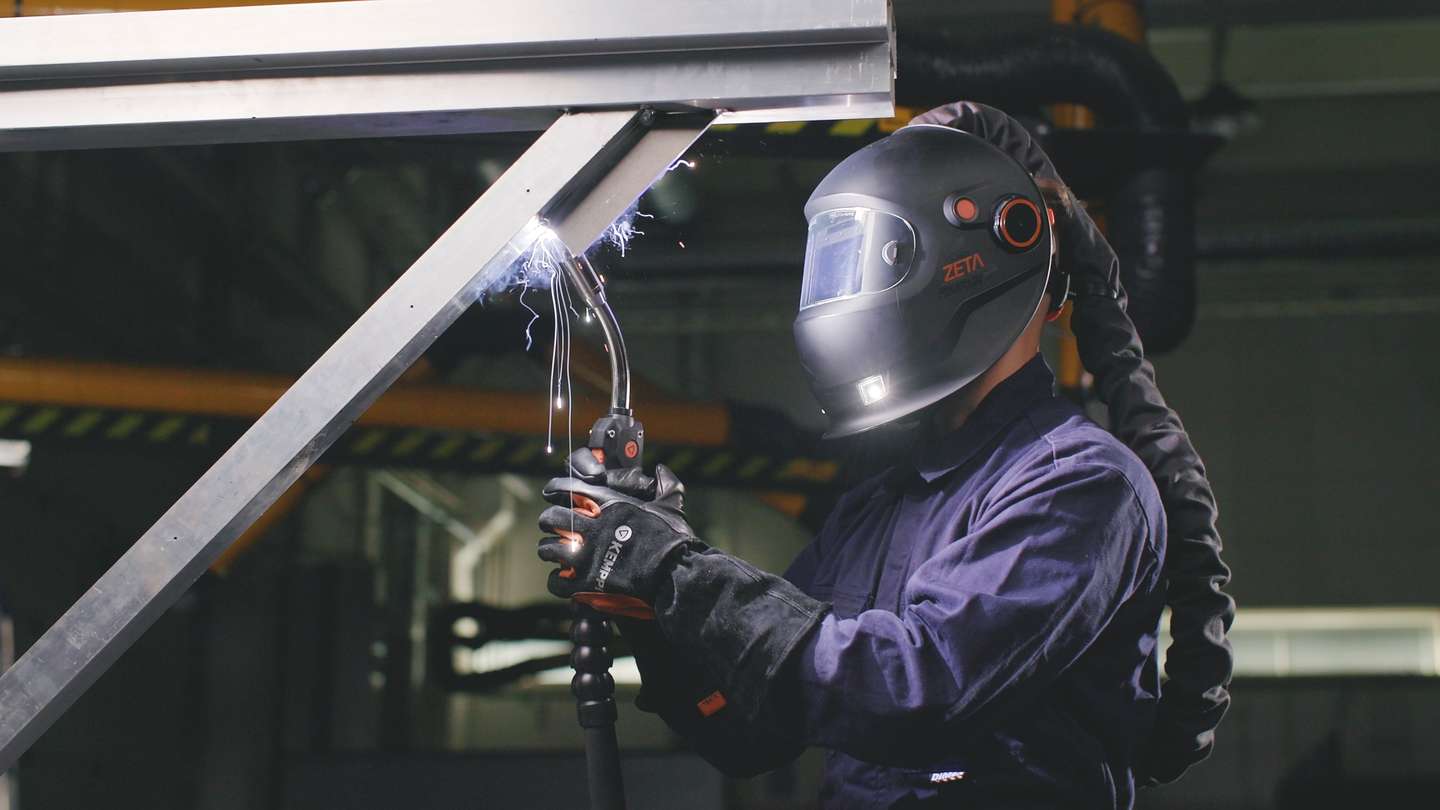
Hitsausturvallisuudesta on tullut yhä vaativampaa. Valokaaren vaarat pysyvät ennallaan, mutta nyt pitkät työvuorot ja ahtaat sisätilat saattavat lisätä altistumisen riskiä. Siksi henkilösuojaimet ovat hitsaajan suoja ja todistus vaatimustenmukaisuudesta. Kempillä hitsaushenkilösuojaimet suunnitellaan ja validoidaan käytännössä selkeiden vaatimusten mukaan, hitsaajien palautetta kuunnellen ja noudattaen todennetusti EU:n henkilösuojaimia koskevaa säädöstä 2016/425, CE-merkintäprosesseja sekä asiaankuuluvia EN-standardeja.
Turvallisuus, Hitsauksen ABC
Eurosatory 2026 ja puolustusteollisuuden tulevaisuus
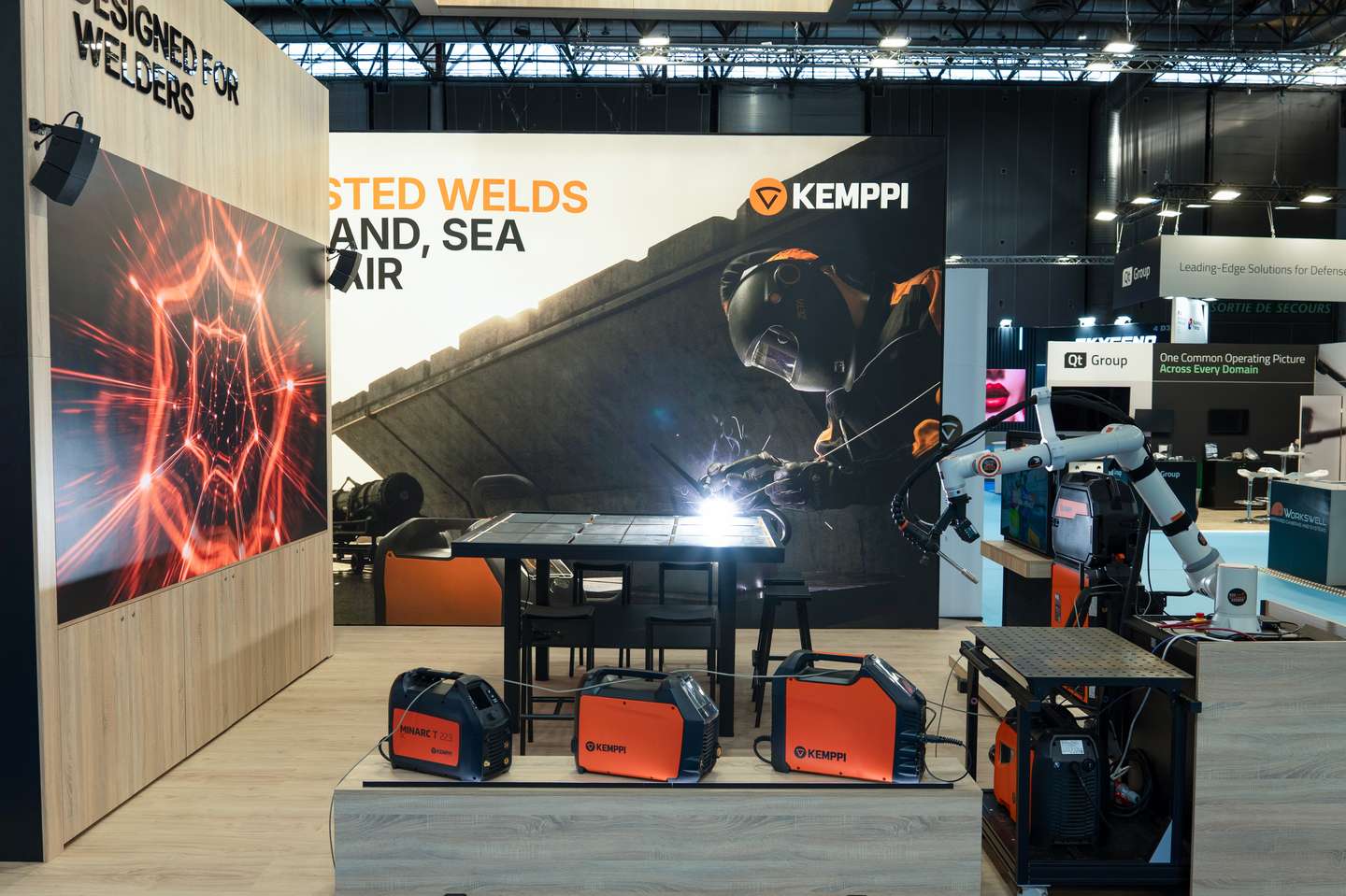
Eurosatory 2026 -tapahtuma korosti selvää muutosta nykyaikaisessa puolustusteollisuudessa. Samalla kun puolustusjärjestelmistä tulee yhä digitaalisempia, verkottuneempia ja autonomisempia, niiden perusta pysyy edelleen fyysisenä. Aina panssaroiduista ajoneuvoista ja tykistöstä teolliseen suorituskykyyn asti hitsauksen laatu, teräsrakenteet ja tuotantokuri säilyvät ensisijaisen tärkeinä puolustusvalmiuden kannalta katsottuna.
Digitalisaatio, Innovaatio