Soudage manuel
Analyse du cycle de vie dans le soudage : une approche durable guidée par les données
15 juillet 2025
L’analyse du cycle de vie (ACV) est une méthode systématique permettant d’évaluer l’impact environnemental d’un produit tout au long de sa durée de vie, depuis l’extraction des matières premières et la fabrication jusqu’à l’utilisation et la fin de vie.
Anni Knuuttila
Why lifecycle assessment matters in the welding industry
Lifecycle assessment (LCA) is a systematic method for evaluating a product’s environmental impact throughout its lifespan—from raw material extraction and manufacturing to usage and end-of-life disposal. It provides essential data for optimizing resource efficiency, reducing emissions, and making informed decisions about product design and material choices.
In the welding industry, LCA has the potential to play a much greater role in helping manufacturers comply with tightening environmental regulations and meet growing customer expectations for sustainability. While its use is still developing in the sector, it offers a powerful tool for continuous improvement, helping companies identify areas for innovation, efficiency gains, and responsible material sourcing.
The X5 FastMig Pulse LCA journey
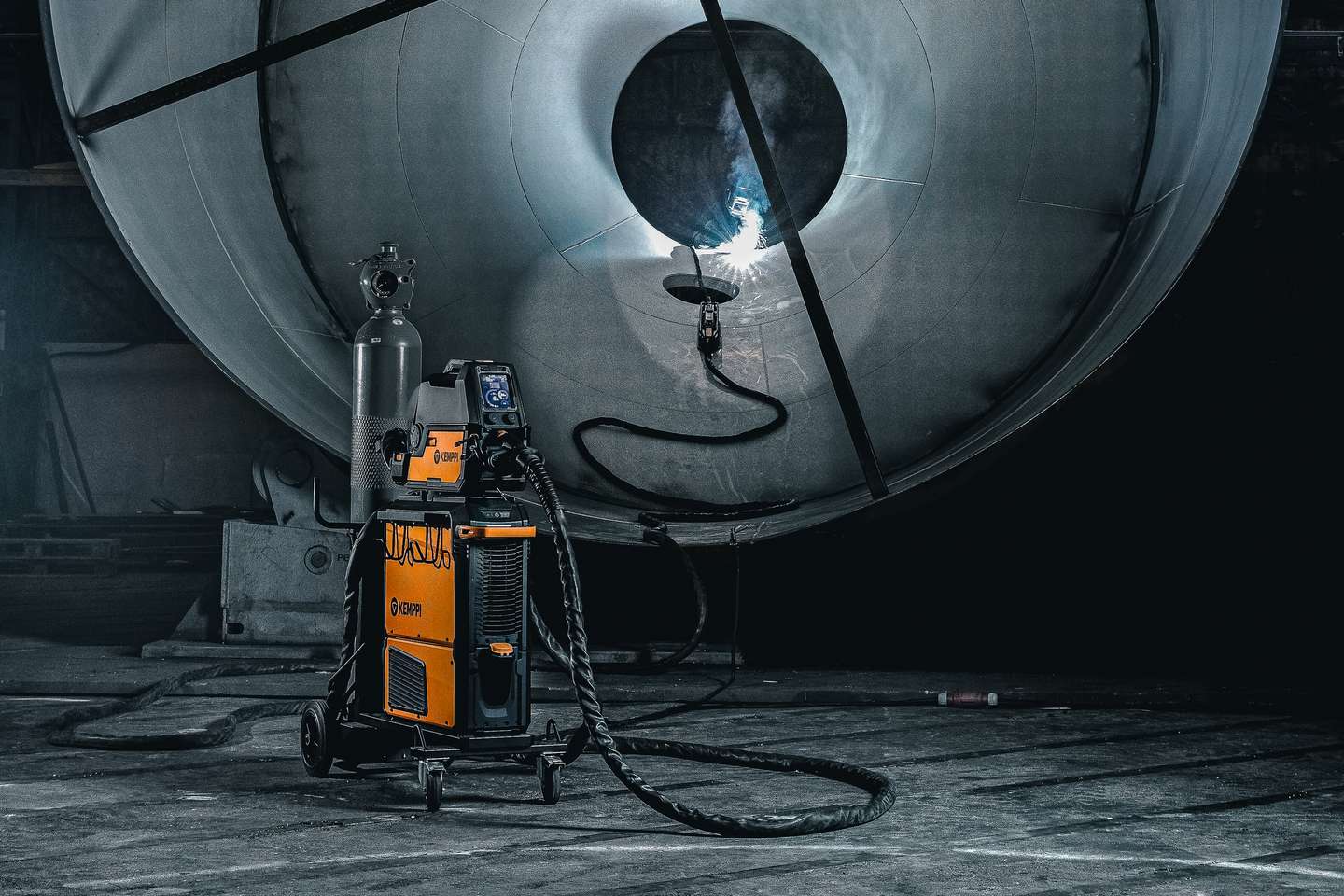
At Kemppi, we see lifecycle assessment as a crucial step toward more sustainable welding solutions. With the X5 FastMig Pulse welding system, the goal was to conduct a comprehensive evaluation, considering the environmental impact from production to end-of-life.
The findings reinforced a known fact: most emissions occur during the product’s use phase, largely due to energy and filler consumption. This underscores the importance of designing energy-efficient welding equipment that minimizes power and material usage while maintaining high performance. However, the assessment also provided valuable insights into material choices, supply chain impacts, and opportunities for further improvements.
Key learnings from the X5 FastMig Pulse LCA
Conducting a thorough lifecycle assessment presented both challenges and opportunities:
Data collection and supply chain transparency: Gathering precise data on materials and components required extensive collaboration with suppliers. Some primary data was unavailable, necessitating the use of European industry averages, which may slightly influence the final emission calculations. This highlights the need for ongoing dialogue with suppliers and improved data collection methods.
Integration with business systems: The LCA process sparked discussions on how lifecycle data could be integrated into Kemppi’s ERP system and reporting platforms, ensuring that sustainability insights are embedded into decision-making at every stage.
A Foundation for future assessments: Since many of the components used in X5 FastMig Pulse are shared across Kemppi’s product range, the findings provide valuable insights not just for this model, but for a broader assessment of our manufacturing processes.
Key highlights from the X5 FastMig lifecycle assessment
Use phase dominates emissions
According to the life cycle assessment results, the use of the product (downstream) is the most dominant phase of the life cycle in terms of the GWP–fossil as it covers 96,7 % of the life cycle GWP impacts. This is mainly caused by the large amount of materials and energy consumed by the welding process, including welding filler and welding gas during the entire life cycle. Therefore, all factors related to the scenario of the usage of the product in the calculation can have a significant impact on the results.
Welding work profile affects total emissions
The welding work profile can change significantly depending on what material and what type of pieces of that material are being welded. Thus, the total emissions are highly dependent on the user. The consumption of filler and electricity during use has been assumed to be the global average steel and the average European electricity, respectively. As the study’s geographical scope is Europe, this assumption can be considered somewhat conservative for most of the user base. However, results are not perfectly applicable in every market country, as among the markets where the products are sold, available energy sources and the waste treatment standards may differ from the used scenario.
User behavior and energy choices matter
As the use phase emissions can vary a lot depending on the use scenario, they only give a good representation of the modelled user profile. This means that any user who deviates from the selected parameters will have different results when calculating their impacts. By paying attention to user behavior, such as setting correct welding parameters, and by using renewable energy sources, emission impacts can be reduced.
Kemppi’s innovations for energy and material efficiency
Kemppi has developed many technologies that help welders monitor and reduce the impact of welding without compromising quality or productivity. (RGT, WiseSteel, WiseRoot+, WeldEye, WPS). Reduced Gap Technology (RGT) saves arc time by reliable narrow gap welding and consumes even 25% less filler material. Our universal software solution, WeldEye, helps to predict possible errors and enables transparency in the manufacturing process by collecting productivity information such as welding time, filler wire, gas, and energy consumption. Weld Assist guides the welder to set the correct parameters and enables a more energy-efficient welding process.
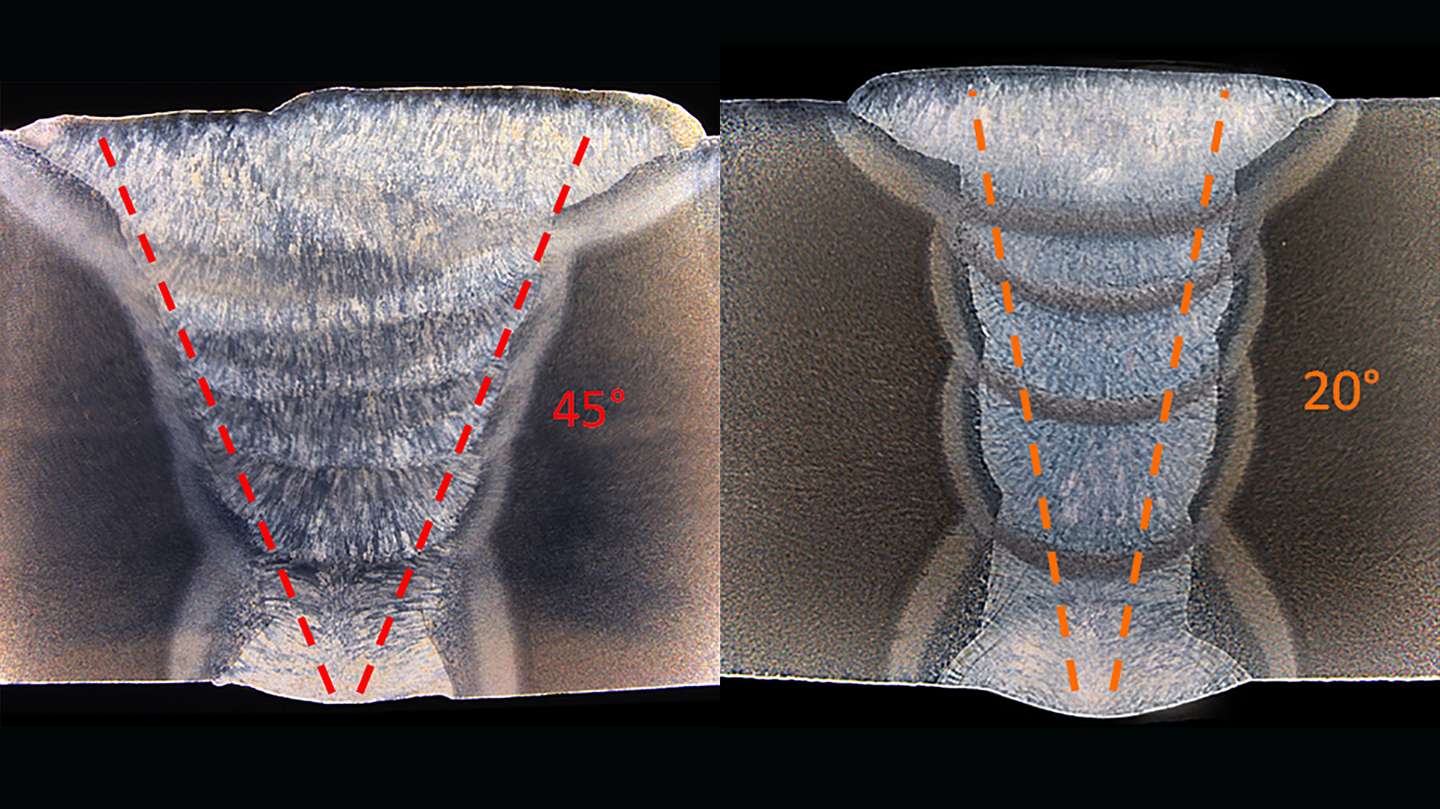
On the left, a traditional weld with 7 weld passes and on the right a weld utilizing Reduced Gap Technology, using only 5 weld passes.
Impact of lifecycle assessment choices
As we wanted to know all the emissions coming from the product, the choice to calculate emissions of the functional unit was desirable, but also one of the most significant decisions in the LCA study. Its main effect on the results of the study is that all of the emissions from the product’s life cycle are assigned to it, including the use of the product for the duration of its entire service life. If a certain function, such as 1 m of welding or 1 hour of use, was chosen for the calculation, then the upstream and core emissions would be distributed over a larger volume of activity, and the impacts could decrease the longer the product was used.
Different lifespans would change those impacts of the product that do not change with the service life. A shorter one would increase them, and a longer one would decrease them. On the other hand, the impacts coming from use would no longer increase and instead stay the same, even if the RSL (Reference Service Life) changes. However, the fact that this causes all of the emissions related to the product to be assigned to it does not give consideration to the longevity being a generally positive trait.
Recyclability and longevity support sustainability
For electronic products such as welding equipment, longevity is an important feature, both for the purpose of the users, getting more value out of what they paid for, and for the idea of circularity, by using fewer resources as the product lasts longer and does not have to be replaced. This modelling decision therefore does not reward a longer functioning product and instead assigns more impacts to it the longer the product is in use.
Recyclability and longevity of products is important for Kemppi. We offer a wide variety of spare parts and consumable parts to maintain a long product life cycle. Typically, we offer spare parts at least 10 years after the product is ramped down from production. All of our machines are designed with straightforward maintenance in mind to guarantee quick and easy service work.
The future of LCA in welding equipment development
Lifecycle assessment is becoming an increasingly valuable tool in welding technology development. As industries worldwide accelerate their sustainability efforts, welding equipment manufacturers must ensure they stay ahead of regulatory changes and evolving customer demands.
Rather than treating LCA as a one-time exercise, its integration into R&D, procurement, and production processes ensures long-term benefits. By continuously refining assessment methods, improving data accuracy, and strengthening supplier collaboration, manufacturers can drive meaningful environmental impact reductions while maintaining operational efficiency.
Advice for industry professionals
For companies looking to integrate LCA into their decision-making, here are some key recommendations:
Define clear objectives from the start – Determine what data is already available, what insights you aim to gain, and who needs to be involved in the process.
Prioritize data quality – High-quality primary data leads to more accurate assessments. Engaging suppliers in sustainability discussions and improving transparency are crucial.
Ensure cross-functional collaboration – Lifecycle assessment is most effective when integrated across R&D, procurement, and supply chain management.
Think beyond compliance – Regulations are evolving, but companies that proactively adopt LCA gain a competitive advantage in efficiency, innovation, and sustainability leadership.
By embedding LCA into core business practices, welding equipment manufacturers can make informed, data-driven decisions that enhance both sustainability and long-term competitiveness. At Kemppi, the X5 FastMig Pulse LCA has been an important step in this journey – one that will continue to shape how we approach product development and environmental responsibility in the years to come.

Anni Knuuttila
Anni Knuuttila
Ingénieure en technologies environnementales, elle possède plus de 10 ans d’expérience acquise à travers différents postes chez Kemppi. Aujourd’hui Responsable du développement durable, elle contribue activement à améliorer les performances et les objectifs de durabilité de l’entreprise. Animée par une grande curiosité et un fort sens de l’intégrité, elle s’engage à faire évoluer l’organisation vers des pratiques et des innovations toujours plus durables.
Produits connexes
Famille de produits
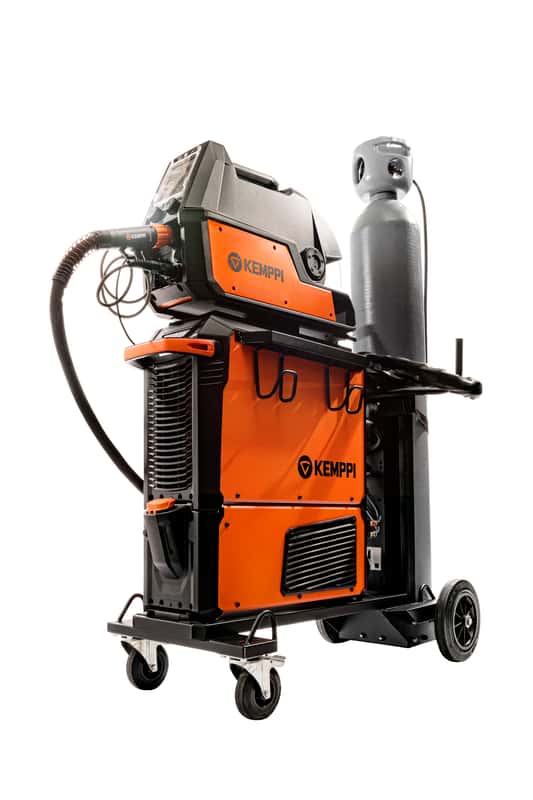
Le poste multi-procédés modulaire à 360 degrés se concentre principalement sur le soudage MIG/MAG haute performance. X5 FastMig offre des options de configuration pour le soudage manuel, synergique et pulsé. Une vaste gamme d'accessoires confère flexibilité et efficacité aux processus de production de soudage.
Plus d'articles de blog

Industrie du soudage - 6 façons d'économiser l'énergie
La crise de l’énergie est réelle, et elle est là maintenant. Elle affecte l’industrie du soudage, grande consommatrice d’énergie, car le soudage consiste à assembler ou à fusionner des pièces en utilisant la chaleur et/ou la compression de manière à ce que les pièces forment un continuum, ce qui consomme beaucoup d’énergie. Comment réduire la consommation d’énergie dans l’industrie du soudage ? À moins d’être prêts à souder à la lumière des bougies, nous ne pouvons pas simplement refuser de souder jusqu’à ce que la crise de l’énergie soit terminée. Mais il existe une solution : de petits changements dans le travail quotidien peuvent entraîner des économies d’énergie considérables à long terme.
Soudage manuel
Welding value with X5 FastMig
Small improvements in welding efficiency can positively influence overall productivity and establish valuable cost savings. By investing in robust, reliable, and versatile equipment, you can improve and better manage welding project costs.
Soudage manuel
Up to 38 % savings with Reduced Gap Technology
The groove angle has a direct impact on the efficiency and productivity of welding heavy metal structures. Kemppi's new solution, Reduced Gap Technology (RGT) changes the understanding of narrow gap welding. The new technology challenges conventional joint design principles.
Innovation
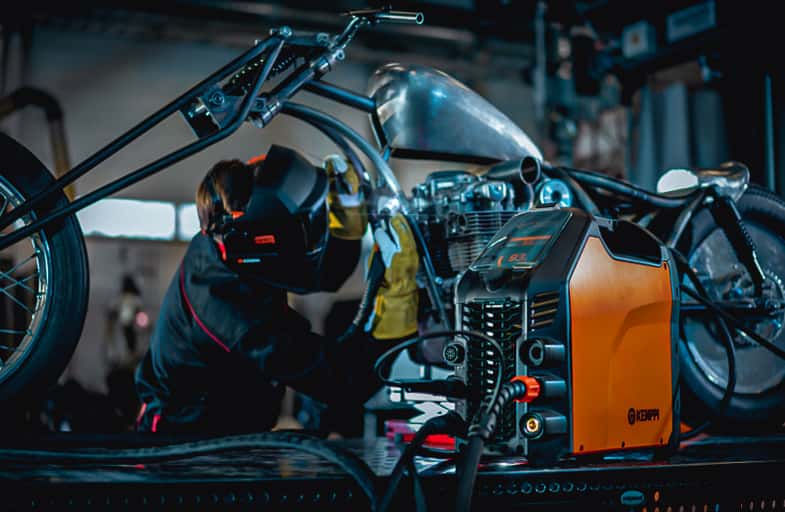
Comment Rapid Welding et Kemppi ont bâti un partenariat qui dure
Rapid Welding travaille avec Kemppi depuis la création de l'entreprise en 1990. Roy Edwards, cofondateur et directeur général, présente les principes qui sous-tendent ce partenariat de 36 ans : choisir la bonne solution de soudage, accompagner les équipements tout au long de leur durée de vie, répondre à la pénurie de compétences et déterminer la place appropriée de l'automatisation et du soudage laser.
Automatisation du soudage, Soudage manuel, ABC du soudage
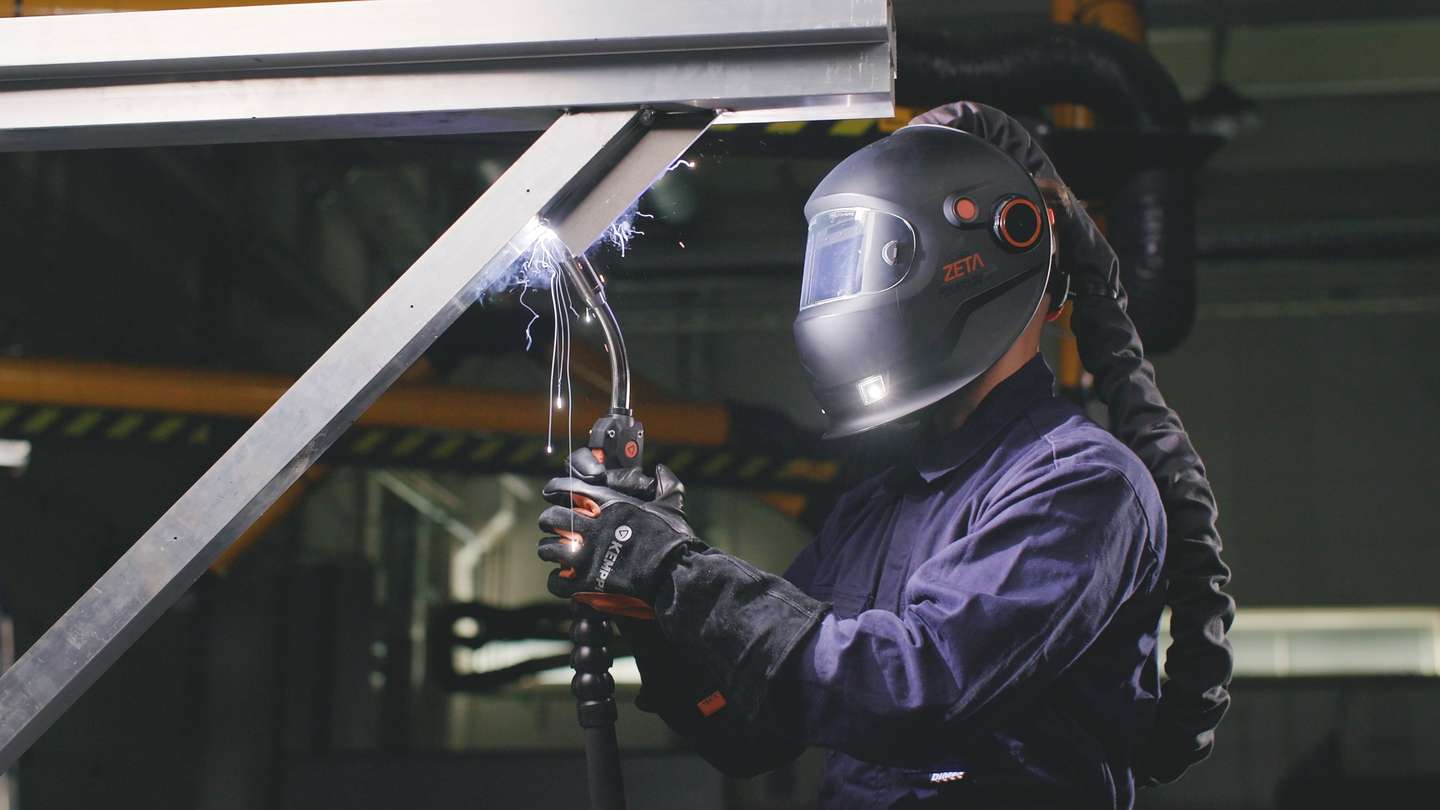
Une sécurité qui s'adapte aux défis des soudeurs et à l'évolution des risques
Les exigences en matière de sécurité dans le domaine de soudage sont de plus en plus strictes. Les dangers à l’arc restent constants, mais les conditions de travail modernes font que l’exposition peut s’accumuler sur des périodes de travail plus longues et dans des espaces intérieurs plus confinés. Par conséquent, les EPI de soudage doivent être considérés à la fois comme une protection pour le soudeur et comme une preuve de conformité. Chez Kemppi, les EPI de sécurité pour le soudage sont conçus et validés en conditions réelles, sur la base d’exigences claires, des retours d'expérience des soudeurs, ainsi que d’une conformité vérifiée au Règlement européen EPI 2016/425, aux processus de marquage CE et aux normes EN applicables.
Sécurité, ABC du soudage
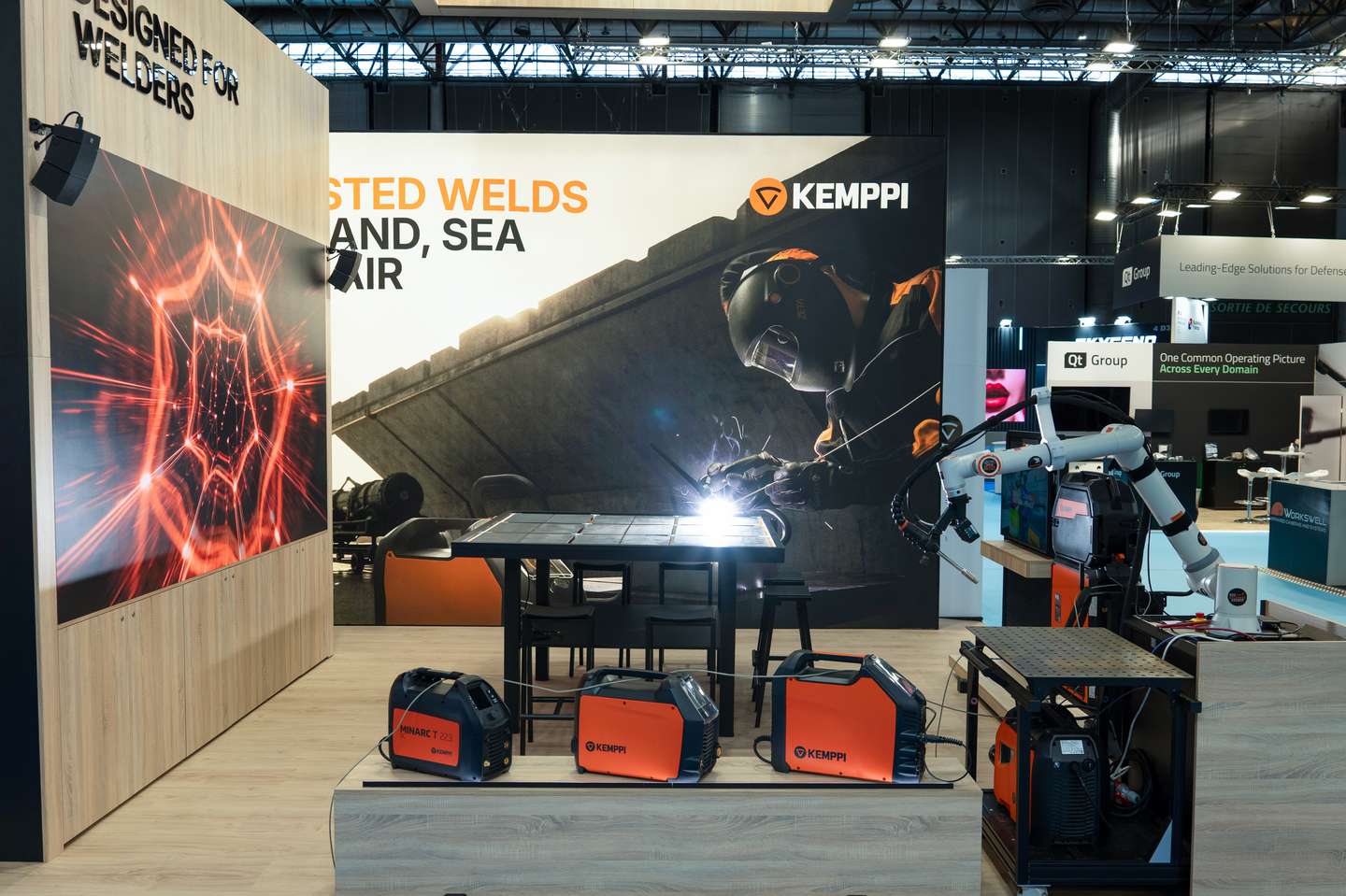
Eurosatory 2026 et l'avenir de l'industrie de la défense
Eurosatory 2026 a mis en lumière une évolution claire de l’industrie de défense moderne. Si les systèmes de défense deviennent de plus en plus numériques, connectés et autonomes, leur fondement reste profondément matériel. Des véhicules blindés aux systèmes d’artillerie, en passant par la résilience industrielle, la qualité des soudures et les structures métalliques, l’acier, les procédés de fabrication et la rigueur de production demeurent au cœur de la préparation opérationnelle.
Digitalisation, Innovation