Digitalisation
Internet of Welding – reaching for the top of competitiveness
11 mai 2017
Internet of Things has been a buzz word among industry representatives for a few years now. It is discussed in various seminars and workshops every week. However, the topics covered have changed over time. In the beginning, the focus was on connecting devices to data networks. The next phase was adding sensors for various events and phenomena.
Kemppi marketing
During the past year, more and more people have started wondering about whether extensive investments make sense and what their payback time will be. It is, indeed, a valid concern, especially if the only reasons for adopting IoT were that it is a hot topic or that technology is seen as a must-have. IoT and digitalization are easy to talk about since they are "in". However, connecting devices to data networks in a cost-effective way is an extensive project that requires a good deal of new kind of know-how from a traditional device manufacturer.
Same technology, different needs
Today, it is possible to connect all kinds of things to the internet where it is possible to define receipts (IF-THEN-THEN-THAT) based on their status. An example of such a system is a meeting room that has air quality measurement connected to smart lighting. If the air quality gets poor, the decision-makers in the room get a visual cue and avoid making bad decisions due to low alertness. At home, you can have a weather station connected to the network, and after a freezing night, it can adjust your alarm to provide you enough time to scrape the windows of your car.
Technology companies seem to have different kinds of approaches to utilizing IoT. Manufacturing industries concentrate on developing their own processes, while entities driven by product development create tools for their customers. The technology is essentially the same, but the mentality is certainly different based on whether you concentrate on your own needs or your customer's needs. This difference in approaches is even seen in conversations on the national level. In Finland, general discussion has mostly revolved around IoT solutions developed for the customer. In Germany, the focus has been on increasing your own efficiency (Industry 4.0), because Germany's strong car industry has been actively involved.
What is Internet of Welding?
This is a question that so far remains without a definite answer. It is clear, however, that a cloud connection and advanced technology are not enough by themselves. Internet of Welding must enable a company to make their operational processes leaner or speed up existing processes in order to reduce waste. Quality management, internal logistics and device maintenance are excellent examples of processes that can be improved with IoW. New welding machines know when they are running short of filler wire, when a weld joint is ready for inspection or when a job is finished. Could such status data coming from a previous task automatically trigger actions or tasks in a welding workshop?
Will IoT investments pay off?
My answer is definitely yes. Over the years, I have looked at welding from the perspectives of research, manufacturing industries and product development. Based on my experience, it clear that productivity development has been modest in our industry. There are relatively few performance indicators in the welding industry that are actually useful. The most commonly used indicator seems to be the ratio of working hours to the weight of end products (h/ton). It is basically a good and useful indicator, but the problem is that as materials and their thicknesses evolve, history data cannot be utilized in designing and manufacturing lighter structures. There is much room for improvement. In some cases, it takes companies more time to eliminate unwanted phenomena related to welding than they spend actually welding.
Digitalization to improve profitability
Our industry has not been able to increase value added in the way the electronics or IT industries have. Our industry will not see a driving force pioneer like Nokia used to be, but it is now possible to use digitalization to fine-tune our order and supply chains also in the welding industry.
Digitalization will change ways of working, processes and systems. The collection and analysis of a wide pool of data will lead to findings that enable significant increases in value added. It is a long way to go from an average duty cycle (<15%) to a maximally optimized duty cycle (30 to 45%). Over the years, I have had the opportunity to visit companies where key tasks were planned and equipped with a great attention to detail. What all these advanced workstations have in common is that both the work done during welding and the work done outside of welding is carefully planned and optimized as a whole.
The Internet of Welding enabled by digitalization will bring a new set of tools for welding management.
Read more about the Internet of Things.
Mikko Veikkolainen, Director, Research & Innovation, Kemppi Oy

Kemppi marketing
Kemppi marketing
Kemppi marketing aims to evoke discussion on the transformation of modern welding and bring you the latest stories from within the global welding industry, told by true experts in their respective fields.
Produits connexes

Famille de produits
WeldEye est une solution universelle pour la gestion de votre production de soudage.
Plus d'articles de blog
Industry 4.0 in welding – myth or reality?
Industry 4.0 refers to the Fourth Industrial Revolution. What does it mean, and how does it fit into the conservative world of welding? Can the intelligence of a welding machine truly bring additional value to an organization and benefit welders as well?
Innovation
Quelles vont être les principales tendances du soudage robotisé en 2022?
Robots collaboratifs, commande de précision sans équivalent, mise en œuvre de l’industrie 4.0 : nous vous présentons les principales tendances qui devraient bouleverser le marché du soudage robotisé en 2022 selon nos experts.
Automatisation du soudage
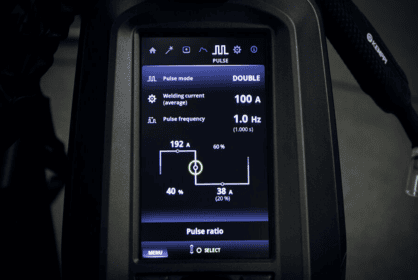
Le procédé double pulse rend le soudage TIG plus efficace, même avec des matériaux exigeants
Le soudage TIG est un procédé de soudage couramment utilisé pour les métaux considérés comme difficiles à souder, tels que le titane. Il s’agit de la méthode la plus simple et la plus sûre pour obtenir une qualité élevée avec de faibles investissements en équipement. Cependant, le nombre de passes de soudure nécessaires rend le soudage TIG lent et exigeant, et la productivité en souffre. La fonction double pulse du nouveau MasterTig de Kemppi a été développée pour rendre le soudage TIG plus efficace.
Innovation
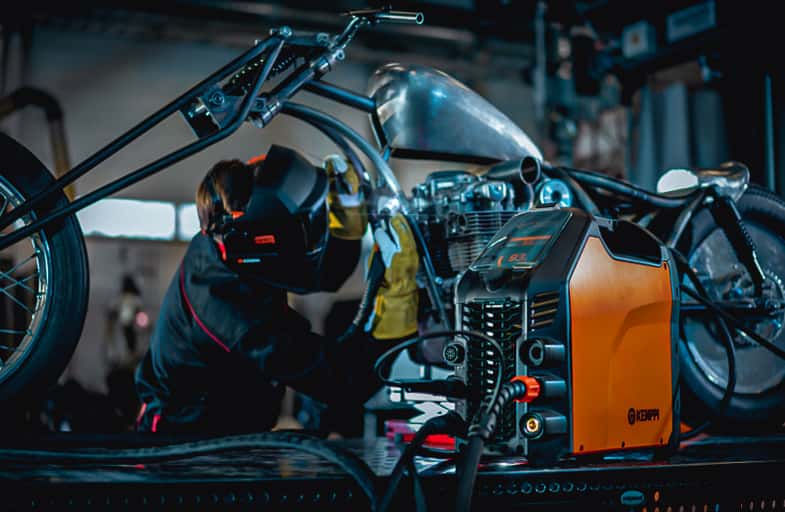
Comment Rapid Welding et Kemppi ont bâti un partenariat qui dure
Rapid Welding travaille avec Kemppi depuis la création de l'entreprise en 1990. Roy Edwards, cofondateur et directeur général, présente les principes qui sous-tendent ce partenariat de 36 ans : choisir la bonne solution de soudage, accompagner les équipements tout au long de leur durée de vie, répondre à la pénurie de compétences et déterminer la place appropriée de l'automatisation et du soudage laser.
Automatisation du soudage, Soudage manuel, ABC du soudage
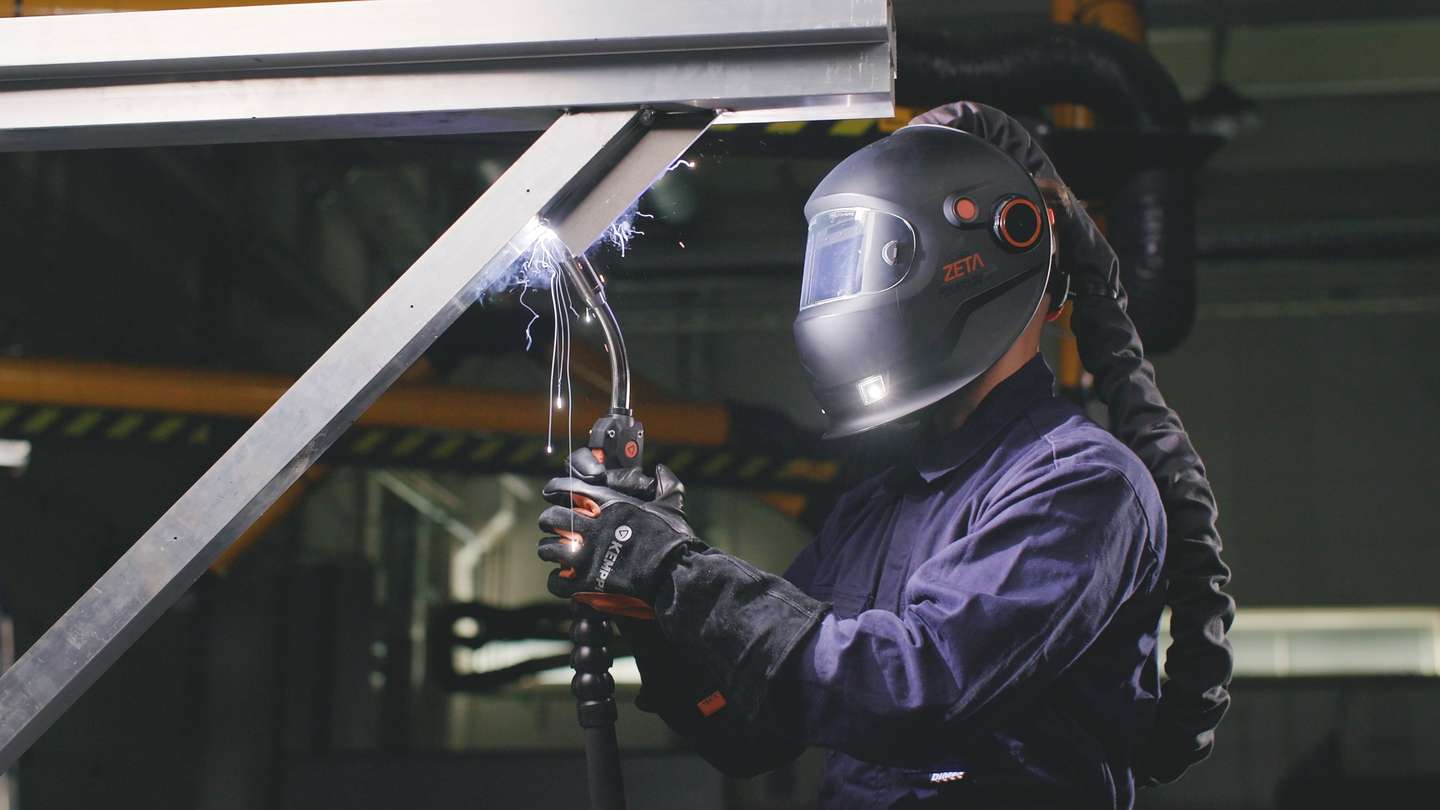
Une sécurité qui s'adapte aux défis des soudeurs et à l'évolution des risques
Les exigences en matière de sécurité dans le domaine de soudage sont de plus en plus strictes. Les dangers à l’arc restent constants, mais les conditions de travail modernes font que l’exposition peut s’accumuler sur des périodes de travail plus longues et dans des espaces intérieurs plus confinés. Par conséquent, les EPI de soudage doivent être considérés à la fois comme une protection pour le soudeur et comme une preuve de conformité. Chez Kemppi, les EPI de sécurité pour le soudage sont conçus et validés en conditions réelles, sur la base d’exigences claires, des retours d'expérience des soudeurs, ainsi que d’une conformité vérifiée au Règlement européen EPI 2016/425, aux processus de marquage CE et aux normes EN applicables.
Sécurité, ABC du soudage
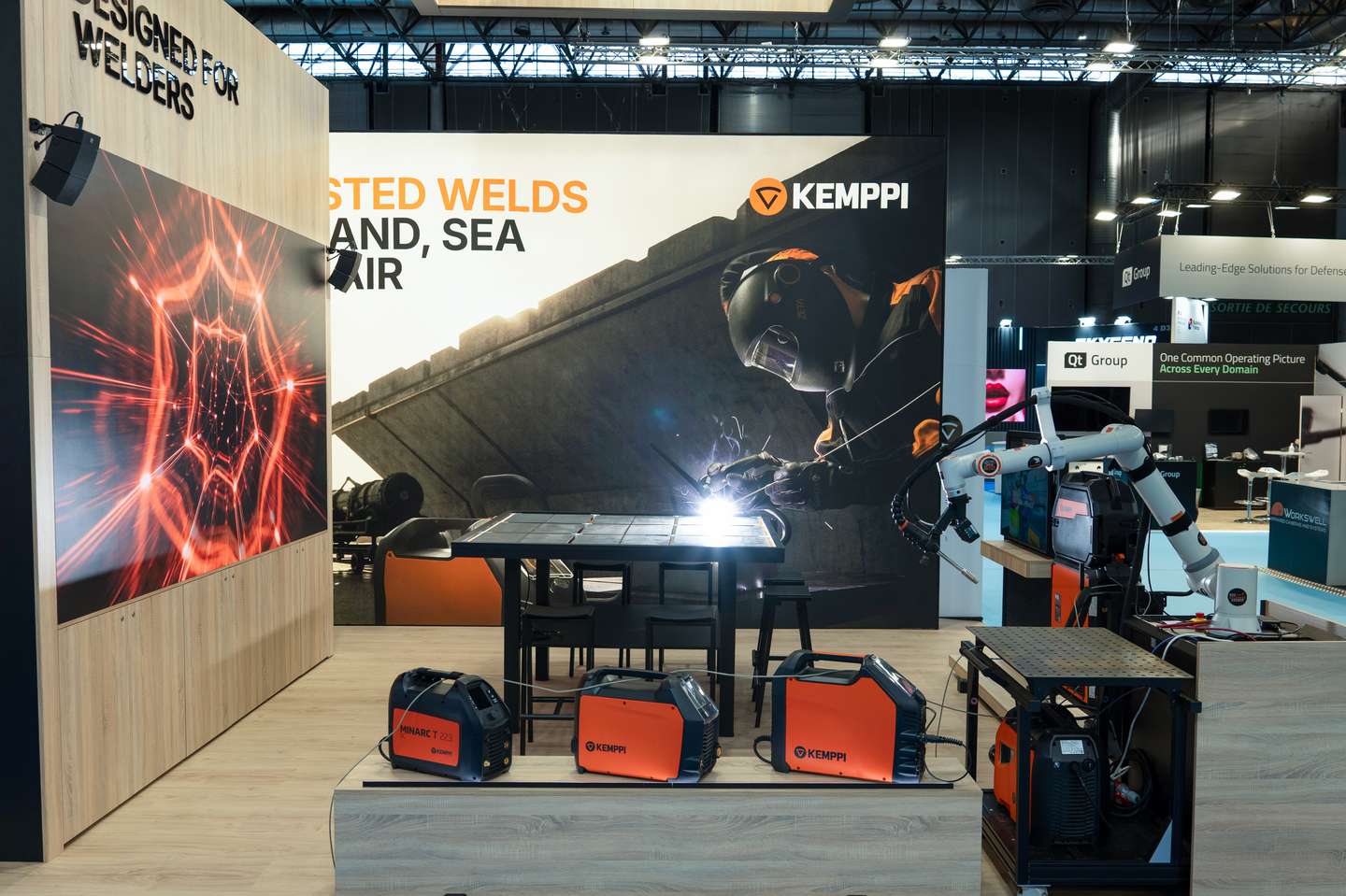
Eurosatory 2026 et l'avenir de l'industrie de la défense
Eurosatory 2026 a mis en lumière une évolution claire de l’industrie de défense moderne. Si les systèmes de défense deviennent de plus en plus numériques, connectés et autonomes, leur fondement reste profondément matériel. Des véhicules blindés aux systèmes d’artillerie, en passant par la résilience industrielle, la qualité des soudures et les structures métalliques, l’acier, les procédés de fabrication et la rigueur de production demeurent au cœur de la préparation opérationnelle.
Digitalisation, Innovation