Innovation
WiseSteel – Quality and Productivity for MAG Welding of Structural Steel
5 septembre 2021
Welding equipment faces raised expectations due to more demanding base materials. In the welding of stronger steel grades, Kemppi has optimized arc control as a practical solution. WiseSteel is a MAG welding process developed by Kemppi for welding structural steel. The process can reduce the risk of welding defects at high welding speeds. It also enables the use of the low heat input required for stronger steel grades.
Jani Kumpulainen
Structural steel uses carbon steel and is chiefly meant for load-bearing structures. Typical applications include load-bearing structures in buildings and bridges and the frames of various vehicles. The trend in vehicle manufacturing, in particular, has for quite some time focused on lightening structures and improving energy efficiency. This development has made manufacturers use thinner but stronger steel. There is now a wide range of structural steel in different strength classes on the market.
Heat input matters
When welding stronger steel grades, heat input becomes a key issue in preserving the steel’s mechanical properties in both the weld and heat-affected zone (HAZ) areas. When the heat input is too high, the heat-affected zone of the steel softens, which in turn reduces the steel's static strength.
For example, SSAB's Strenx® product family includes structural steels with strength grades between 700 and 1300 MPa. Figure 1 shows the maximum permissible heat inputs for different plate thicknesses of steels in SSAB's Strenx® product family when preheating before welding is not used. The figure illustrates that the heat input must not exceed 0.5 kJ/mm for the strongest grades and thinnest plates.
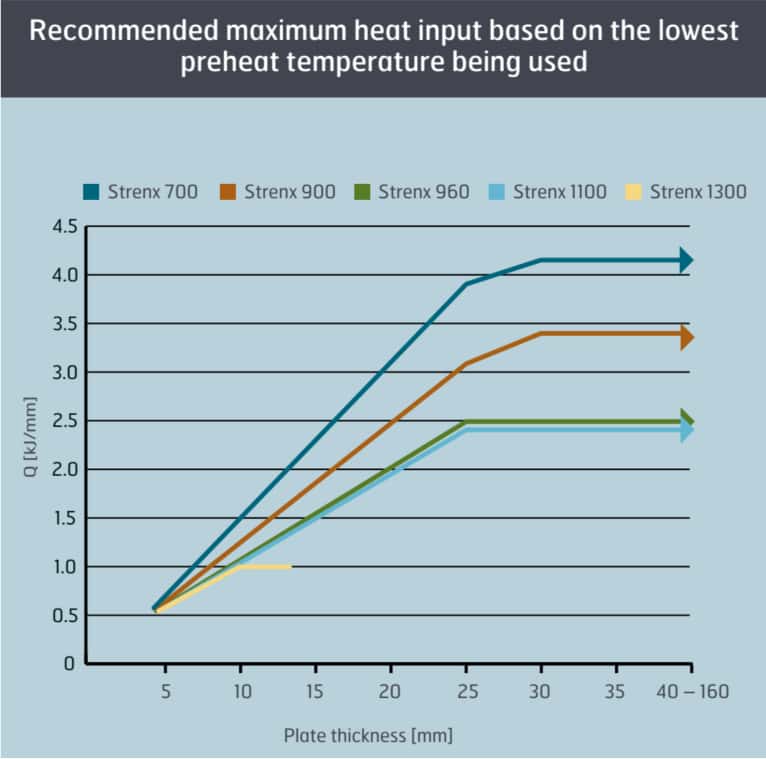
Figure 1. Maximum recommended heat inputs for SSAB Strenx® structural steel for different strength grades and plate thicknesses when preheating prior to welding.
The solution lies in arc control
Today's increasingly demanding structural steels place heavy requirements on welding equipment. With over 70 years of experience in developing arc welding technology, Kemppi has created practical solutions that involve arc control. The currents of modern, digitally-controlled welding inverters can be controlled very precisely and quickly at different stages of the welding process.
WiseSteel is a MAG welding process developed by Kemppi for welding structural steel. The process can be used to weld solid mild steel and metal cored filler wires of different strength grades using Ar + 8-18% CO2 shielding gas.
Kemppi’s welding laboratory began to develop the WiseSteel welding process by aiming to improve every arc type for traditional MAG welding, which would also improve the quality and productivity of structural steel welding for different plate thicknesses. The process can reduce the risk of welding defects at high welding speeds. It also enables the use of the low heat input required for stronger steel grades.
In the short-arc range, the WiseSteel process measures the short-circuit frequency and adjusts the voltage adaptively. If the short-circuit frequency begins to slow down, for example, the voltage is adaptively set lower, which in turn causes the frequency to increase.
Welders use their sight and hearing to determine the short-circuit frequency while short-arc welding. At the correct voltage level for a short-arc, the short-circuit frequency is high enough and the welder sees a well-focused arc and hears a tight buzz without interference. The short arc range of the WiseSteel process can be used for 1–3 mm thin sheets as well as for thicker plates in root pass and position welding.
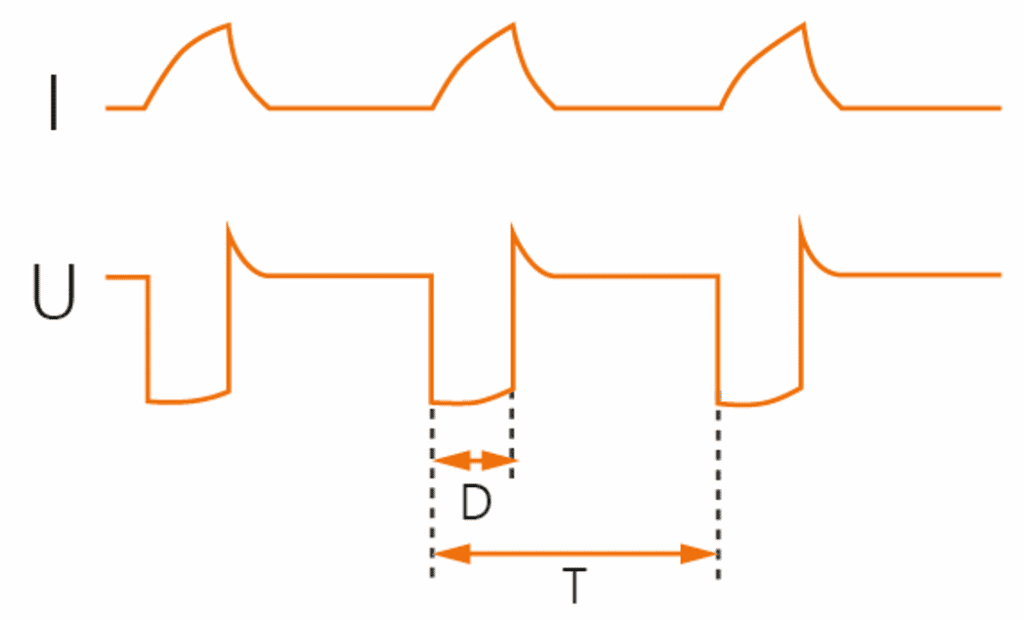
Figure 2. The WiseSteel process measures the short-circuit frequency and adjusts the voltage adaptively.
Globular arc is a spattering arc type in MAG welding and should normally be avoided. In the WiseSteel process, the wire feed speed is varied at a frequency of about 2 Hz between the short arc and spray arc values. This approach ensures that the average power remains in the globular arc range while the welding occurs with short and spray arcs for short periods. The globular arc range of the WiseSteel process is about 200 amperes on both sides and is suitable for plate thicknesses of 4 to 5 mm.
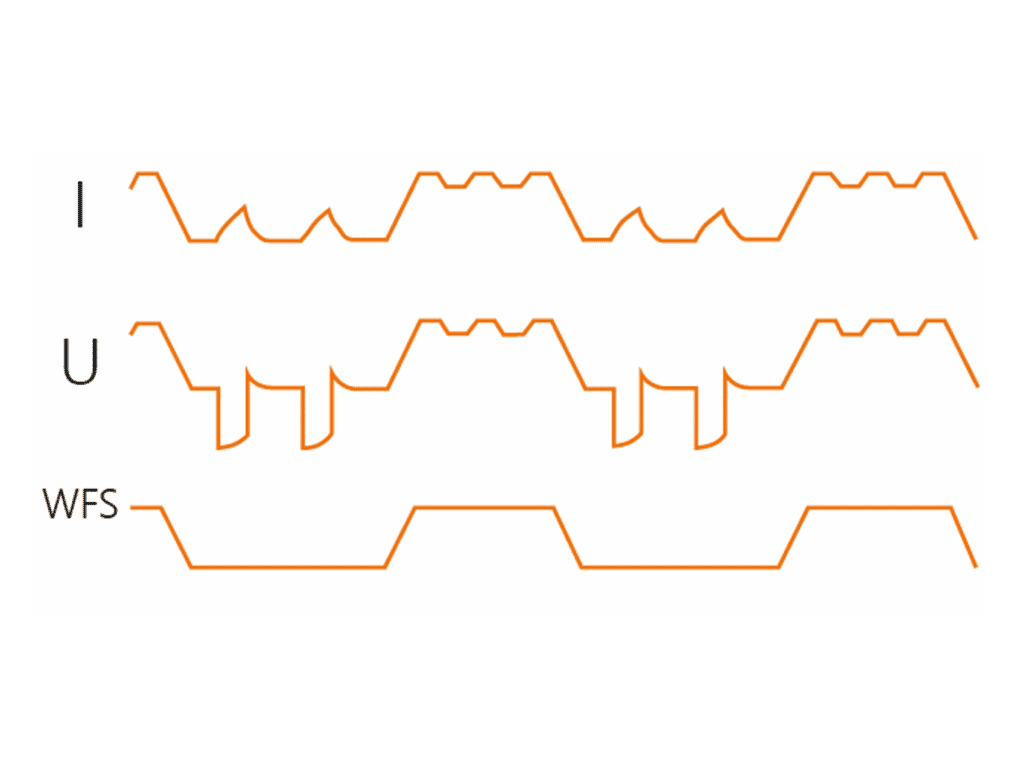
Figure 3. In the globular arc range, the WiseSteel process varies the wire feed speed (WFS).
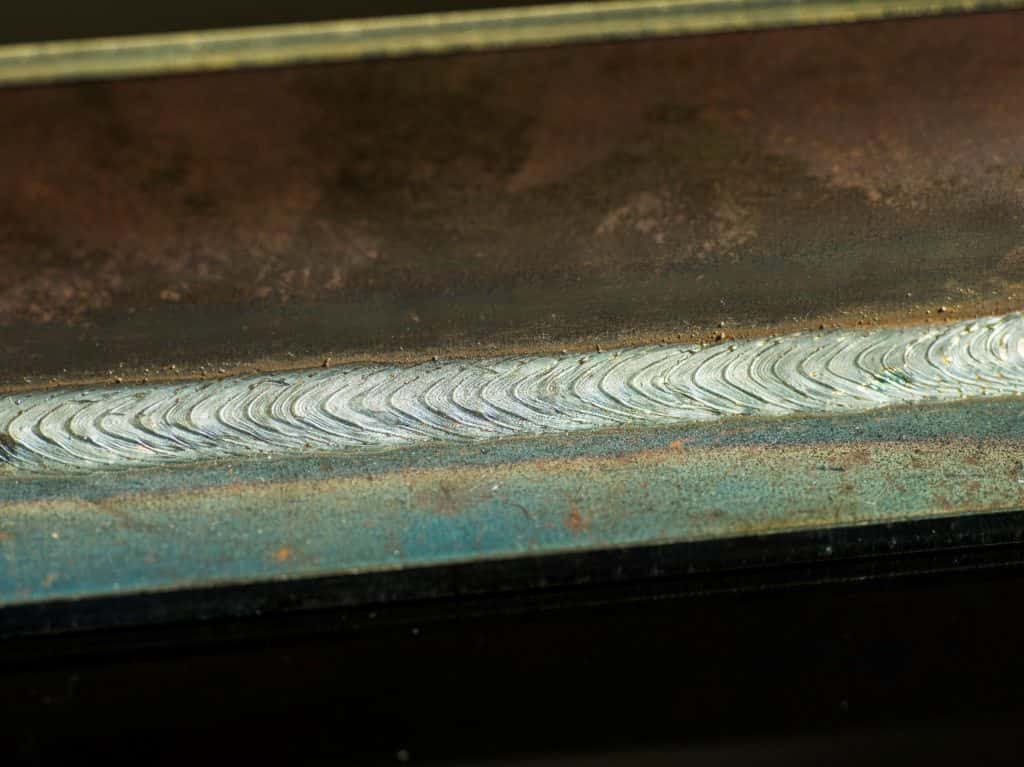
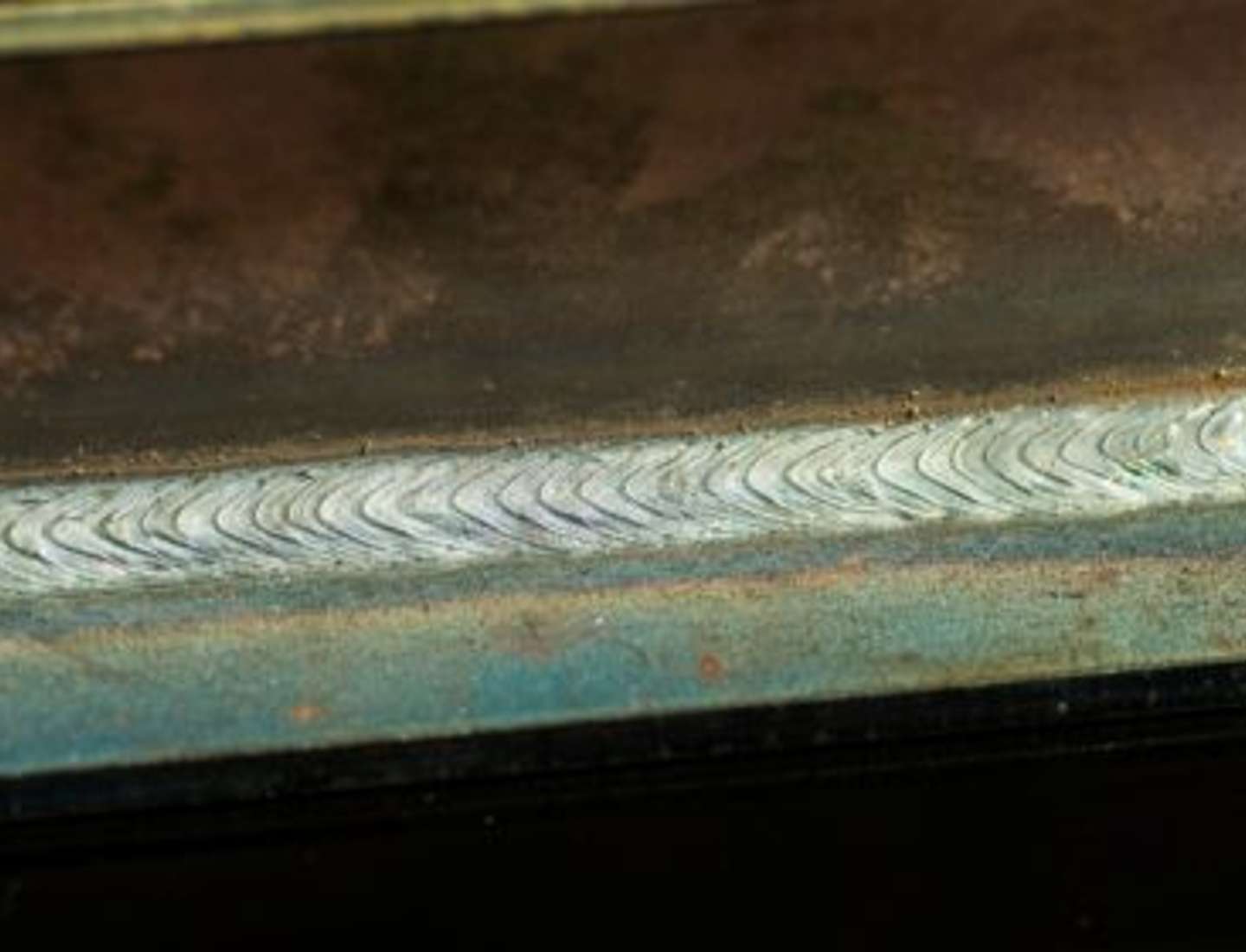
Figure 4. In the globular arc range of the WiseSteel process, short and spray arc welding alternate. This creates a scaly pattern on the weld surface.
In the spray arc range, the welding current pulses at a frequency of about 200 to 300 Hz, which improves arc alignment and stability even at low arc voltages. When striving for high welding speeds and low heat input, good arc focusing and low arc voltage (= short arc length) are key. The spray arc range of the WiseSteel process starts at about 250 amperes. It is suitable for horizontal-vertical and flat position welding of steel plates with a thickness of 5 mm or more.
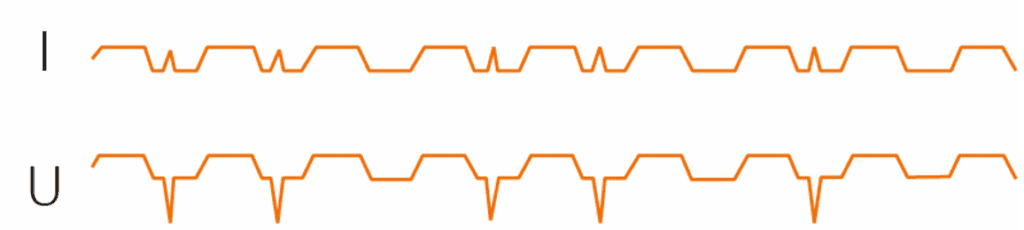
Figure 5. Micropulsing for the WiseSteel process’ spray arc range. The sharp peaks in current and voltage illustrate the short circuits caused by the short arc length.
Faster welding with low heat input
Kemppi's welding laboratory has conducted various welding tests with the WiseSteel process. The examples below show two fillet welds in more detail. The test materials were S355 structural steel, G3Si1 (ER70S-6) 1.2 mm solid wire and Ar + 18% CO2 shielding gas. For the 6 mm thick plate, the goal was an effective throat thickness of 4 mm with good quality and productivity. For the slightly thinner, 5 mm thick material, the aim was to weld an effective throat thickness of 3 mm at the highest possible welding speed.
Figure 6 shows a horizontal-vertical weld with a plate thickness of 6 mm. Welding parameters used:
Wire feed speed: 11 m/min
Welding current: 330 A
Arc voltage: 28.8 V
Welding speed: 600 mm/min
Heat input: 0.76 kJ/mm
Effective throat thickness: 4.36 mm
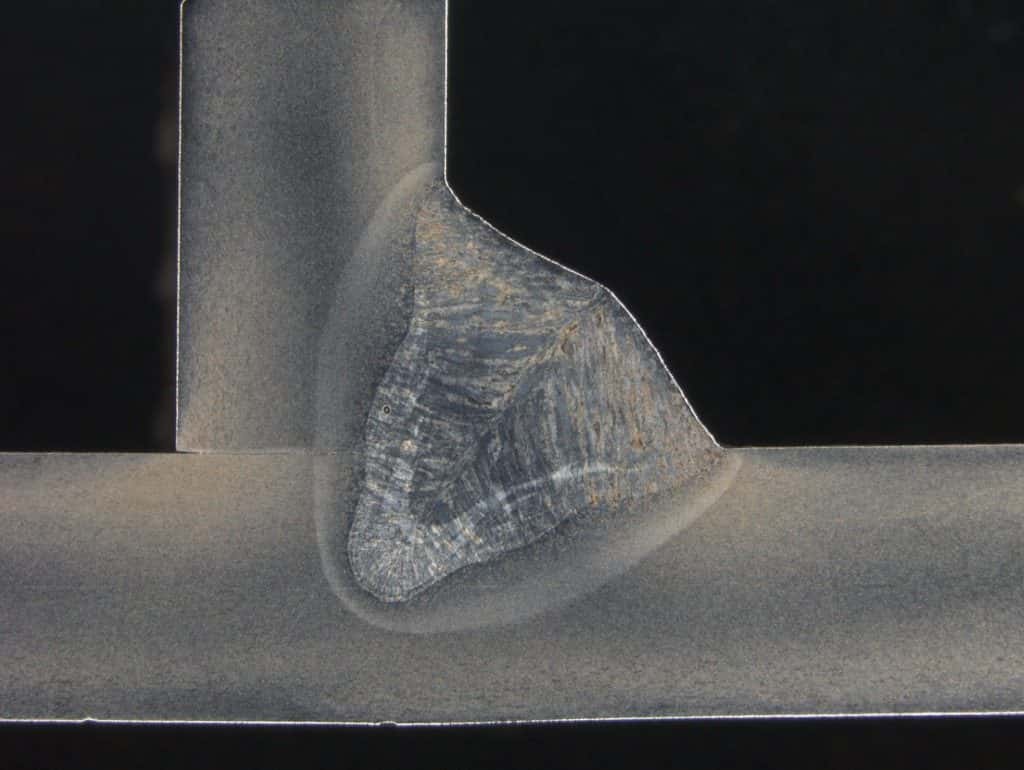
Figure 6. Horizontal-vertical weld using the WiseSteel process spray arc values for a 6 mm thick plate.
Figure 7 shows test welds for the comparison of different MAG welding processes, welded to a 5 mm thick plate. The goal was to weld an effective throat thickness of 3 mm using the WiseSteel process at the highest possible welding speed without welding defects. When welding at high welding speeds, the arc must have a good focusing. In practice, this means a short arc and thereby a low arc voltage. This is why the arc voltage was set to be the same for all processes in the comparative tests. Welding parameters used:
Wire feed speed: 12 m/min
Welding current: 370 A
Arc voltage: 28.7 V
Welding speed: 1100 mm/min
Heat input: 0.46 kJ/mm
When welding at high welding speeds, the risk of undercuts increases, which is apparent at points A and B in Figure 7. Another typical mistake when welding at high speed and low heat input is excessive convexity. With regards to excessive convexity, all the welds in Figure 7 meet the requirements of EN ISO 5817 Class B. However, differences can be seen when looking at the effective throat thicknesses:
Synergic spray arc MAG: throat thickness 2.99 mm
Pulsed MAG: throat thickness 3.07 mm
WiseSteel: throat thickness 3.23 mm
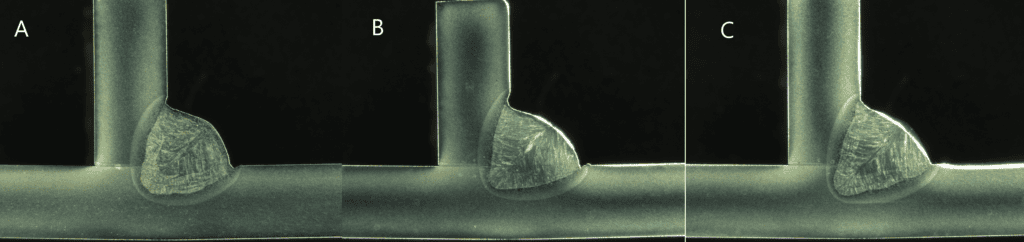
Figure 7. A) Synergic MAG B) Pulse MAG C) WiseSteel
This means a high weld cap reduces the effective throat thickness even if the deposition rate is the same.
Modern welding equipment makes quality control easier
WiseSteel is available in Kemppi's industrial welding systems: X5 FastMig and X8 MIG Welder. These systems also make the calculation of heat input easier. The equipment measures the arc voltage directly from the contact tip to avoid voltage losses and is also able to determine the welding speed when the welder enters the length of the weld after welding is completed. This function makes it easier to fill in welding procedure test reports, for example, because the necessary information on welding parameters, welding speed, and heat input is visible on the welding machine's control panel display after welding.
Originally published in the magazine Teräsrakenne (Constructional Steelwork) 4/2020
Jani Kumpulainen
Jani Kumpulainen
Responsable technologie du soudage chez Kemppi Oy, Jani est aussi ingénieur international en soudage (IWE) et inspecteur international en soudage (IWI-C). Fort de plus de 15 ans d’expérience en tant qu’expert en soudage, il a développé une solide expertise dans le développement des procédés de soudage, la coordination du soudage pour les équipements sous pression et les ventes internationales. Passionné par l’ensemble de l’industrie du soudage, il s’intéresse particulièrement aux procédés de soudage, aux matériaux soudables et aux normes de qualité applicables au soudage.
Produits connexes
Famille de produits
Une fonction de soudage spécialement conçue pour relever les défis de transfert globulaire. WiseSteel alterne transfert par court-circuit et pulvérisation axiale, ce qui produit de belles soudures caractérisées par un motif en écailles de poisson régulier.
Famille de produits
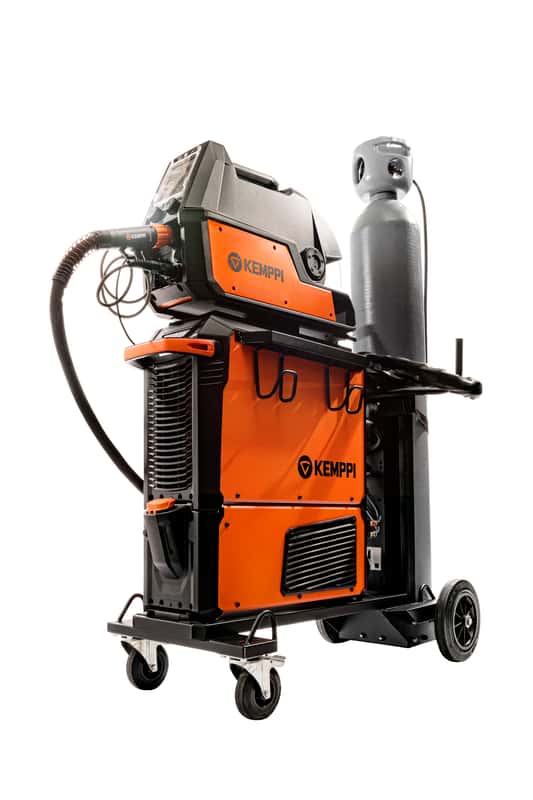
Le poste multi-procédés modulaire à 360 degrés se concentre principalement sur le soudage MIG/MAG haute performance. X5 FastMig offre des options de configuration pour le soudage manuel, synergique et pulsé. Une vaste gamme d'accessoires confère flexibilité et efficacité aux processus de production de soudage.
Plus d'articles de blog
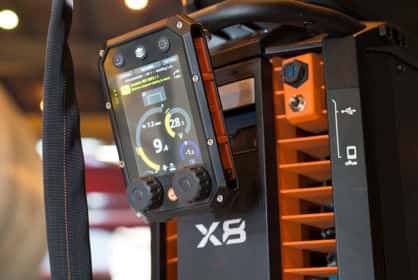
Calculation of heat input in MIG/MAG welding
The new welding procedure test standard, EN-ISO 15614-1:2017, provides recommendations for the measurement and calculation of heat input. In concrete terms, what does this mean for MIG/MAG welding? And how can workshops carry out these calculations in practice?
ABC du soudage

How Ready Are We for Green Steel?
The steel industry is without a doubt one of the highest CO2-emitting industries and its effects on the environment raise concerns. High-strength and “green” steel can offer both environmental and financial benefits for manufacturers that contribute to sustainable development. But how ready are we to commit to it?
Innovation
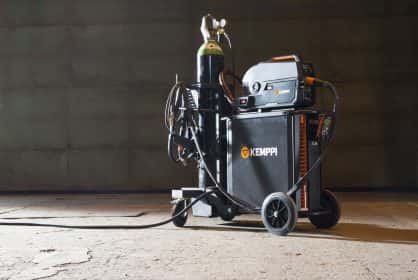
Behind the scenes: The development of X8 MIG Welder
Creating a new product for industrial users is both a long journey and exciting adventure. In his LinkedIn Pulse post, Kemppi's User Experience Manager Jussi Kapanen recalls the beginning of an ambitious R&D project, when the team was tasked with the target of creating the best MIG welding system in the world, to be loved by users in 2017.
Innovation
Comment Rapid Welding et Kemppi ont bâti un partenariat qui dure
Rapid Welding travaille avec Kemppi depuis la création de l'entreprise en 1990. Roy Edwards, cofondateur et directeur général, présente les principes qui sous-tendent ce partenariat de 36 ans : choisir la bonne solution de soudage, accompagner les équipements tout au long de leur durée de vie, répondre à la pénurie de compétences et déterminer la place appropriée de l'automatisation et du soudage laser.
Automatisation du soudage, Soudage manuel, ABC du soudage
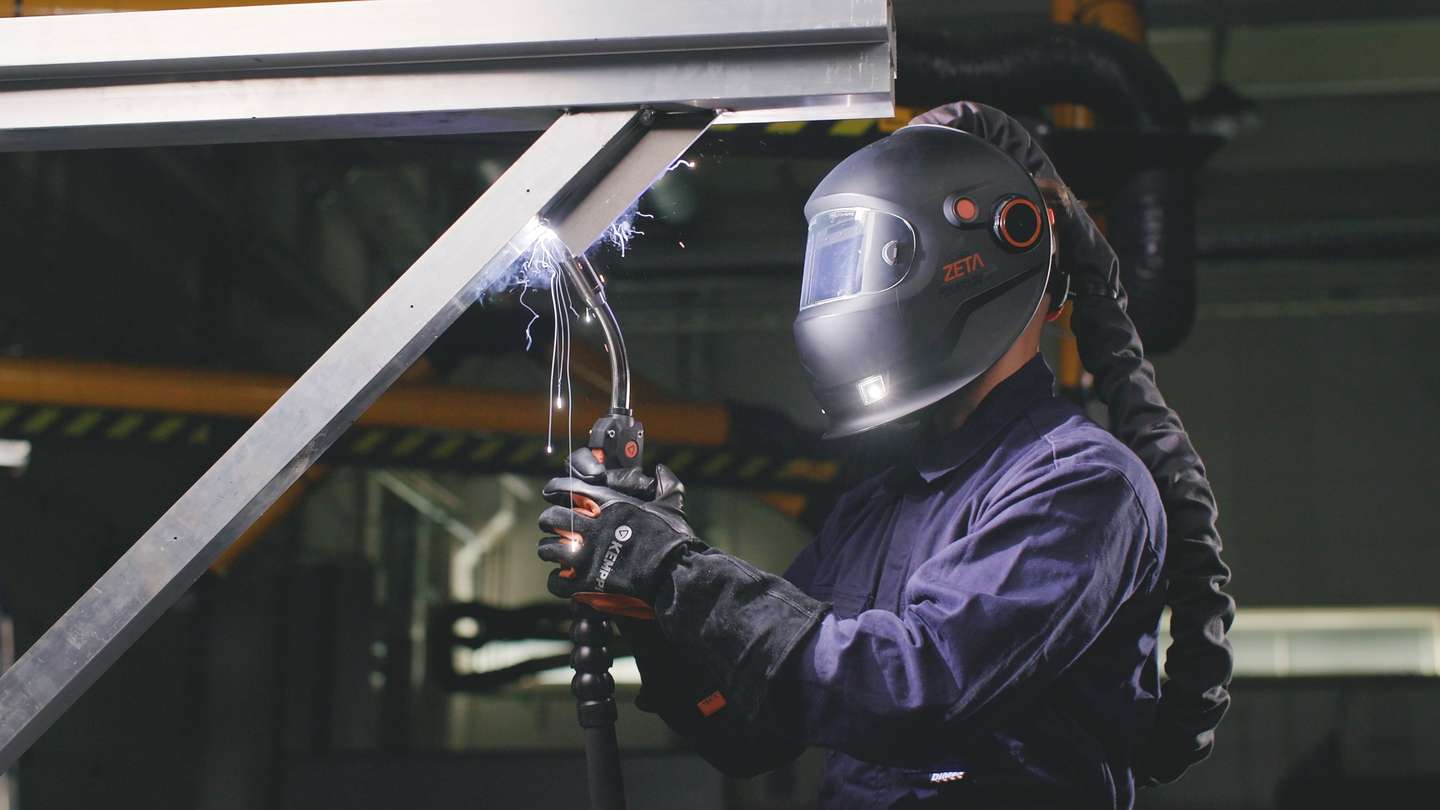
Une sécurité qui s'adapte aux défis des soudeurs et à l'évolution des risques
Les exigences en matière de sécurité dans le domaine de soudage sont de plus en plus strictes. Les dangers à l’arc restent constants, mais les conditions de travail modernes font que l’exposition peut s’accumuler sur des périodes de travail plus longues et dans des espaces intérieurs plus confinés. Par conséquent, les EPI de soudage doivent être considérés à la fois comme une protection pour le soudeur et comme une preuve de conformité. Chez Kemppi, les EPI de sécurité pour le soudage sont conçus et validés en conditions réelles, sur la base d’exigences claires, des retours d'expérience des soudeurs, ainsi que d’une conformité vérifiée au Règlement européen EPI 2016/425, aux processus de marquage CE et aux normes EN applicables.
Sécurité, ABC du soudage
Eurosatory 2026 et l'avenir de l'industrie de la défense
Eurosatory 2026 a mis en lumière une évolution claire de l’industrie de défense moderne. Si les systèmes de défense deviennent de plus en plus numériques, connectés et autonomes, leur fondement reste profondément matériel. Des véhicules blindés aux systèmes d’artillerie, en passant par la résilience industrielle, la qualité des soudures et les structures métalliques, l’acier, les procédés de fabrication et la rigueur de production demeurent au cœur de la préparation opérationnelle.
Digitalisation, Innovation