Soldadura manual
SSAB and Kemppi Advance Armour Steel Welding for Ballistic Performance
30 de julio de 2026
Welding armour steel for demanding defence applications
In defence manufacturing, every material choice matters. And so does every weld.
Armour steels are designed to protect against ballistic and blast threats in some of the most demanding operating environments. Their performance depends on a careful balance of hardness, toughness, processability, and structural reliability. When these steels are welded, that balance must be protected as far as possible.
Kemppi and SSAB are working together to explore how welding technology can support the fabrication of armour steel structures used in demanding protection applications.
The focus is on understanding how different welding processes and consumables affect the properties of welded armour steel structures.
Armour steel types and their welding requirements
Armour steels are developed for different protection needs. The required material properties depend on the type of threat, the structure, and the intended application.
Blast protection steels typically have lower hardness, around 400 HBW, to allow controlled deformation during an explosion. In these applications, the steel must be able to absorb energy without cracking, including in cold operating conditions.
Ballistic protection steels are generally harder. High Hardness Armour steels, around 500 HBW, are widely used because they offer a balance of protection, bendability, weldability, and fatigue resistance. Very High Hardness Armour steels, around 550 HBW, provide higher protection levels while still maintaining some bendability and weldability.
Ultra-High Hardness and Extreme High Hardness steels, around 600–650 HBW, offer higher ballistic protection levels, but with reduced processability. At the highest hardness levels, bending and welding are generally more restricted and require careful evaluation.
This creates a practical challenge for manufacturers. The material must provide protection, but it must also be suitable for fabrication. Welding process selection, filler material choice, heat input control, and production repeatability all become important factors in achieving reliable results.
Why heat input is critical in armour steel welding
Armour steels are based on a tempered martensitic microstructure. This microstructure is central to their hardness and protection capability. During welding, the surrounding base material is exposed to a thermal cycle, which can reduce hardness in the heat-affected zone.
Some softening in the heat-affected zone is unavoidable. However, the extent of softening depends strongly on heat input, welding parameters, joint design, plate thickness, and the selected process.
In defence vessels and vehicles, the welded joint is part of the structure that, in most cases, is exposed to ballistic impact, blast loading, vibration, fatigue, and harsh environmental conditions. A wider softened zone may affect how the structure behaves under load or impact.
Heat input can be reduced through several methods, including multipass welding with smaller beads, low heat-input welding processes, modified short-arc MIG/MAG, and laser welding. The correct approach depends on the material grade, thickness, joint configuration, production environment, and performance requirements.
Welding process comparison
We have done some comparison between arc welding and laser welding and found: Early comparisons show clear differences between handheld laser welding and pulse MAG welding.
Handheld laser welding uses a laser beam with wobbling. It provides deep penetration and produces a narrow weld profile with a narrow heat-affected zone. In the initial comparison, handheld laser welding showed lower heat input. It depends the case how much it is lower but some cases it 50% less and especially with thinner materials it is even less, about 10-20% of arc welding heat input
Pulse MAG welding uses pulsed current. It offers lower penetration compared with laser welding, but a much higher filler material deposition rate. In the initial comparison, pulse MAG welding showed higher heat input and produced a wider weld and heat-affected zone.
These differences are relevant for defence manufacturing because process selection is rarely based on one parameter alone. A lower heat input and narrower heat-affected zone can be beneficial when preserving base material properties is a priority. Higher deposition rate, established production use, and process robustness remain important where productivity, joint fill, and industrial scalability are required.
Handheld laser welding may be particularly interesting for thinner armour steel components, precision joints, and applications where a narrow heat-affected zone is beneficial. Pulse MAG welding remains highly relevant for larger assemblies, thicker sections, longer welds, and production environments where high deposition rates and familiar welding procedures are needed.
Filler material selection and weld performance
Armor steel can be welded both ferritic and austenitic filler materials, including ER70S-6 and ER307. Austenitic consumables such as AWS 307 and AWS 309 are also commonly considered in armour steel welding. Filler material selection can influence weld metal properties, cracking resistance, toughness, dilution behaviour, and overall joint performance.
In armour steel welding, a suitable filler material is selected to support a reliable and crack-resistant joint while maintaining the required structural performance. This is particularly imperative when welding high-hardness steels, where hydrogen cracking, residual stresses, and local hardness changes must be controlled. The most suitable filler material depends on the base material grade, plate thickness, joint design, restraint level, welding process, and application requirements.
Production control in defence manufacturing
In defence manufacturing, a successful test weld is valuable only if the same result can be reproduced consistently in manufacturing. This makes welding procedure qualification, parameter control, welder competence, inspection and traceability important parts of armour steel fabrication.
Manufacturers need to understand which process was used, which filler material was selected, what heat input was achieved, and whether the welding procedure remained within the required limits. Preheat and interpass temperature control may also be important, depending on the material, plate thickness, joint restraint, hydrogen level, and workshop conditions. These factors can influence cracking risk, distortion, residual stresses, and the final performance of the welded structure.
Supporting future armour steel fabrication
The cooperation between Kemppi and SSAB is focused on building practical knowledge around armour steel welding. The early results highlight the importance of heat input control and show that different welding processes offer different advantages. Handheld laser welding appears promising where a narrow heat-affected zone is required. Pulse MAG welding continues to offer established benefits in deposition rate, productivity, and industrial use.
Further mechanical and ballistic testing will provide deeper understanding of how the welded structures perform after fabrication.
For defence manufacturers, the key point is clear. Armour steel performance depends not only on the material grade, but also on how the material is processed, welded, controlled, and verified. In conclusion, there is no doubt that welding technology plays a central role in ensuring that protective structures can be manufactured with the required quality, consistency, and reliability.

Varsha Saraogi
Varsha Saraogi
Hails from a background in journalism and editorial strategy and brings an international B2B perspective to content and communications at Kemppi. Passionate about creating stories that connect welding technology with the people and industries it serves, combining technical substance with a clear and engaging voice. Work has been published in specialist titles such as Airport Technology, Railway Technology, Ship Technology, FinTech Global, and RegTech Analyst, reflecting experience across a wide range of industrial and business sectors.
Más publicaciones del blog
How Laser Welding Could Reshape Fabrication by 2035
Laser welding is already changing how fast manufacturers can work. Its bigger potential lies in what happens around the weld. From scarce skills and faster changeovers to earlier quality control and better use of production capacity, we look at how laser could reshape fabrication by 2035.
Soldadura manual, Innovación
What 10,000 Welds Reveal About Laser Welding Productivity
What is the real cost of a weld? Kemppi's comparison of laser, MAG and TIG welding goes beyond welding speed to examine the factors that shape production costs, from labour hours and consumables to heat input, finishing and rework. Discover how seemingly small differences can add up across thousands of welds, freeing production capacity, improving efficiency and strengthening the business case for laser welding.
Innovación, Soldadura manual
How Rapid Welding and Kemppi Built a Partnership That Lasts
Rapid Welding has worked with Kemppi since the company opened in 1990. Co-founder and Managing Director Roy Edwards highlighted the principles behind that 36-year partnership, from choosing the right welding solution and supporting equipment throughout its life to addressing the skills shortage and finding the right place for automation and laser welding.
Automatización de la soldadura, Soldadura manual, Fundamentos de soldadura
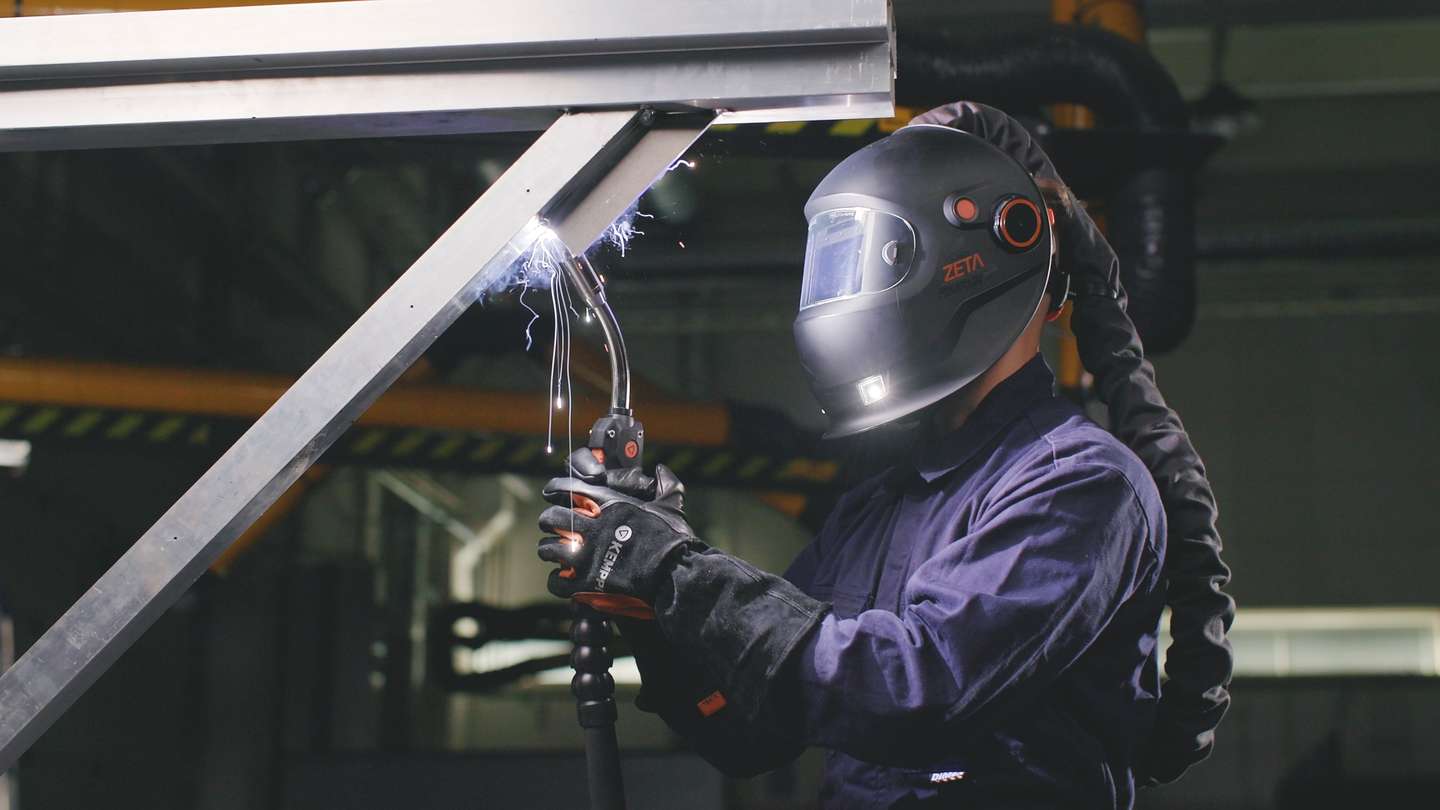
Safety that keeps up with welders' challenges and changing risks
Welding safety has become increasingly demanding. The hazards at the arc remain constant, but modern working conditions mean exposure can accumulate over longer shifts and in tighter indoor spaces. As a result, welding PPE needs to be treated as both protection for the welder and proof of compliance. At Kemppi, welding safety PPE is designed and validated in practice through clear requirements, welder-led feedback, and verified compliance with EU PPE Regulation 2016/425, CE marking processes, and relevant EN standards.
Seguridad, Fundamentos de soldadura
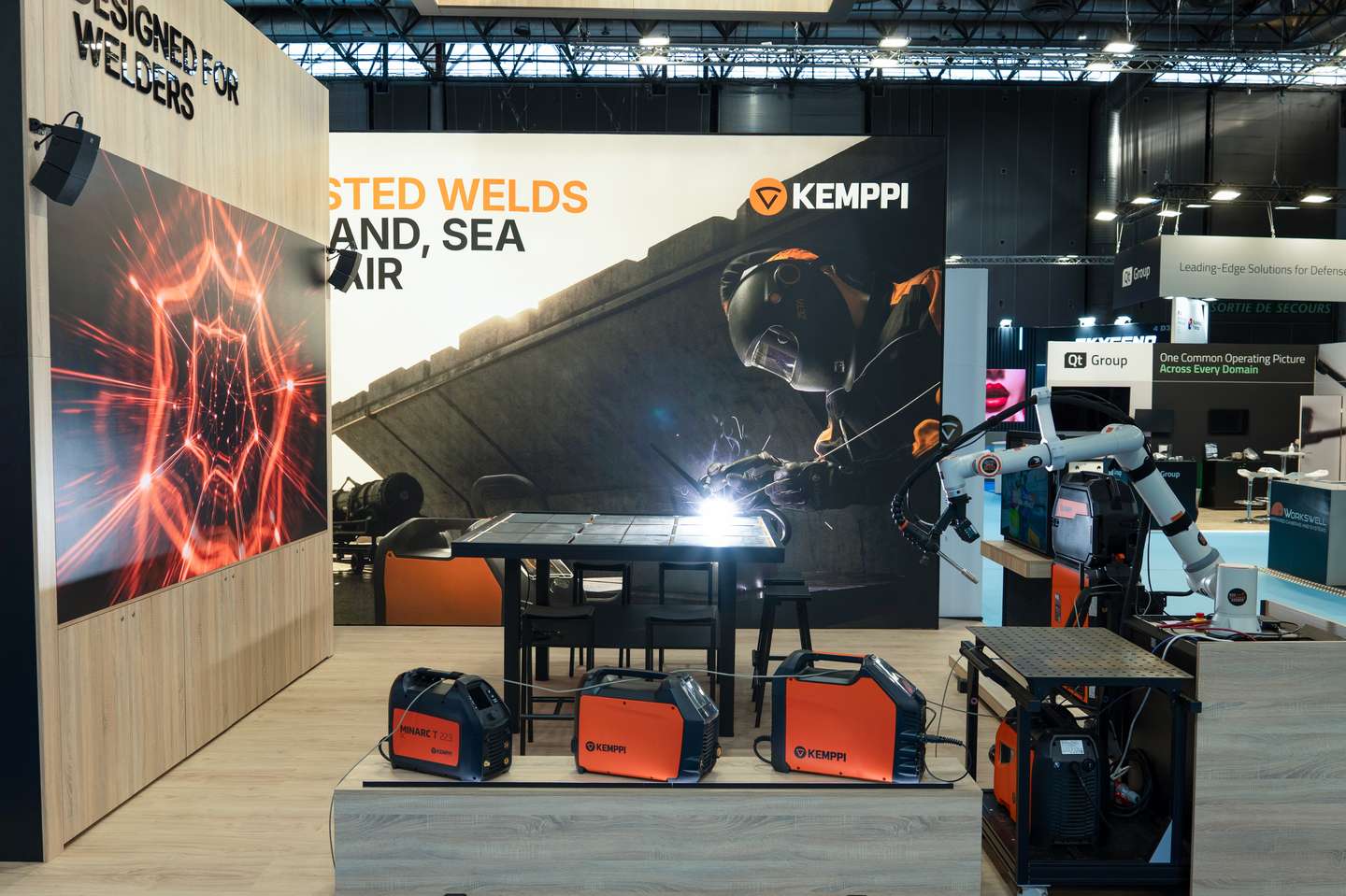
Eurosatory 2026 And the Future of Defence Manufacturing
Eurosatory 2026 highlighted a clear shift in modern defence manufacturing. While defence systems are becoming more digital, networked, and autonomous, their foundation remains physical. From armoured vehicles and artillery to industrial resilience, welding quality, steel structures, and production discipline remain paramount to defence readiness.
Digitalización, Innovación