L'innovazione
Alla scoperta di Coherent, la tecnologia alla base di Kemppi FastBeam 3
16 novembre 2026
Che cosa rende un laser industriale così affidabile per la produzione quotidiana? Per noi, la risposta ha iniziato a prendere forma nello stabilimento produttivo di Coherent a Tampere, in Finlandia. Con oltre vent'anni di esperienza nella tecnologia laser a fibra, Coherent produce e collauda i moduli laser destinati alle applicazioni industriali più impegnative. Oggi questa competenza incontra il know-how di Kemppi nella saldatura in FastBeam 3, portando l'avanzata ingegneria laser finlandese direttamente nelle mani dei saldatori.
Varsha Saraogi
A powerful laser can produce an impressive weld. Producing thousands of consistent welds under real manufacturing conditions, however, requires something more: stable optical power, precise process control and technology that can withstand prolonged industrial use.
For manufacturers investing in laser welding, these factors directly influence production quality, operating costs and the long-term value of their equipment.
That is also what makes the collaboration between Coherent Fiber Laser and Kemppi significant. Behind FastBeam 3 is a partnership connecting two areas of Finnish industrial expertise, from the physics of generating high-power laser light to the practical requirements of welding on the factory floor.
Over two decades of expertise behind the beam
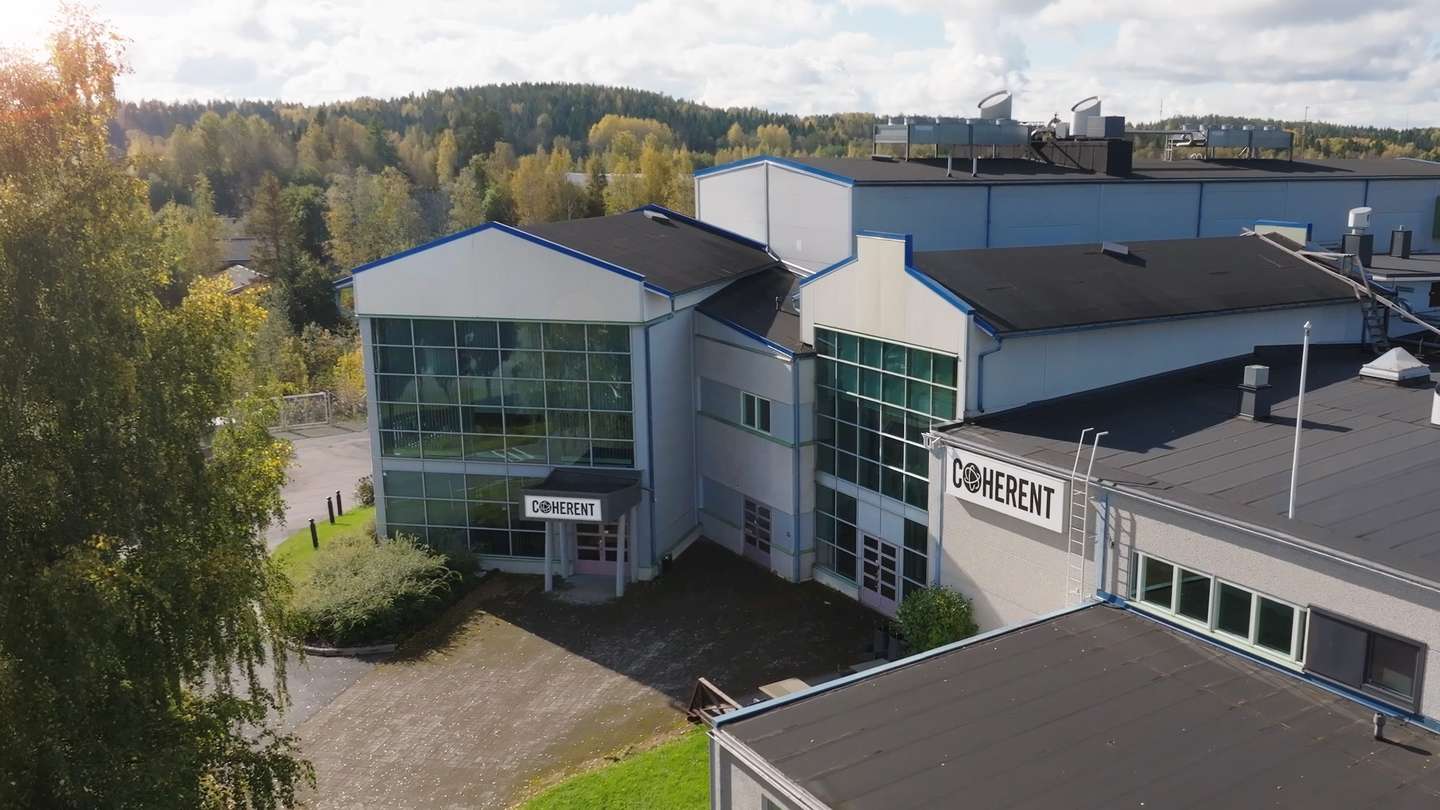
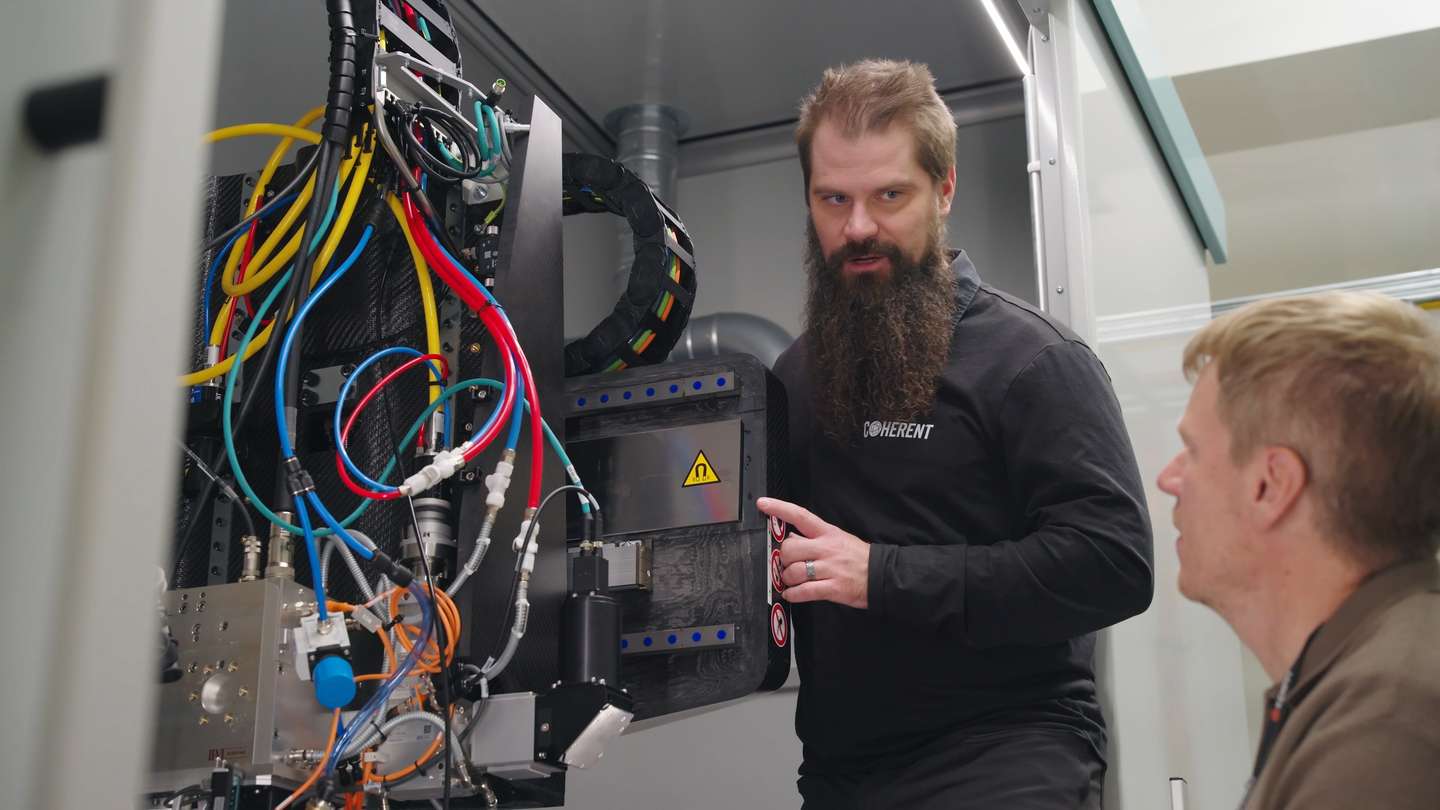
Coherent Fiber Laser has manufactured fiber lasers in Tampere since 2003. In 2020, the company designated the site its Center of Excellence for Fiber Lasers, bringing critical optical component manufacturing, laser assembly, testing and application development closer together.
The expertise developed at Coherent Fiber Laser reaches far beyond handheld welding. It supplies high-power laser technology for industries such as automotive manufacturing, electric vehicle production and energy storage. Its industrial laser portfolio includes systems delivering up to 20 kW, with advanced beam-control technologies developed for challenging materials and high-volume production. This experience is particularly valuable in applications where even small variations in laser performance can affect weld penetration, component quality and manufacturing yield.
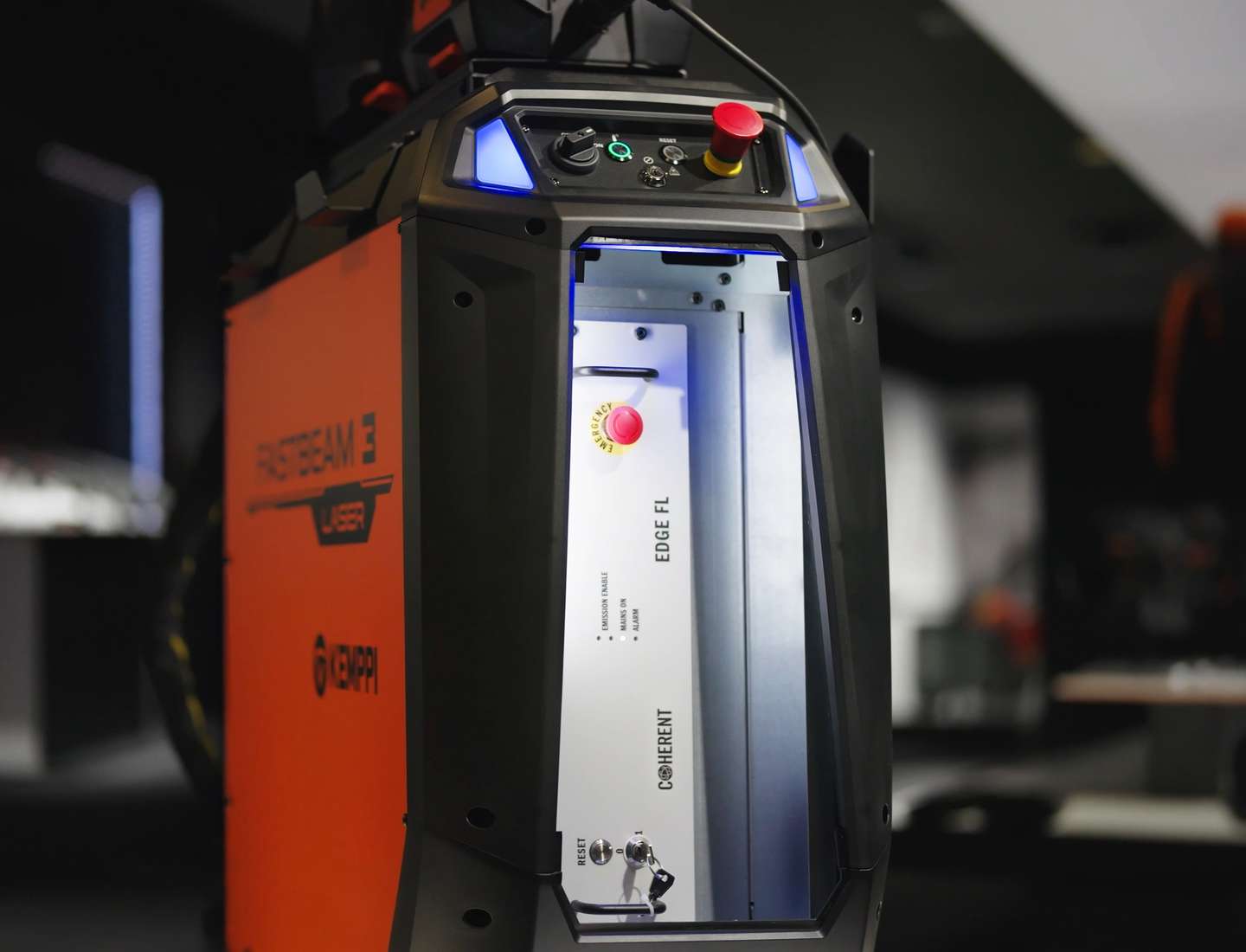
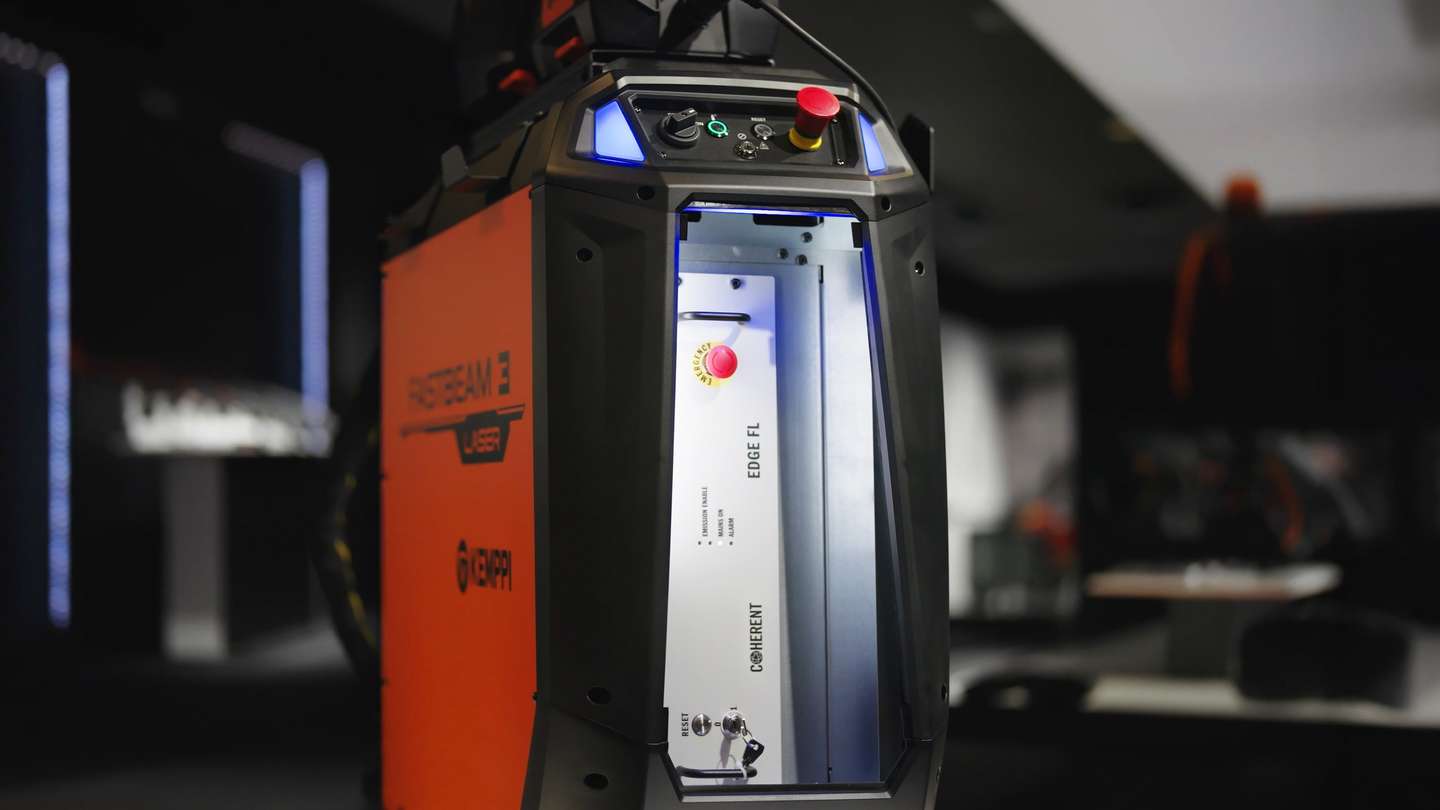
For FastBeam 3, Coherent Fiber Laser manufactures the 3 kW fiber laser module at the heart of the system, combining high optical power with an architecture suitable for a handheld industrial welding machine.
"The size is a big factor," explains Aku Antikainen, Laser Application Engineer at Coherent Fiber Laser. The challenge, he says, is achieving sufficiently high power while keeping the system compact enough for practical industrial use.
Generating 3 kW from a single laser module requires overcoming significant engineering constraints. As optical power increases, unwanted nonlinear effects such as stimulated Raman scattering become more difficult to manage. Optical losses can also generate substantial heat inside sensitive components.
At an output of 3 kW, even a 1% optical loss represents 30 watts of energy that may be converted into heat. Maintaining high optical efficiency therefore requires careful fiber design, clean optical interfaces and effective thermal management.
Coherent Fiber Laser's single-module approach provides FastBeam 3 with the required optical output without the additional complexity of combining several laser modules.
Why stable laser power matters to every weld
Power is one of the most visible specifications on a laser welding machine. Yet for consistent industrial welding, how precisely that power is delivered matters just as much as the maximum output.
A laser must reach its commanded power quickly, avoid excessive overshoot and maintain a stable output throughout the welding operation. "If the power fluctuates or degrades over time, then you're not going to get these consistent welds," Antikainen explains.
Changes in optical output can affect the molten pool, penetration depth and weld geometry. A fluctuating beam may lead to variations along a seam, while excessive or insufficient energy can increase the risk of defects.
Coherent Fiber Laser has made repeatability a major focus of its industrial fiber laser development. In published testing of its separate ARM laser family, 90 individual lasers set to deliver 2.575 kW demonstrated a standard deviation of just 5.4 W in measured output power, equivalent to approximately 0.2%.
Although these results relate to a different laser platform, they illustrate the company's engineering capability in achieving consistent optical output across manufactured units.
That level of manufacturing discipline is important to industrial customers because process repeatability depends on having a predictable starting point. If laser characteristics vary significantly, welding parameters may need to be adjusted between machines or over time.
Antikainen explains that Coherent Fiber Laser's testing pays particular attention to how rapidly the laser reaches its requested power and whether that output remains stable during sustained operation.
For a production manager, the implications are practical: fewer unexpected process variations, less time spent troubleshooting and greater confidence in the consistency of finished welds.
Tested and traceable in Tampere
At Coherent Fiber Laser, reliability is built into the manufacturing process.
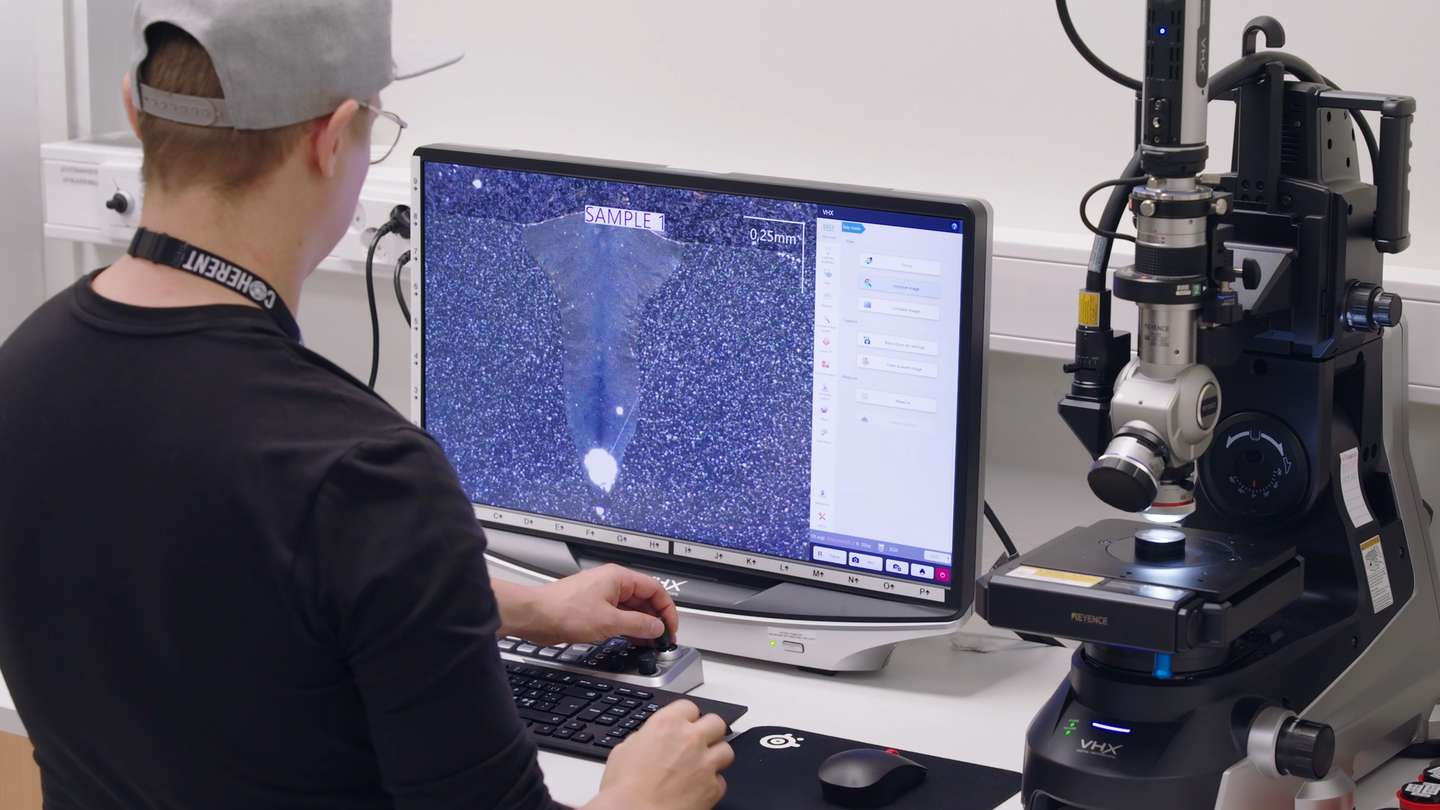
According to Antikainen, components are checked at different production stages, while completed laser modules undergo functional and performance testing before delivery. These tests include verifying output power and its stability during extended operation.
"There's a footprint of everything," Antikainen explains. If a component batch proves faulty, the company can trace the issue back through its manufacturing records.
For customers, this approach has value beyond quality assurance. Industrial equipment often operates within tightly scheduled production environments where unexpected failures can interrupt multiple downstream processes.
Traceability makes investigations more systematic, while thorough testing before delivery helps reduce the risk of equipment problems entering production.
For Antikainen, the confidence that comes from this process is also a source of professional pride. "I can stand behind our products," he says, reflecting on the testing and engineering behind the lasers manufactured in Tampere.
Coherent Fiber Laser's technology meets Kemppi's welding expertise
The laser module is only one part of what makes FastBeam 3 an industrial welding solution.
While Coherent Fiber Laser provides the technology for generating stable, high-power laser light, Kemppi integrates it into a complete system designed around welding performance, operator usability and industrial safety.
FastBeam 3 combines its water-cooled 3 kW laser source with Kemppi's Penetration Shape Control, allowing welders to adjust beam shape, balance, oscillation and power to suit different applications.
With adjustable beam oscillation from 0–5 mm at frequencies of 20–150 Hz, welders can control how energy is distributed across the joint and adapt the weld profile to different materials and joint geometries.
This is where optical performance becomes measurable production value. A stable laser source helps deliver predictable energy to the workpiece, while Kemppi's process controls determine how that energy is applied.
Concentrating heat precisely around the joint can reduce the heat-affected zone and limit distortion in suitable applications. Less distortion can mean fewer corrective operations, less finishing work and a lower cost per finished component.
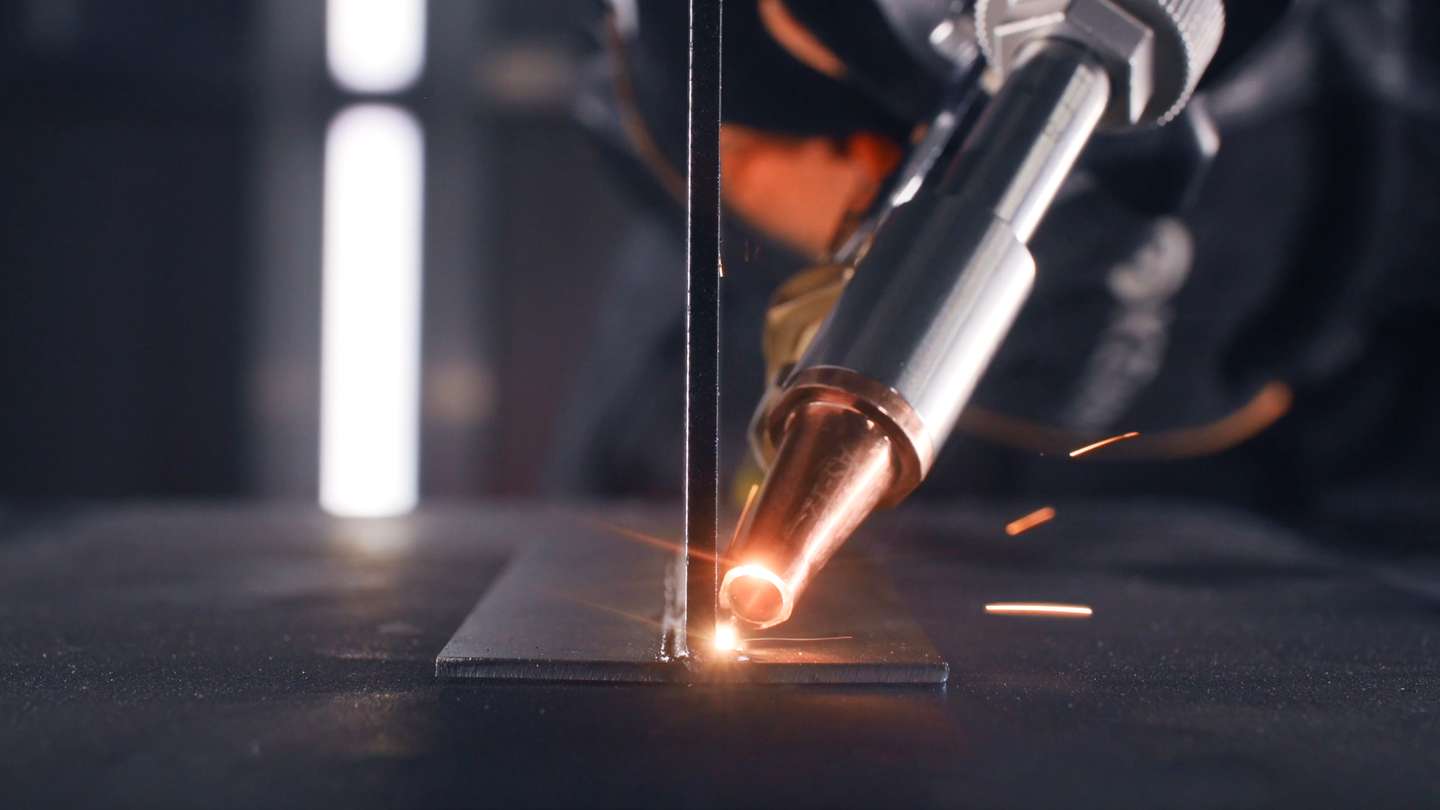
FastBeam 3 also addresses the practical requirements of industrial operation. Weld Assist guides users toward suitable starting parameters, while the water-cooled LT3 torch, optional filler-wire feeding and external chiller support varied production tasks.
The external chiller can be positioned outside the welding enclosure using 5 m or 10 m cooling hoses, helping reduce heat and noise around the operator while improving maintenance access.
For manufacturers, the benefit extends to the combination of controlled weld quality, efficient job changes, reduced secondary work and equipment designed for dependable operation.
Finnish expertise at laser speed
The strength of the collaboration lies in what each company contributes. While Coherent Fiber Laser produces and tests the laser module in Tampere, Kemppi develops and manufactures the complete FastBeam 3 system in Lahti, integrating the laser with welding process controls, safety functions and equipment designed for industrial use.
For manufacturers, this partnership brings something particularly valuable: confidence in what goes into the machine and what they can expect from it. FastBeam 3 includes automatic laser power cut-off with redundant protection, color-coded machine status indications and a limited start window after torch contact. These built-in functions support safe operation alongside the protective equipment, training and controlled working environment required for handheld Class 4 laser welding.
Antikainen believes further developments in optical fibers and laser wavelengths will continue expanding what industrial lasers can achieve. Different wavelengths can change how materials absorb laser energy, potentially opening opportunities to process materials that are currently difficult to weld or cut efficiently.
For Kemppi, FastBeam 3 represents an important step in bringing this technology into everyday industrial fabrication.

Varsha Saraogi
Varsha Saraogi
Proviene dal mondo del giornalismo e della strategia editoriale e apporta una prospettiva B2B internazionale ai contenuti e alla comunicazione di Kemppi. Appassionata per la creazione di storie che mettano in relazione la tecnologia di saldatura con le persone ed i settori industriali a cui si rivolge, combinando la sostanza tecnica con uno stile chiaro e coinvolgente. I suoi articoli sono stati pubblicati su riviste specializzate quali Airport Technology, Railway Technology, Ship Technology, FinTech Global e RegTech Analyst, a testimonianza della sua esperienza in un’ampia gamma di settori industriali e commerciali.
Prodotti correlati
Famiglia di prodotti
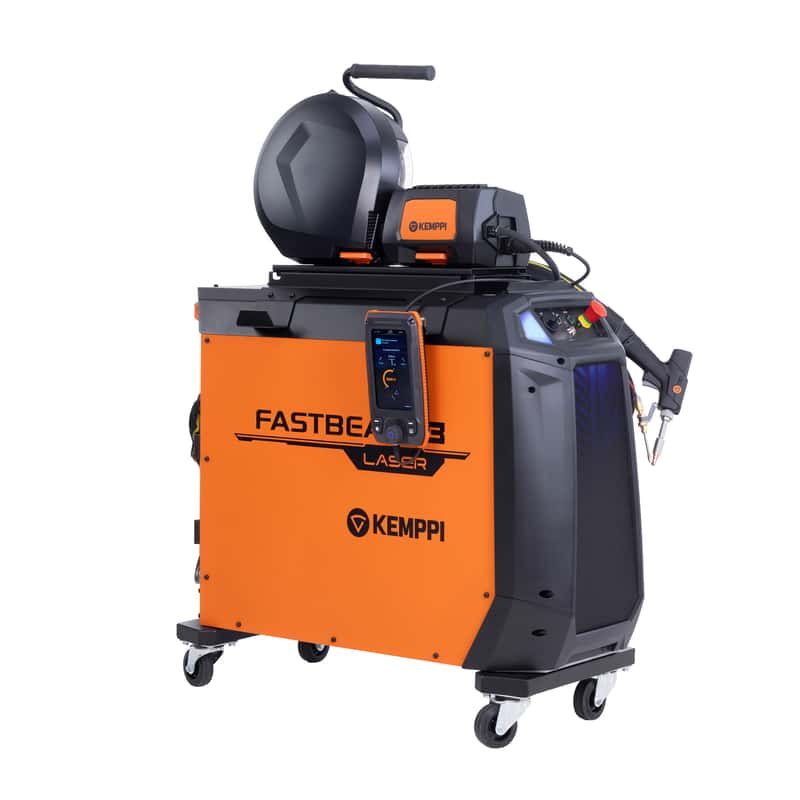
FastBeam 3 è una saldatrice laser a fibra manuale da 3 kW, prodotta in Finlandia, per la saldatura rapida e controllata di acciaio, acciaio inox e alluminio. Il Penetration Shape Control e l’integrazione di Weld Assist consentono una regolazione precisa del processo, una preparazione più rapida e la tracciabilità digitale nella saldatura laser industriale.
Altri articoli del blog
Come la saldatura laser potrebbe trasformare la produzione industriale entro il 2035
La saldatura laser sta già cambiando la velocità con cui i produttori possono lavorare. Ma il suo potenziale maggiore risiede in ciò che accade attorno alla saldatura. Dalla scarsità di competenze e dai cambi di produzione più rapidi fino a un controllo della qualità più tempestivo e a un migliore utilizzo della capacità produttiva, analizziamo come il laser potrebbe trasformare la fabbricazione entro il 2035.
Saldatura manuale, L'innovazione
Cosa rivelano 10.000 saldature sulla produttività della saldatura laser
Quanto costa davvero una saldatura? Partendo dai test comparativi Kemppi tra saldatura laser, MAG e TIG, l’articolo va oltre la velocità per analizzare ore di lavoro, gas di protezione, materiale d’apporto, apporto termico e lavorazioni successive. Scopri come piccole differenze, moltiplicate per grandi volumi, possono influire su capacità produttiva, produttività e ritorno sull’investimento.
L'innovazione, Saldatura manuale
Come Rapid Welding e Kemppi hanno costruito una partnership che dura nel tempo
Rapid Welding collabora con Kemppi fin dalla propria fondazione, nel 1990. Roy Edwards, cofondatore e amministratore delegato, illustra i principi alla base di questa partnership lunga 36 anni: dalla scelta della soluzione di saldatura più adatta e dall'assistenza alle apparecchiature lungo tutto il loro ciclo di vita, fino alla carenza di competenze e alla ricerca del ruolo più appropriato per l'automazione e la saldatura laser.
Automazione della saldatura, Saldatura manuale, ABC della saldatura
Safety that keeps up with welders' challenges and changing risks
Welding safety has become increasingly demanding. The hazards at the arc remain constant, but modern working conditions mean exposure can accumulate over longer shifts and in tighter indoor spaces. As a result, welding PPE needs to be treated as both protection for the welder and proof of compliance. At Kemppi, welding safety PPE is designed and validated in practice through clear requirements, welder-led feedback, and verified compliance with EU PPE Regulation 2016/425, CE marking processes, and relevant EN standards.
Sicurezza, ABC della saldatura
Eurosatory 2026 e il futuro dell'industria della difesa
Eurosatory 2026 ha messo in luce un netto cambiamento nel settore della produzione moderna nel campo della difesa. Sebbene i sistemi di difesa stiano diventando sempre più digitali, interconnessi ed autonomi, la loro base rimane fisica. Dai veicoli corazzati all’artiglieria, passando per la resilienza industriale, la qualità della saldatura, le strutture in acciaio e la disciplina produttiva rimangono fondamentali per la prontezza operativa nel settore della difesa.
Digitalizzazione, L'innovazione
How AI Supports Quality, Traceability, and Flexibility in Robotic Welding
The AITOOLS1 webinar explored how AI-assisted process control, machine vision, synchronized data, and machine learning models are advancing robotic welding automation, improving quality management, traceability, and production flexibility for demanding industrial production.
Automazione della saldatura, L'innovazione, Digitalizzazione