Automatyzacja spawania
What Nordic Welding Expo 2026 revealed: robotics, laser welding and the future of fabrication
26 marca 2026
The Nordic Welding Expo 2026 highlighted where welding is heading. While automation and laser welding are accelerating, the real advantage lies in workflows that deliver repeatable results under real constraints and digital traceability is becoming part of everyday production
Varsha Saraogi
In the welding, robotic integration and manufacturing industries, the conversation is changing. At Nordic Welding Expo’s 20th edition in Tampere, that shift was impossible to miss: we’re moving from planning to implement automation to deploying technologies that can be integrated smoothly as well as survive production challenges such as changing variation, time pressure, mixed materials and the daily grind of getting consistent results.
We heard from some of the leading firms in robotics such as ABB, Yaskawa, Robomatik and Murri about what’s next in welding. Three themes came up: automation and laser welding with a refreshingly practical lens. And, how technology will change the role of the traditional welder.
1) Automation is no longer the question. Integration is the battleground.
Industrial robots are already scaling globally. Per the International Federation of Robotics, 542,000 industrial robots were installed in 2024 worldwide, and annual installations have stayed above 500,000 for four straight years. Admittedly, the consistent theme in conversations across the expo was that while the robot is crucial, the real challenge is integration. The most prominent issues facing companies are:
Fixturing and part variation: can the cell tolerate production reality?
Changeovers and programming time: is it flexible enough for high-mix production?
Operator adoption: can it be run confidently on the shop floor by welders and not just by specialists?
Traceability and proof: can one track the welds without creating admin overload?
Kemppi takeaway: Top priorities are repeatable arc performance, sensible parameter control, and tools that make it easier to standardize results across shifts and sites.
That’s why we design welding cells + workflows that tolerate the real production mess: part variation, awkward access, mixed batches, consumable wear. For Kemppi, helping customers turn automation and process choices into repeatable results, backed by traceability with WeldEye and training/services is what makes welding systems scalable.
2) Laser welding is moving from hype to strategy
Laser welding is already becoming a production strategy for manufacturers who chase tighter tolerances, higher throughput, and lower distortion, especially in high-volume environments where small improvements compound quickly.
Of course, arc processes remain the backbone of fabrication because they’re adaptable and more forgiving in the messy realities of gaps, variation, and positional work. Laser, by contrast, tends to win when the joint design and process control support it and where precision and low heat input translate into measurable gains.
Market signals back up that momentum. One major analysis values the laser welding machine market at USD 2.7B in 2024, projecting 5.2% CAGR through 2034, driven by advanced manufacturing needs, especially sectors like automotive, aerospace and medical devices.
3) Skills are still the multiplier
Even with automation rising, the craft isn’t going away, and neither is the need for skilled people. AWS-backed workforce data projects 320,500 new welding professionals needed in the U.S. by 2029, averaging 80,000 jobs to be filled annually by 2029. That shortage is exactly why companies should focus on: making quality repeatable, setups faster, and knowledge transferable across shifts.
The most exciting innovations go beyond new features. They are the things that help skilled welders scale quality so they can implement more stable results across positions and materials, better control the heat input, and get training in workflows that reduce variability and rework.
Kemppi takeaway: Modern welding systems demand disciplined setup, process understanding, and consistent execution. What we aim to solve through our structured training for welders: how quickly a new operator can produce a compliant weld; how consistently a team can follow WPS; how smoothly knowledge transfers across shifts and sites.
What stood out most was a clear north star: predictability. This means building welding systems defined by stable arc performance, intuitive parameter control, and digital workflows that remove friction from quality proof. Kemppi’s role sits right there - bringing equipment, WeldEye traceability, and hands-on support together so repeatable welding becomes repeatable output.

Varsha Saraogi
Varsha Saraogi
Hails from a background in journalism and editorial strategy and brings an international B2B perspective to content and communications at Kemppi. Passionate about creating stories that connect welding technology with the people and industries it serves, combining technical substance with a clear and engaging voice. Work has been published in specialist titles such as Airport Technology, Railway Technology, Ship Technology, FinTech Global, and RegTech Analyst, reflecting experience across a wide range of industrial and business sectors.
Powiązane produkty

MSM358G
Produkt
Kompaktowe urządzenie spawalnicze MIG/MAG z opcją spawania ręcznego, synergicznego (Auto) impulsowego (Auto Pulse) oraz spawania z podwójną pulsacją. Generuje prąd 350 A w 40%.cyklu pracy Inteligentne ustawianie parametrów spawania dzięki Weld Assist. Kolorowy wyświetlacz TFT z wbudowaną łącznością cyfrową z systemem WeldEye i oświetleniem roboczymi LED umożliwia bardzo wygodną obsługę. Zawiera programy spawania Work Pack obejmujące materiały Fe, Ss, Al, CuSi, CuAl, Fe metaliczny, Fe rutylowy, FC-CrNiMo. Sprawna praca z agregatem.
MSM358GM
Produkt
Kompaktowe urządzenie spawalnicze MIG/MAG z opcją spawania ręcznego, synergicznego (Auto) impulsowego (Auto Pulse) oraz spawania z podwójną pulsacją. Generuje prąd 350 A w 40%.cyklu pracy Inteligentne ustawianie parametrów spawania dzięki Weld Assist. Kolorowy wyświetlacz TFT z wbudowaną łącznością cyfrową z systemem WeldEye i oświetleniem roboczymi LED umożliwia bardzo wygodną obsługę. Zawiera programy spawania Work Pack obejmujące materiały Fe, Ss, Al, CuSi, CuAl, Fe metaliczny, Fe rutylowy, FC-CrNiMo. Zasilanie z agregatu i wielonapięciowe.
Rodzina produktów
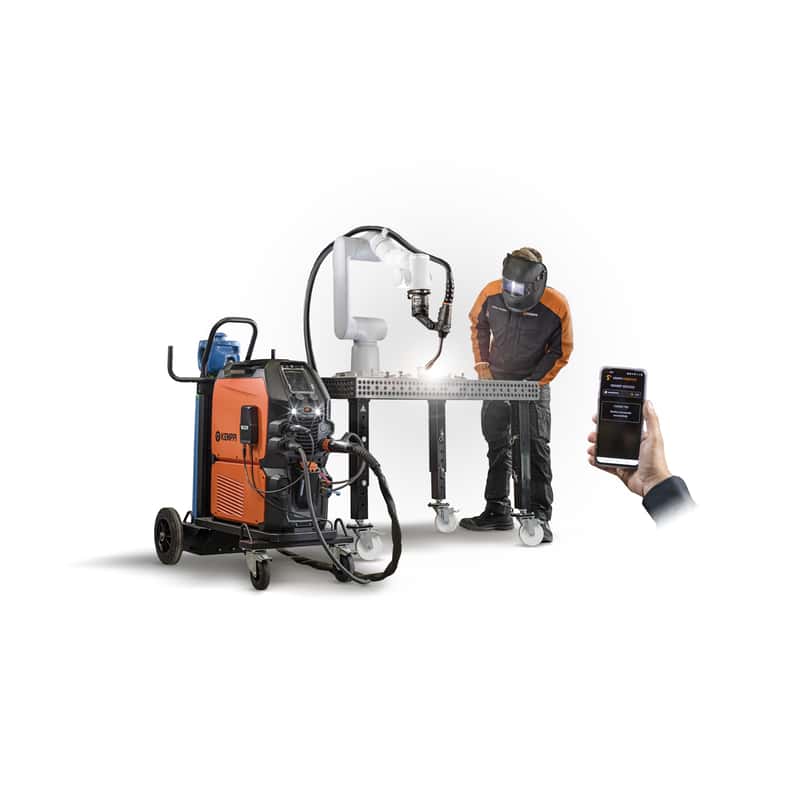
Rozwiązania Kemppi do spawania z użyciem cobotów mają usprawnioną konfigurację z elastycznymi opcjami zoptymalizowanymi pod kątem zautomatyzowanego spawania w różnych warunkach. Nasze portfolio opracowane z myślą o niezawodności, precyzji i wysokiej wydajności, obejmuje modele Master M i X5 FastMig, a także system spawania z użyciem cobota AX z zaawansowanymi funkcjami automatyzacji przeznaczony do bardziej wymagających warunków przemysłowych.
Więcej postów na blogu
Jak Kemppi pomaga partnerom odnosić sukcesy w spawaniu z wykorzystaniem kobotów
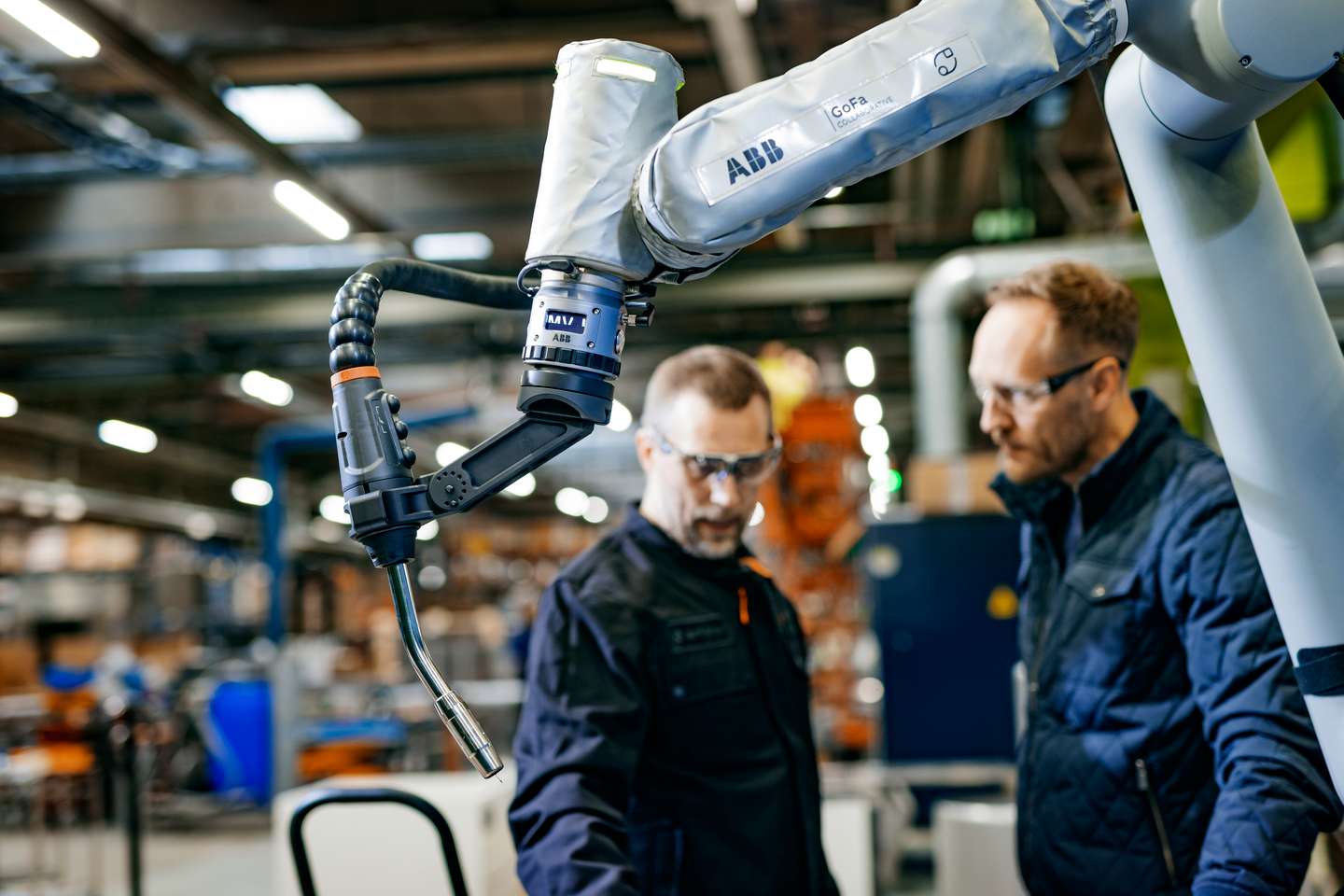
W tym artykule rozmawiamy o dynamicznie zmieniającym się rynku spawania z wykorzystaniem kobotów z dwoma ekspertami: Alessio Cocchi, globalnym menedżerem ds. sprzedaży i marketingu kobotów w ABB, oraz Jakubem Bancerem, menedżerem ds. kluczowych klientów w FANUC.
Automatyzacja spawania, Ludzie
Jak oprogramowanie do zarządzania spawaniem WeldEye wyznacza standardy identyfikowalności spawania
Identyfikowalność spawania staje się coraz bardziej istotnym wymogiem w branżach, w których bezpieczeństwo, jakość i zgodność z przepisami są najważniejsze.
Cyfryzacja
Kompleksowe rozwiązanie firmy Kemppi do spawania z wykorzystaniem Kobotów
Branża spawalnicza znajduje się pod ciągłą presją, aby zwiększać produktywność, utrzymywać wysoką jakość i radzić sobie z rosnącym niedoborem wykwalifikowanej siły roboczej. Roboty współpracujące (koboty) zapewniają elastyczny i wydajny sposób automatyzacji zadań spawalniczych bez pełnego zastępowania operatora. Rozwiązanie Kemppi do spawania z zastosowaniem kobotów wyróżnia się wyjątkowym podejściem: praktycznym, opłacalnym połączeniem sprawdzonej technologii spawania ręcznego i inteligentnych narzędzi integracyjnych.
Automatyzacja spawania
Jak Rapid Welding i Kemppi zbudowały partnerstwo na lata
Rapid Welding współpracuje z Kemppi od chwili założenia firmy w 1990 roku. Roy Edwards, współzałożyciel i dyrektor zarządzający, przedstawia zasady, na których opiera się to 36-letnie partnerstwo: od doboru właściwego rozwiązania spawalniczego i wsparcia urządzeń przez cały okres ich eksploatacji po przeciwdziałanie niedoborowi wykwalifikowanych pracowników oraz znajdowanie odpowiedniego miejsca dla automatyzacji i spawania laserowego.
Automatyzacja spawania, Spawanie ręczne, ABC spawania
Bezpieczeństwo, które nadąża za wyzwaniami spawaczy i zmieniającymi się zagrożeniami
Bezpieczeństwo spawania staje się coraz bardziej wymagające. Choć same zagrożenia generowane przez łuk spawalniczy się nie zmieniają, to w dzisiejszych realiach przemysłowych ekspozycja na nie ulega kumulacji - głównie za sprawą dłuższych zmian roboczych oraz pracy w bardziej ograniczonych, zamkniętych przestrzeniach. W związku z tym, spawalnicze środki ochrony indywidualnej (ŚOI) należy traktować nie tylko jako bezpośrednie zabezpieczenie spawacza, ale również jako dowód zgodności z obowiązującymi normami. W Kemppi ŚOI zwiększające bezpieczeństwo spawania są projektowane i weryfikowane w praktyce na podstawie jasnych wymagań, opinii spawaczy oraz potwierdzonej zgodności z rozporządzeniem UE 2016/425 w sprawie ŚOI, procedurami oznakowania CE i odpowiednimi normami EN.
Bezpieczeństwo, ABC spawania
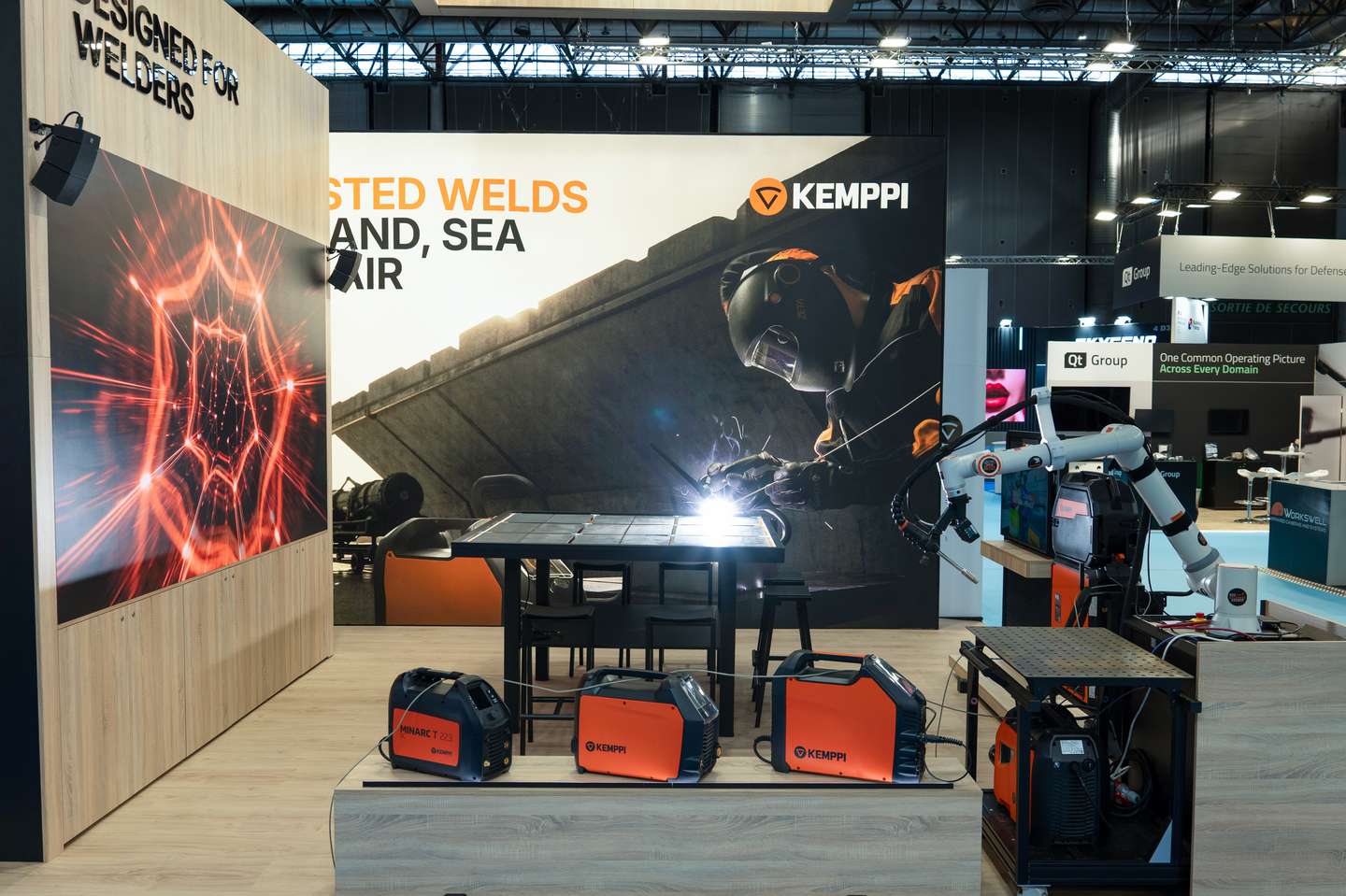
Eurosatory 2026 And the Future of Defence Manufacturing
Eurosatory 2026 highlighted a clear shift in modern defence manufacturing. While defence systems are becoming more digital, networked, and autonomous, their foundation remains physical. From armoured vehicles and artillery to industrial resilience, welding quality, steel structures, and production discipline remain paramount to defence readiness.
Cyfryzacja, Innowacja