Manuel svejsning
Magnetism in welding: how to deal with magnetic blow
24. november 2025
When welding ferritic steels, especially high-strength grades, magnetic blow can become a real challenge. This phenomenon occurs when magnetic fields interfere with the welding arc, causing instability, spatter, and sometimes making welding almost impossible.
Jani Kumpulainen
Why Magnetic Blow Happens
Magnetic blow is caused by residual magnetism in the steel. High-strength steels, with their fine grain structure, tend to retain magnetism more easily than regular mild steels. Magnetism can be introduced into the material in several ways — for example:
Magnetic lifting cranes commonly used in production halls
Previous welding operations, especially when using high DC current
Once the material becomes magnetized, the magnetic field can distort the electric arc and push it away from the weld joint.
How It Affects Welding
Magnetic blow can disturb all types of arc welding processes.
Pulse MAG welding is particularly sensitive to it.
TIG and MMA (stick welding) are also heavily affected.
Short arc welding is the least sensitive, but still not immune.
In practice, magnetic blow causes arc instability, spatter, and arc breaks. In severe cases, welding becomes impossible because the arc refuses to stay in its intended position.
How to Measure Magnetism
Magnetic fields in steel can be measured using a gaussmeter or magnetometer, typically in millitesla (mT). While there is no exact threshold, both tests and experience show that:
Around 5–20 mT can already affect arc stability
Over 20 mT often causes major welding issues
If a measuring device isn’t available, a quick practical test can help. A thin steel sheet can reveal magnetism if it sticks to the end of a pipe (see Picture 1).
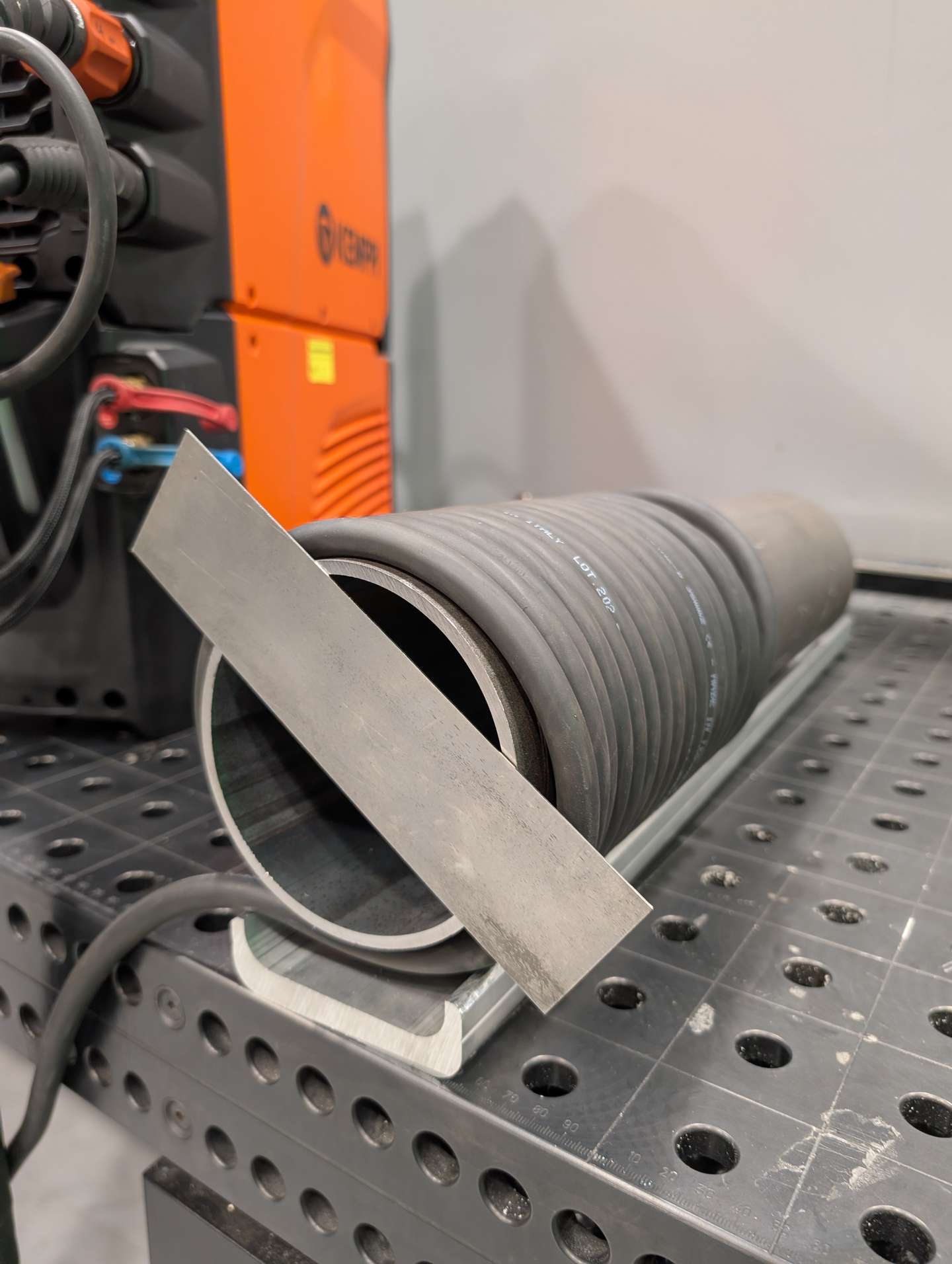
A thin steel plate stays attached to the pipe due to magnetism.
How to Remove Magnetism
Magnetism can be removed from steel parts using AC current. Traditionally, this requires wrapping a cable around the workpiece and carefully reducing the alternating current to zero—a method that can be quite tricky without specialized equipment.
Now, there’s an easier way.
Kemppi’s new Master T TIG machine family includes an automatic demagnetization function in all AC/DC models. The process is simple: Just follow the on-screen instructions, press the START button, and in about 30 seconds, the magnetism is gone. No extra tools needed.
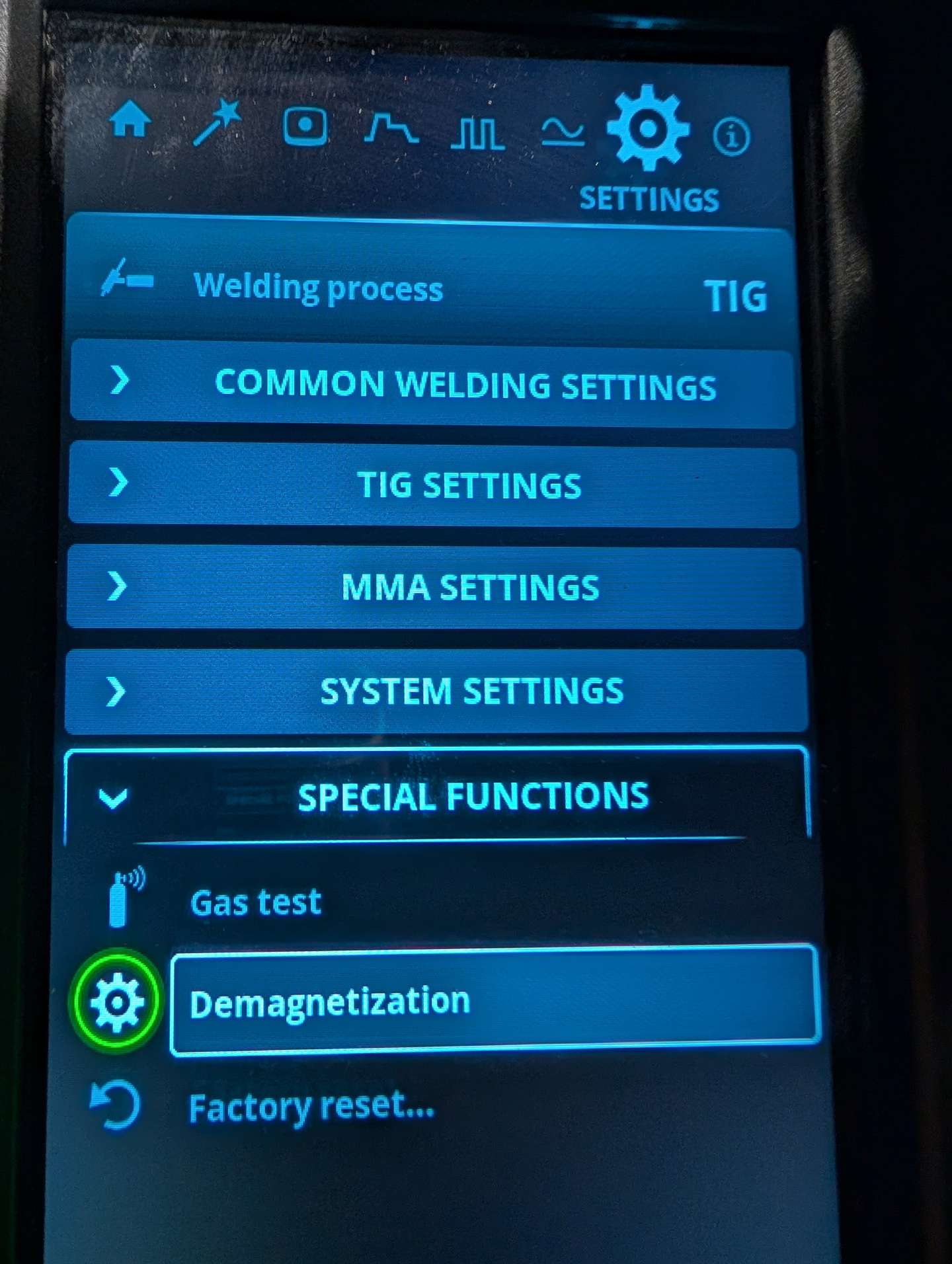
The demagnetizing function in the Kemppi Master T 355 AC/DC.
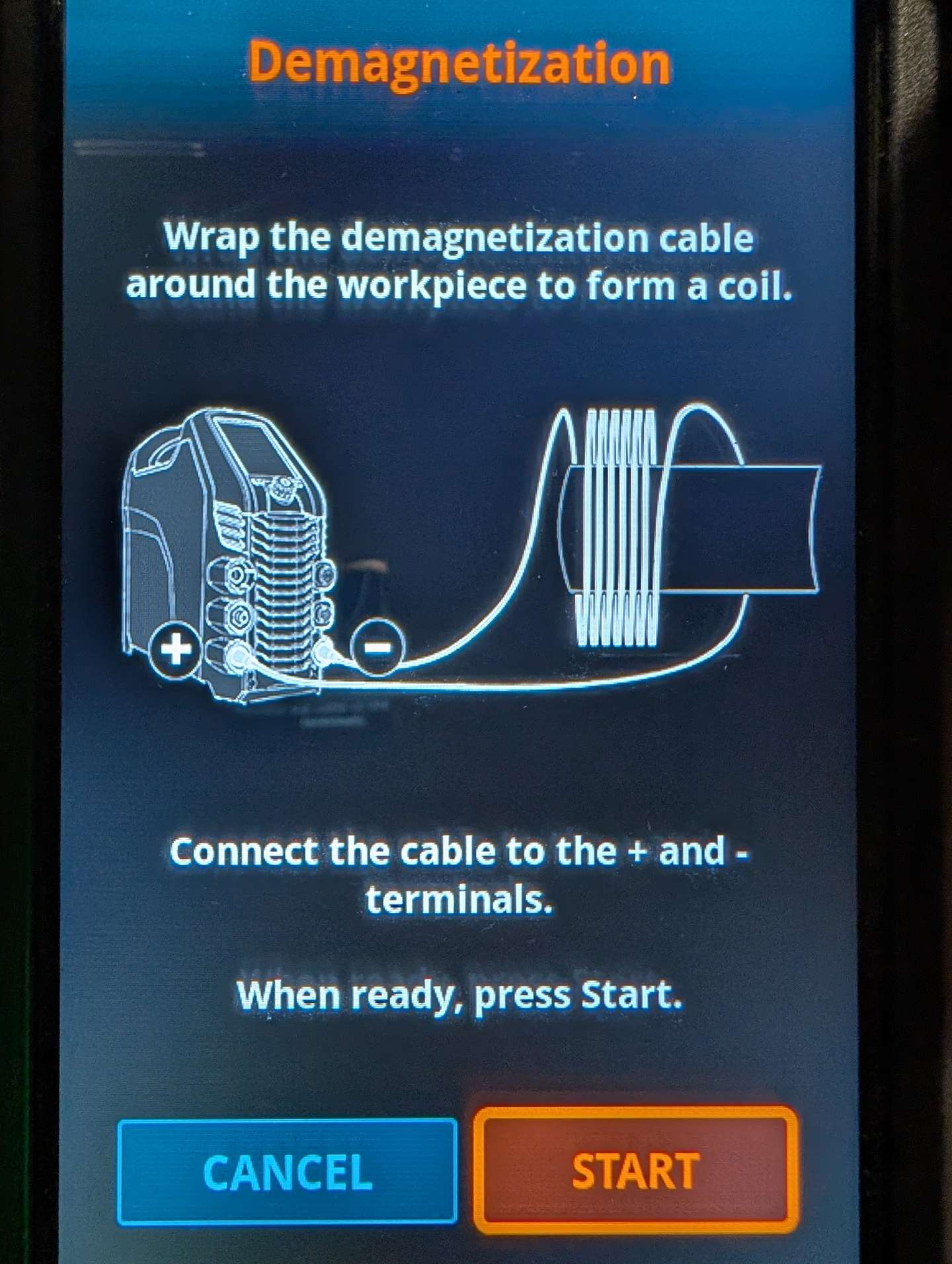
The demagnetizing function in the Kemppi Master T 355 AC/DC.
Case Example – SSAB Raex 500 Steel
High-strength and wear-resistant steels, such as SSAB Raex 500, are especially prone to magnetism issues. The following video demonstrates how the Kemppi Master T 355 AC/DC can effectively demagnetize such material, restoring stability and smoothness to the welding process.
Jani Kumpulainen
Jani Kumpulainen
Welding Technology Manager at Kemppi Oy. International Welding Engineer (IWE) and Inspector (IWI-C) who has over 15 years of experience as a welding expert in welding process development, welding coordination of pressure vessels and international sales. Interested in understanding the whole welding industry including welding processes, weldable materials, and welding quality standards.
Relaterede produkter
Produktfamilie
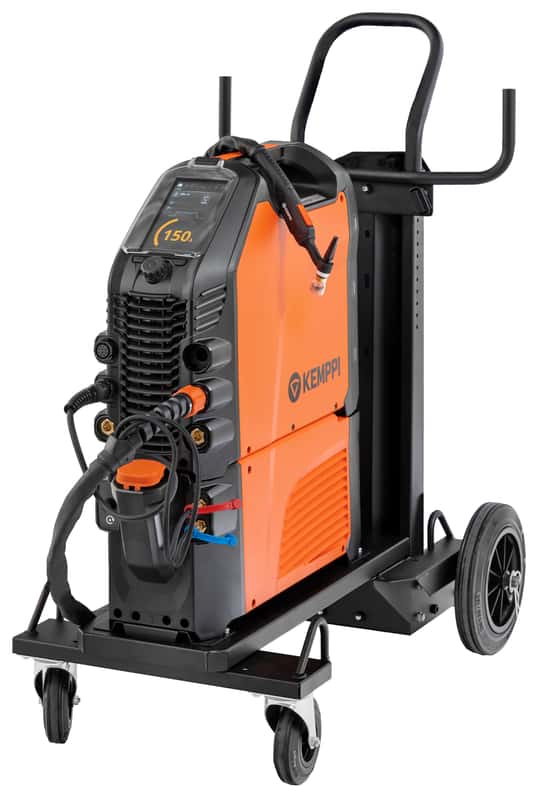
Master T er en førsteklasses TIG-svejsemaskine til professionel AC DC TIG-svejsning. Den leverer en enestående svejsekvalitet, præcision og energieffektivitet. Med avancerede funktioner som MAX WeldClean og afmagnetiseringstilstand øger den produktiviteten og sikrer ensartede resultater.
Flere blogindlæg
How does steel welding benefit from special processes?
Welding mild steels may often be considered a simple task. However, welding these steels has specific characteristics that can make the welding process challenging.
Manuel svejsning, Svejsningens ABC
TIG-svejsning
Anvendelsesformål, svejsere, teknikker til TIG-svejsning
Svejsningens ABC
Kemppi's advanced welding processes: MIG/MAG welding
One of the most important elements in developing welding equipment has long been improving welding processes and creating new process variations. Modern measurement and arc control methods have made a wide range of variations in the arc welding process possible. These advanced welding processes significantly improve welding production efficiency and weld quality. This article presents the special processes and operations developed by Kemppi for MIG/MAG welding.
Svejsningens ABC, Manuel svejsning
How Rapid Welding and Kemppi Built a Partnership That Lasts
Rapid Welding has worked with Kemppi since the company opened in 1990. Co-founder and Managing Director Roy Edwards highlighted the principles behind that 36-year partnership, from choosing the right welding solution and supporting equipment throughout its life to addressing the skills shortage and finding the right place for automation and laser welding.
Automatisering af svejsning, Manuel svejsning, Svejsningens ABC
Sikkerhed, der holder trit med svejsernes udfordringer og skiftende risici
Svejsesikkerhed er blevet stadig mere krævende. Risikoen er den samme, men moderne arbejdsforhold betyder, at eksponeringen kan hobe sig op i løbet af længerevarende arbejdsskift og i trange indendørs rum. Det betyder, at personlige værnemidler til svejsning både skal ses som beskyttelse af svejseren og som overholdelse af regler. Hos Kemppi designes og valideres personlige værnemidler til svejsesikkerhed i praksis gennem klare krav, feedback fra svejsere og verificeret overholdelse af EU's PPE-forordning 2016/425, CE-mærkningsprocesser og relevante EN-standarder.
Sikkerhed, Svejsningens ABC
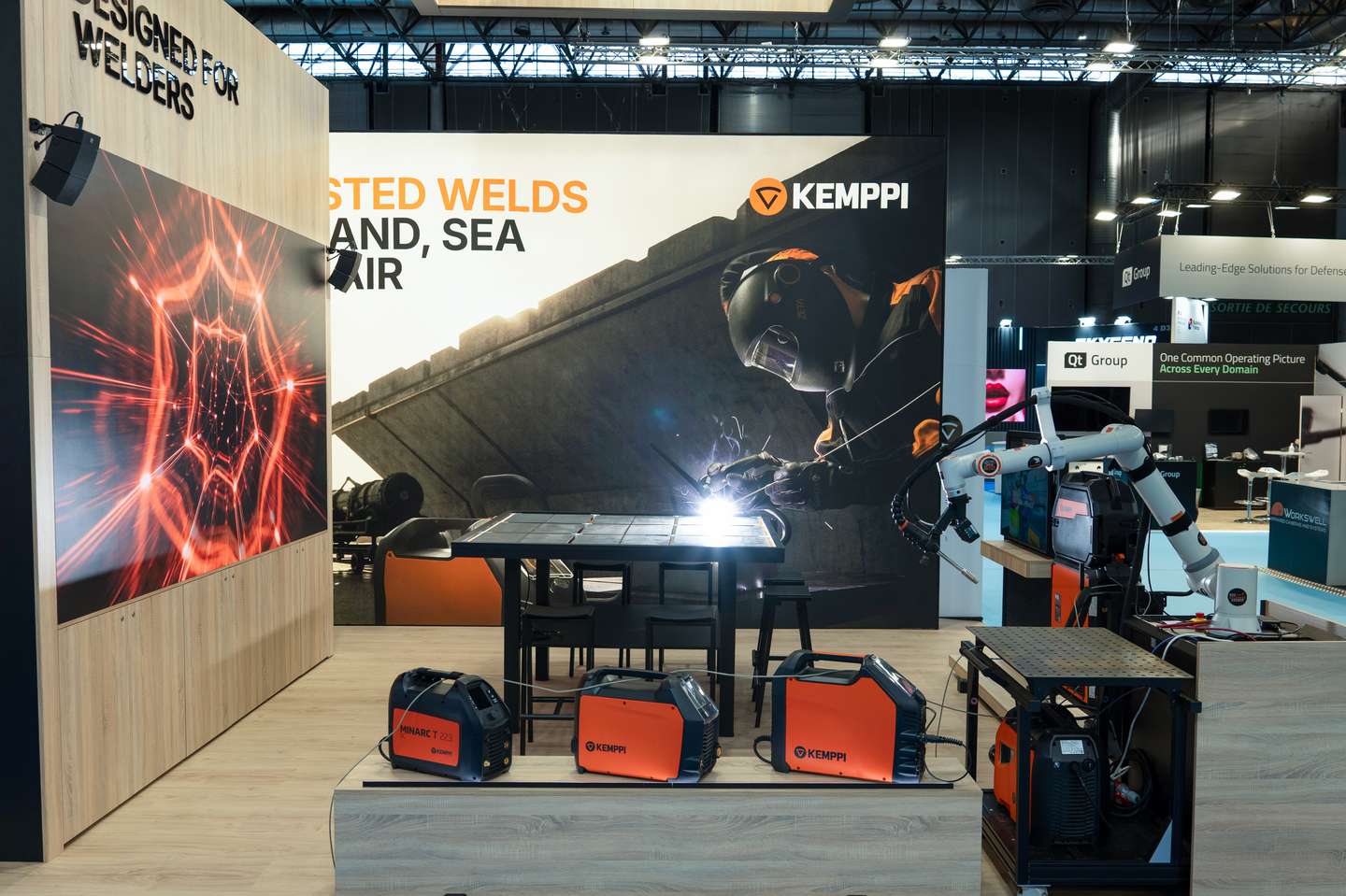
Eurosatory 2026 And the Future of Defence Manufacturing
Eurosatory 2026 highlighted a clear shift in modern defence manufacturing. While defence systems are becoming more digital, networked, and autonomous, their foundation remains physical. From armoured vehicles and artillery to industrial resilience, welding quality, steel structures, and production discipline remain paramount to defence readiness.
Digitalisering, Innovation