Automatisierung beim Schweißen
What Nordic Welding Expo 2026 revealed: robotics, laser welding and the future of fabrication
26. März 2026
The Nordic Welding Expo 2026 highlighted where welding is heading. While automation and laser welding are accelerating, the real advantage lies in workflows that deliver repeatable results under real constraints and digital traceability is becoming part of everyday production
Varsha Saraogi
In the welding, robotic integration and manufacturing industries, the conversation is changing. At Nordic Welding Expo’s 20th edition in Tampere, that shift was impossible to miss: we’re moving from planning to implement automation to deploying technologies that can be integrated smoothly as well as survive production challenges such as changing variation, time pressure, mixed materials and the daily grind of getting consistent results.
We heard from some of the leading firms in robotics such as ABB, Yaskawa, Robomatik and Murri about what’s next in welding. Three themes came up: automation and laser welding with a refreshingly practical lens. And, how technology will change the role of the traditional welder.
1) Automation is no longer the question. Integration is the battleground.
Industrial robots are already scaling globally. Per the International Federation of Robotics, 542,000 industrial robots were installed in 2024 worldwide, and annual installations have stayed above 500,000 for four straight years. Admittedly, the consistent theme in conversations across the expo was that while the robot is crucial, the real challenge is integration. The most prominent issues facing companies are:
Fixturing and part variation: can the cell tolerate production reality?
Changeovers and programming time: is it flexible enough for high-mix production?
Operator adoption: can it be run confidently on the shop floor by welders and not just by specialists?
Traceability and proof: can one track the welds without creating admin overload?
Kemppi takeaway: Top priorities are repeatable arc performance, sensible parameter control, and tools that make it easier to standardize results across shifts and sites.
That’s why we design welding cells + workflows that tolerate the real production mess: part variation, awkward access, mixed batches, consumable wear. For Kemppi, helping customers turn automation and process choices into repeatable results, backed by traceability with WeldEye and training/services is what makes welding systems scalable.
2) Laser welding is moving from hype to strategy
Laser welding is already becoming a production strategy for manufacturers who chase tighter tolerances, higher throughput, and lower distortion, especially in high-volume environments where small improvements compound quickly.
Of course, arc processes remain the backbone of fabrication because they’re adaptable and more forgiving in the messy realities of gaps, variation, and positional work. Laser, by contrast, tends to win when the joint design and process control support it and where precision and low heat input translate into measurable gains.
Market signals back up that momentum. One major analysis values the laser welding machine market at USD 2.7B in 2024, projecting 5.2% CAGR through 2034, driven by advanced manufacturing needs, especially sectors like automotive, aerospace and medical devices.
3) Skills are still the multiplier
Even with automation rising, the craft isn’t going away, and neither is the need for skilled people. AWS-backed workforce data projects 320,500 new welding professionals needed in the U.S. by 2029, averaging 80,000 jobs to be filled annually by 2029. That shortage is exactly why companies should focus on: making quality repeatable, setups faster, and knowledge transferable across shifts.
The most exciting innovations go beyond new features. They are the things that help skilled welders scale quality so they can implement more stable results across positions and materials, better control the heat input, and get training in workflows that reduce variability and rework.
Kemppi takeaway: Modern welding systems demand disciplined setup, process understanding, and consistent execution. What we aim to solve through our structured training for welders: how quickly a new operator can produce a compliant weld; how consistently a team can follow WPS; how smoothly knowledge transfers across shifts and sites.
What stood out most was a clear north star: predictability. This means building welding systems defined by stable arc performance, intuitive parameter control, and digital workflows that remove friction from quality proof. Kemppi’s role sits right there - bringing equipment, WeldEye traceability, and hands-on support together so repeatable welding becomes repeatable output.

Varsha Saraogi
Varsha Saraogi
Hails from a background in journalism and editorial strategy and brings an international B2B perspective to content and communications at Kemppi. Passionate about creating stories that connect welding technology with the people and industries it serves, combining technical substance with a clear and engaging voice. Work has been published in specialist titles such as Airport Technology, Railway Technology, Ship Technology, FinTech Global, and RegTech Analyst, reflecting experience across a wide range of industrial and business sectors.
Verwandte Produkte

MSM358G
Produkt
Kompaktes MIG/MAG-Schweißgerät mit den Prozessen manuell, synergetisch (Auto), Puls (Auto Pulse) und Doppelpuls. 350 A mit 40 % Einschaltdauer. Intelligentes Einstellen der Schweißparameter mit Weld Assist. TFT-Vollfarbdisplay mit integrierter digitaler Vernetzbarkeit zu WeldEye und LED-Arbeitsleuchten für hervorragende Handhabung. Inkl. Workpack mit Kennlinien für Fe, Ss, Al, CuSi, CuAl, Fe-Metall, Fe-Rutil, FC-CrNiMo. Generatortauglich.
MSM358GM
Produkt
Kompaktes MIG/MAG-Schweißgerät mit den Prozessen manuell, synergetisch (Auto), Puls (Auto Pulse) und Doppelpuls. 350 A mit 40 % Einschaltdauer. Intelligentes Einstellen der Schweißparameter mit Weld Assist. TFT-Vollfarbdisplay mit integrierter digitaler Vernetzbarkeit zu WeldEye und LED-Arbeitsleuchten für hervorragende Handhabung. Inkl. Workpack mit Kennlinien für Fe, Ss, Al, CuSi, CuAl, Fe-Metall, Fe-Rutil, FC-CrNiMo. Generator- und Mehrspannungsbetrieb möglich.
Produktfamilie
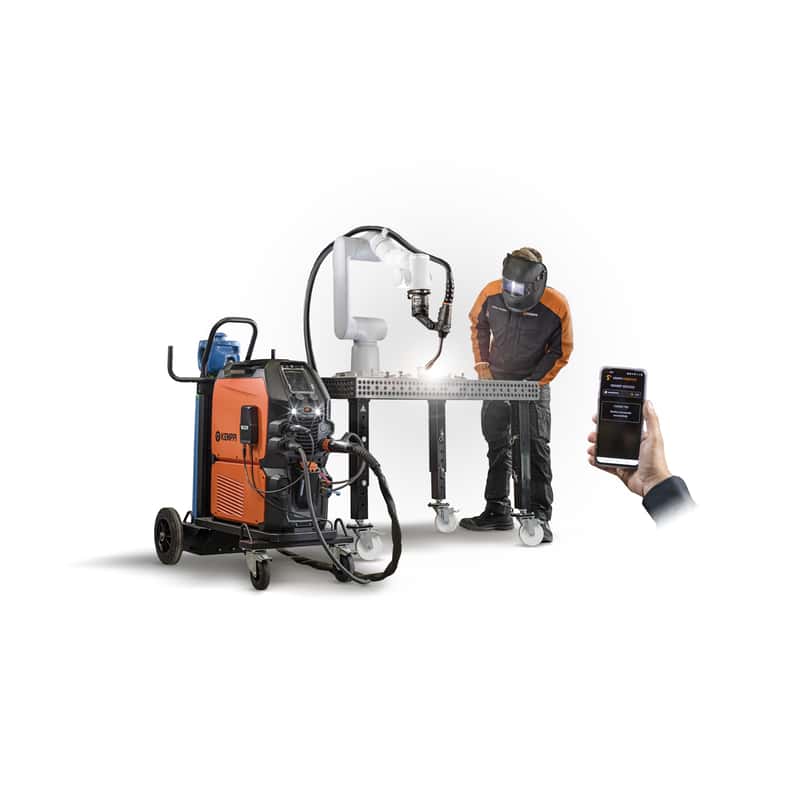
Kemppi ermöglicht das unkomplizierte und schnelle Einrichten von Cobot-Schweißlösungen. Sie bestehen aus einer Schweißmaschine (mit Stromquelle, Drahtvorschubgerät und Schweißbrenner) als Basis, dem kompakten Digital Connectivity Module (DCM), dem GX/GF-Brennerhalter und der Mobilapp Kemppi Cobotics.
Weitere Blog-Beiträge
Wie Kemppi seinen Partnern zum Erfolg beim Cobot-Schweißen verhilft
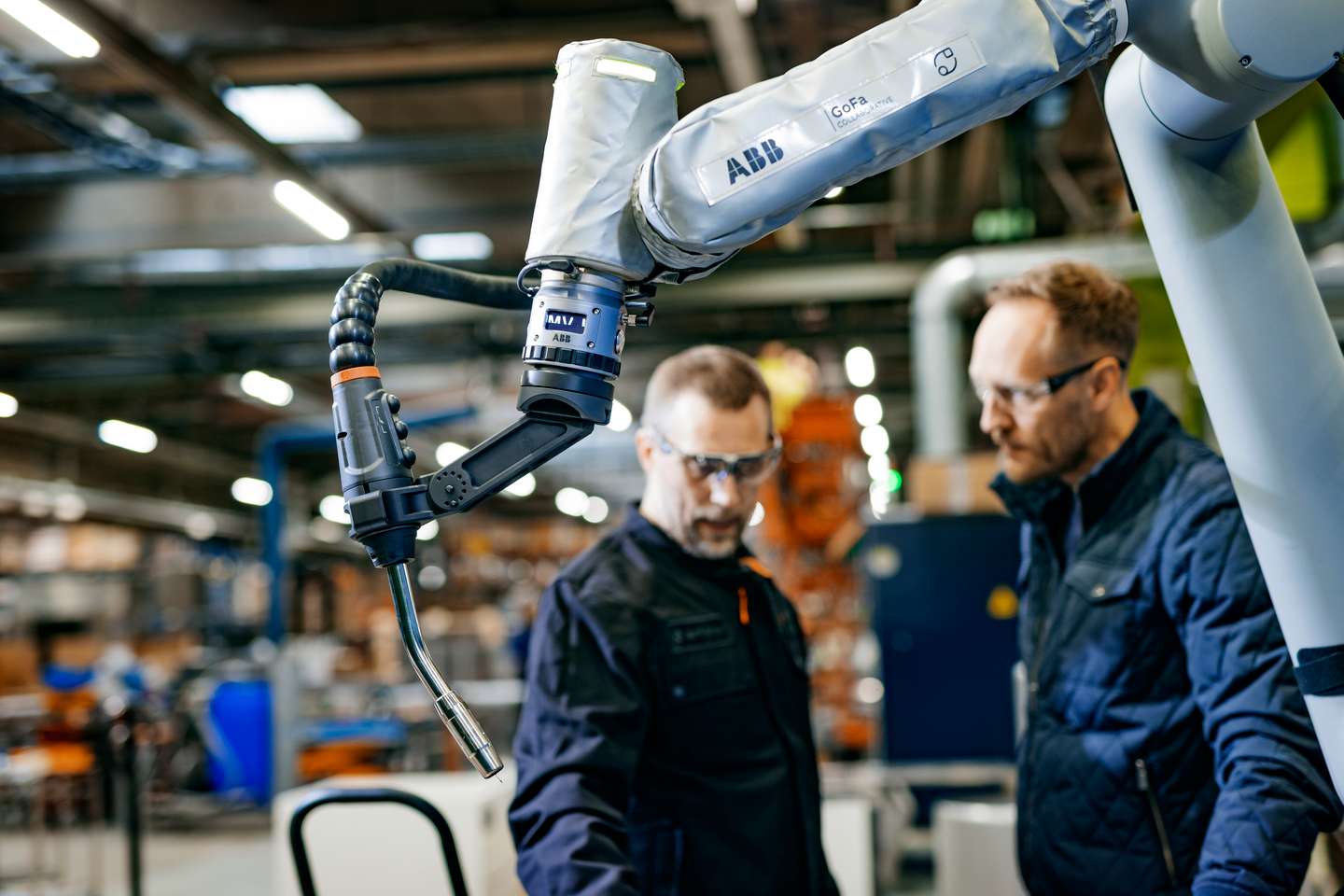
In diesem Artikel sprechen wir mit zwei Branchenexperten über die sich entwickelnde Landschaft des Cobot-Schweißens: Alessio Cocchi, Global Cobot Sales & Marketing Manager bei ABB, und Jakub Bancer, Key Account Manager bei FANUC.
Automatisierung beim Schweißen, Menschen
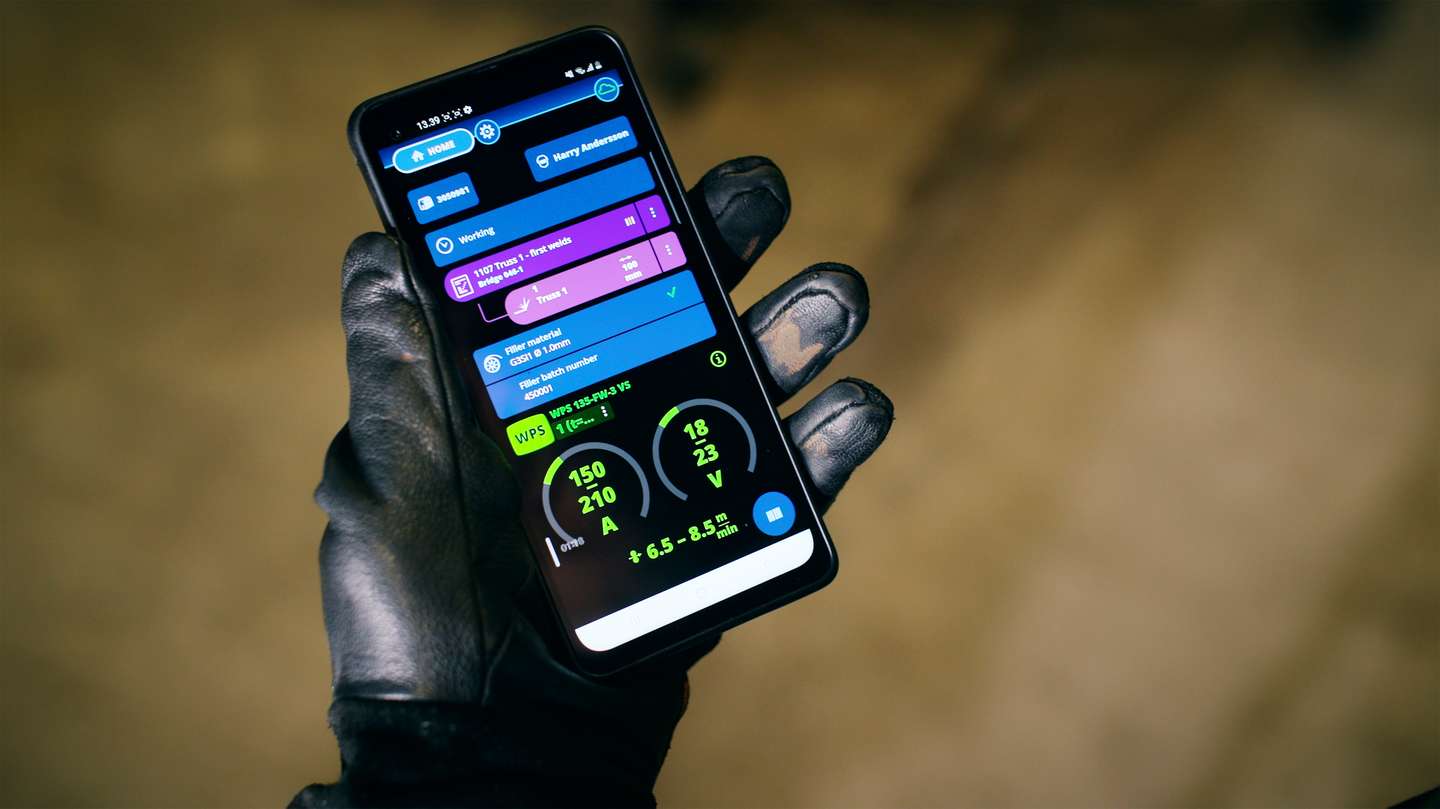
Wie die Schweißmanagement-Software WeldEye den Standard für die Rückverfolgbarkeit von Schweißarbeiten setzt
Die Rückverfolgbarkeit von Schweißnähten wird zu einer immer wichtigeren Anforderung in Branchen, in denen Sicherheit, Qualität und Konformität an erster Stelle stehen.
Digitalisierung
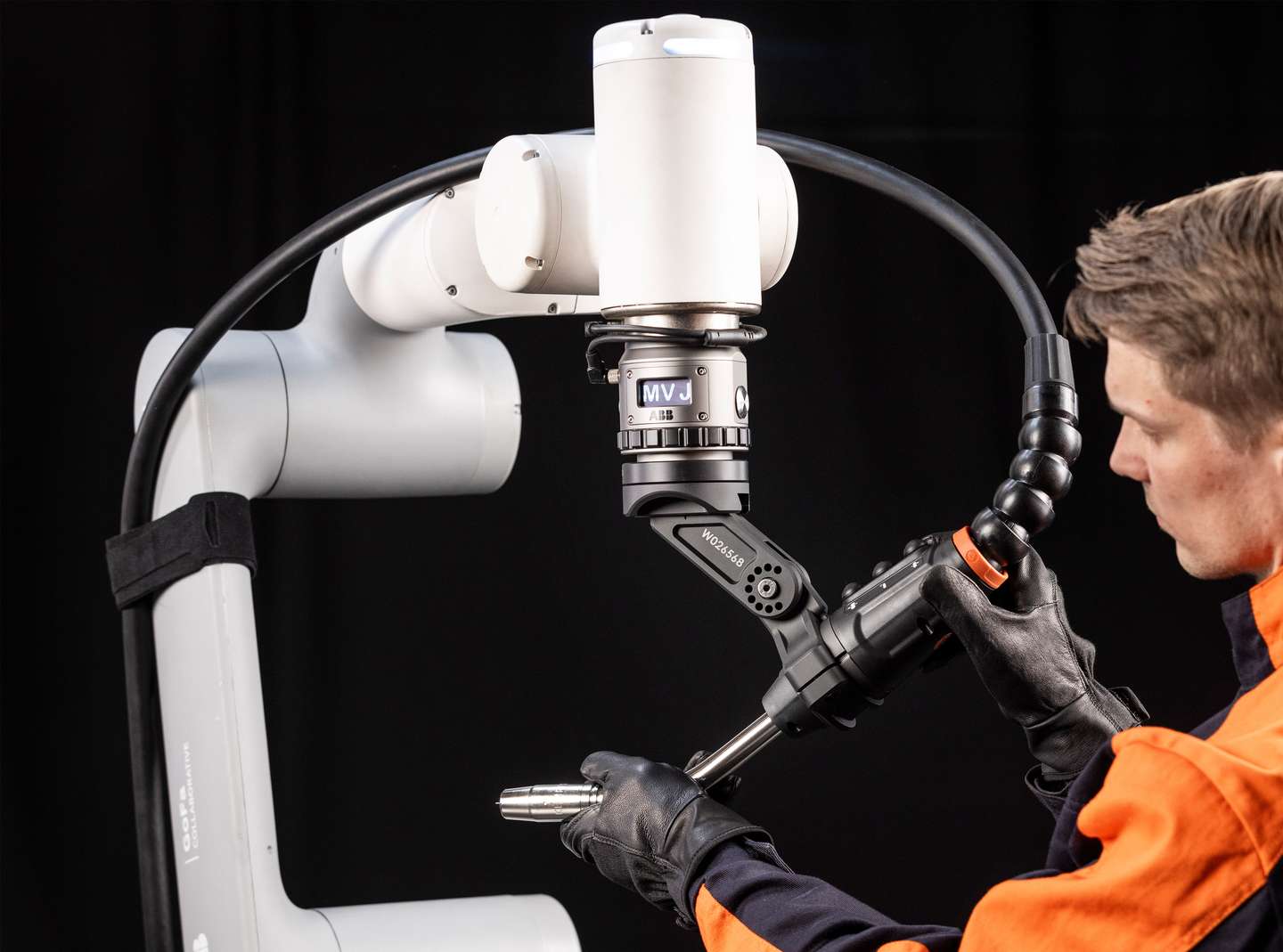
Die Cobot-Lösung von Kemppi: Praktische Automatisierung für moderne Schweißanforderungen
Die Schweißindustrie steht unter ständigem Druck, die Produktivität zu verbessern, eine hohe Qualität aufrechtzuerhalten und den wachsenden Mangel an qualifizierten Arbeitskräften zu bewältigen. Kollaborative Roboter oder Cobots bieten eine flexible und effiziente Möglichkeit, Schweißaufgaben zu automatisieren, ohne den menschlichen Bediener vollständig zu ersetzen. Die Cobot-Lösung von Kemppi zeichnet sich durch ihren einzigartigen Ansatz aus: eine praktische und kostengünstige Kombination aus bewährter Handschweißtechnik und smarten Integrationswerkzeugen.
Automatisierung beim Schweißen
Wie Rapid Welding und Kemppi eine Partnerschaft aufgebaut haben, die Bestand hat
Rapid Welding arbeitet seit der Unternehmensgründung im Jahr 1990 mit Kemppi zusammen. Mitgründer und Geschäftsführer Roy Edwards erläutert die Grundsätze hinter dieser 36-jährigen Partnerschaft: von der Auswahl der richtigen Schweißlösung und der Betreuung der Ausrüstung über ihre gesamte Lebensdauer bis hin zum Umgang mit dem Fachkräftemangel und der Frage, wo Automatisierung und Laserschweißen den größten Nutzen bieten.
Automatisierung beim Schweißen, Manuelles Schweißen, Schweiß-ABC
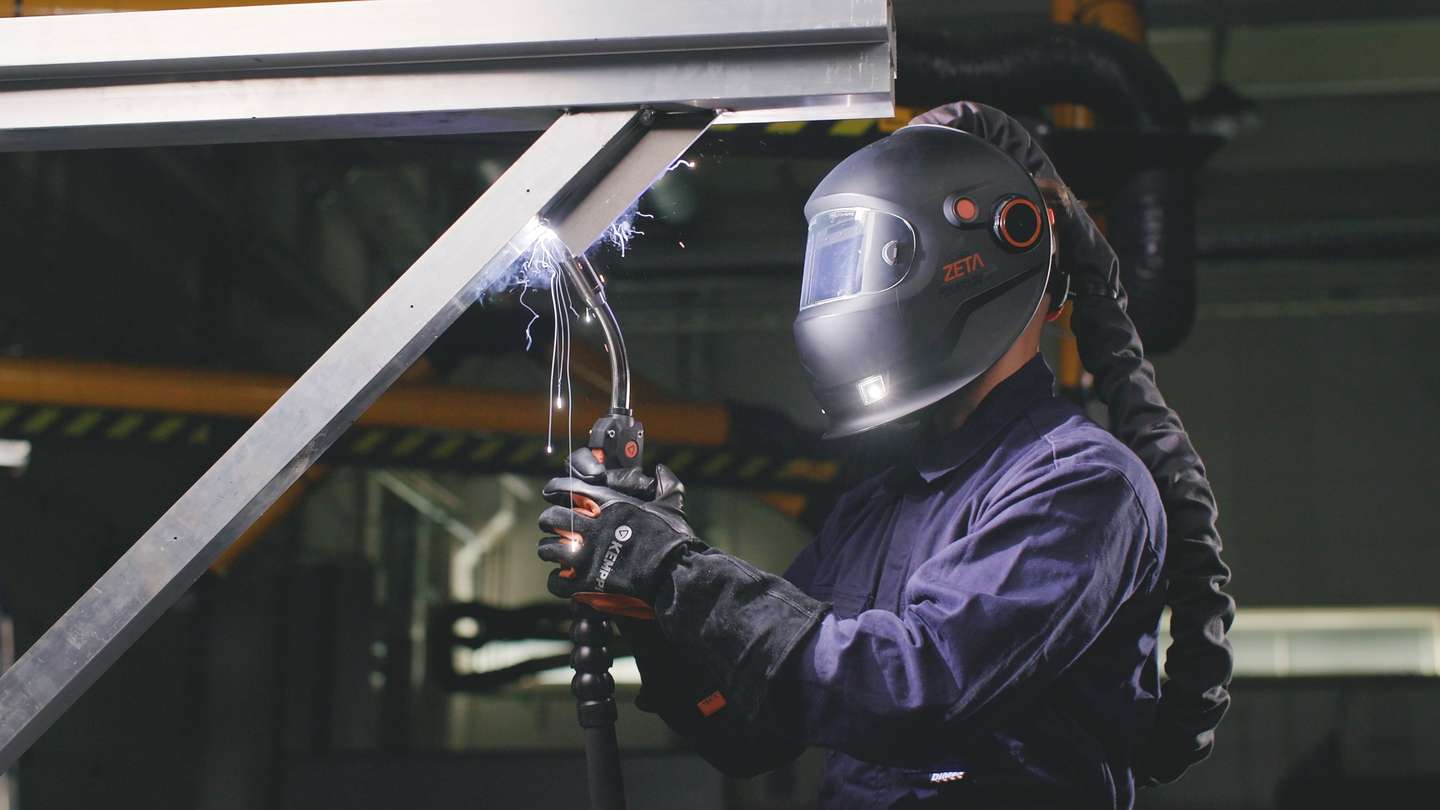
Sicherheit, die mit den Herausforderungen der Schweißer und den sich ändernden Risiken Schritt hält
Die Sicherheit beim Schweißen wird immer anspruchsvoller. Die Risiken beim Lichtbogenschweißen bleiben konstant, aber die modernen Arbeitsbedingungen bedeuten, dass sich die Gefährdung über längere Schichten und in engeren Räumen verschärfen kann. Folglich muss die PSA zum Schweißen sowohl als Schutz für den Schweißer als auch als Nachweis für die Einhaltung der Vorschriften betrachtet werden. Bei Kemppi wird die Sicherheits-PSA für Schweißer entwickelt und deren Tauglichkeit in der Praxis durch klare Anforderungen, Feedback von Schweißern und die verifizierte Einhaltung von EU-PSA-Verordnung 2016/425, CE-Kennzeichnungsprozessen und relevanten EN-Normen bestätigt.
Sicherheit, Schweiß-ABC
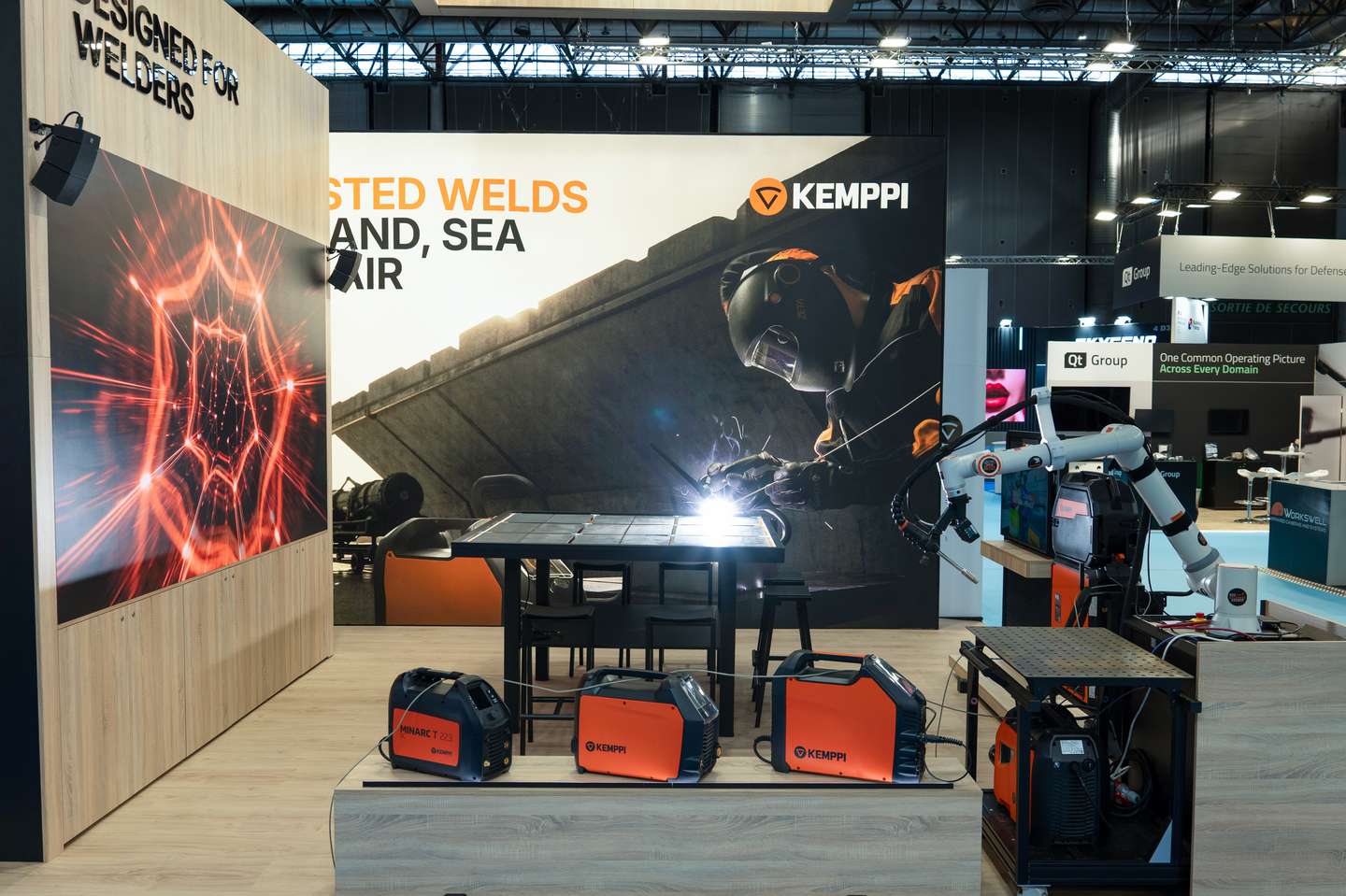
Eurosatory 2026 And the Future of Defence Manufacturing
Eurosatory 2026 highlighted a clear shift in modern defence manufacturing. While defence systems are becoming more digital, networked, and autonomous, their foundation remains physical. From armoured vehicles and artillery to industrial resilience, welding quality, steel structures, and production discipline remain paramount to defence readiness.
Digitalisierung, Innovation