Welding ABC
Stick Welding Can Benefit from Pulsed Welding Current
4 August 2021
With considerably more productive welding processes such as MIG/MAG taking over the welding industry, the role of stick welding (MMA) has become smaller in recent decades. This is why the majority of welding equipment manufacturers have focused their most significant efforts on MIG/MAG welding rather than stick welding, and introduced new features made possible by new power source technologies.
Antti Kahri
Pulsed MIG/MAG welding, for example, has been in extensive use for a few decades now, but similar welding current pulsing is only available for stick welding in a few devices. Kemppi has developed a new easy-to-use pulse function for its Master 315 stick welding machine. This pulse function can be used extensively in various stick welding applications.
How does pulsed stick welding work?
In pulsed stick welding, the welding current varies between two levels at a frequency chosen by the user. The two current levels have been chosen with the idea that both levels typically remain within the electrode’s good operating range when the average current is set close to the middle of the operating range. In practice, this means that the lower current level is fixed at 70% of the higher current level and users do not have to manage the ratio. To further simplify the adjustment process, a fixed value is also set for the ratio of the duration of these current levels. The higher current level lasts for 40% of the entire cycle.
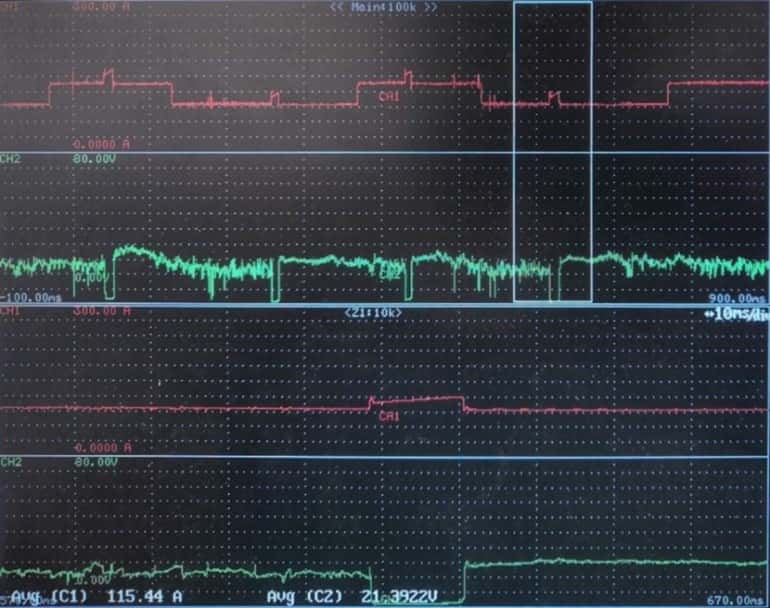
The operating principle is otherwise identical to that of ordinary stick welding, with the addition of the variation in current levels. Figure 1 illustrates the principles of pulsed stick welding.
Principles of pulsed stick welding
Figure 1. The behavior of welding current (red) and arc voltage (green) in pulsed stick welding with a 3.2 mm basic electrode at a 115 A average current and a 2.5 Hz frequency. The higher level of the pulse is 140 A and the lower level is 98 A. The lower curves are a magnification of the framed area of the upper curves and show the behavior during a short circuit.
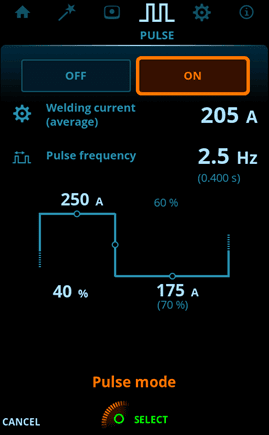
In Master 315’s graphical user interface, the pulsed MMA feature and its essential parameters are clearly displayed on one screen as illustrated in Figure 2. Users can adjust the parameters by turning the knob on the control panel. There are only two adjustable parameters: welding current and pulse frequency. The remaining parameters are displayed for the user's information only. The principle of the process described above is illustrated to the user by using graphics.
User interface view of pulsed MMA process
Figure 2. View of the pulsed MMA process in the Master 315 user interface.
Pulsed stick welding is easier, more efficient and suitable for many applications
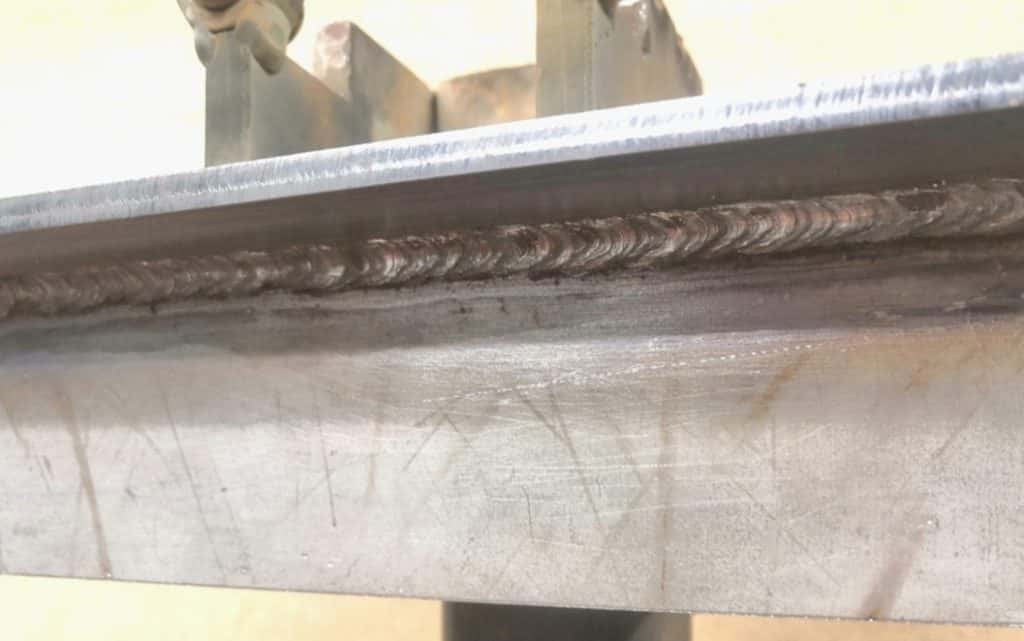
The Master 315 pulsed stick welding feature is optimized for basic electrodes but is suitable for use with almost all electrode types. Thanks to its freely adjustable frequency, users can use this feature in all kinds of welding applications. Based on welding tests conducted in Kemppi's welding laboratory, pulsed stick welding is best for position (Fig. 3), fillet, and root welding.
In position welding, the lower current level helps to cool the weld pool, which then improves the pool controllability. Fillet welding enables users to reach a higher travel speed or to use a lower average current, which then reduces the heat input, resulting in less deformation. In root welding, it is easier to produce a uniform result because the higher current level stirs the weld pool so that traces of manual error are reduced. In addition, the higher current level allows smoother joints to be formed.
Pulsed MMA welded overhead fillet weld
Figure 3. Pulsed MMA welded overhead fillet weld (welding position PD). Base material 5 mm structural steel S355 and filler material 3.2 mm basic electrode. Welding current 130 A and pulse frequency 1.5 Hz. The amount of spatter is minimal considering the welding application.
In addition to these application-specific benefits, pulsed stick welding has the following general benefits when compared to conventional stick welding:
Keeping the travel speed constant is easy because the pulse frequency sets the pace for the welding.
The amount of residual spatter is reduced.
The weld surface is smoother (at a high pulse frequency).
The slag comes off more easily.
Although stick welding is considered to be a fairly simple welding process, users can streamline or tailor it to better meet the requirements of a particular welding application. Few welding devices, however, have such features for improving the stick welding process. Kemppi's new pulsed MMA feature, designed for ease of use, adds options to many different stick welding applications to make welding a little more efficient, higher quality, or just plain easier.

Antti Kahri
Antti Kahri
A respected expert in the field of welding, who tragically passed away in early June 2025 while pursuing his passion on a fly fishing trip. As a Welding Engineer on Kemppi Oy’s Welding Team, he held the prestigious International Welding Engineer (IWE) qualification and brought over a decade of experience to developing advanced welding characteristics for TIG, MIG/MAG, and MMA welding machines, including the renowned X8 MIG Welder and MasterTig. Known for his deep expertise and commitment to welding excellence, he was passionate about enhancing the quality and efficiency of welding through user-friendly innovations. His legacy lives on in the technology he helped shape and in the inspiration he offered to colleagues and the wider welding community.
Related products
Product family
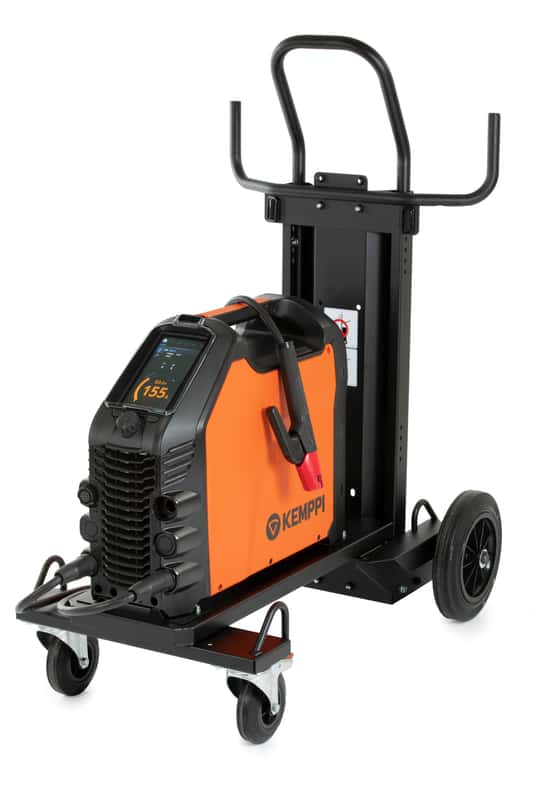
Master 315 is a stylish and practical stick welding machine, that guarantees optimal welding performance and fast parameter setting.
More blog posts
Find the right parameters for TIG welding
Successful welding relies upon a combination of parameter settings and choices.
Welding ABC

What to consider when buying a welding machine?
Once a welding machine has reached the end of its life cycle, or a company expands its operations, it's time to find a new best friend for the welder. There is a wide range of welding machines on the market, and in many cases, comparing different brands and models is challenging. What kind of things should be considered when purchasing a welding machine?
Welding ABC
Stable arc ignition improves welding quality and reduces costs
In MIG/MAG welding, arc ignition plays a key role in welding quality. Any instability will result in the post-weld cleaning of spatters, which eats up resources and hinders productivity in industrial environments. Available in modern welding equipment, new ignition-enhancing technologies offer additional control of the arc and support the craftsmanship of welders.
Manual welding
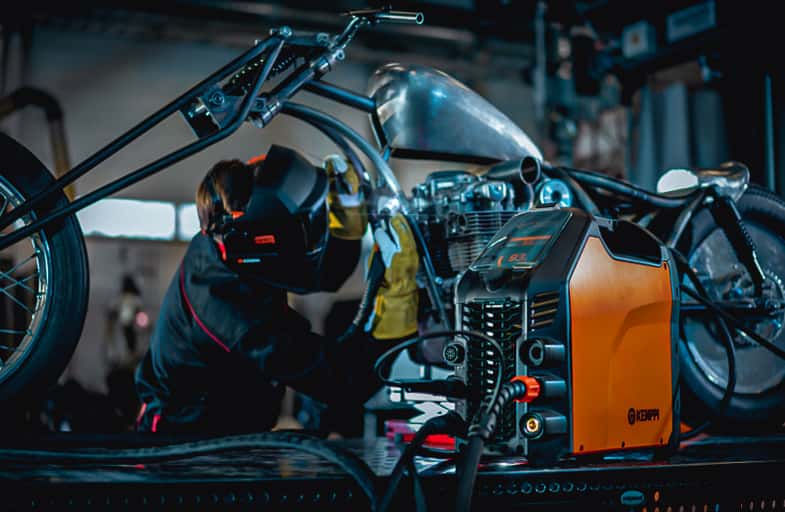
How Rapid Welding and Kemppi Built a Partnership That Lasts
Rapid Welding has worked with Kemppi since the company opened in 1990. Co-founder and Managing Director Roy Edwards highlighted the principles behind that 36-year partnership, from choosing the right welding solution and supporting equipment throughout its life to addressing the skills shortage and finding the right place for automation and laser welding.
Welding automation, Manual welding, Welding ABC
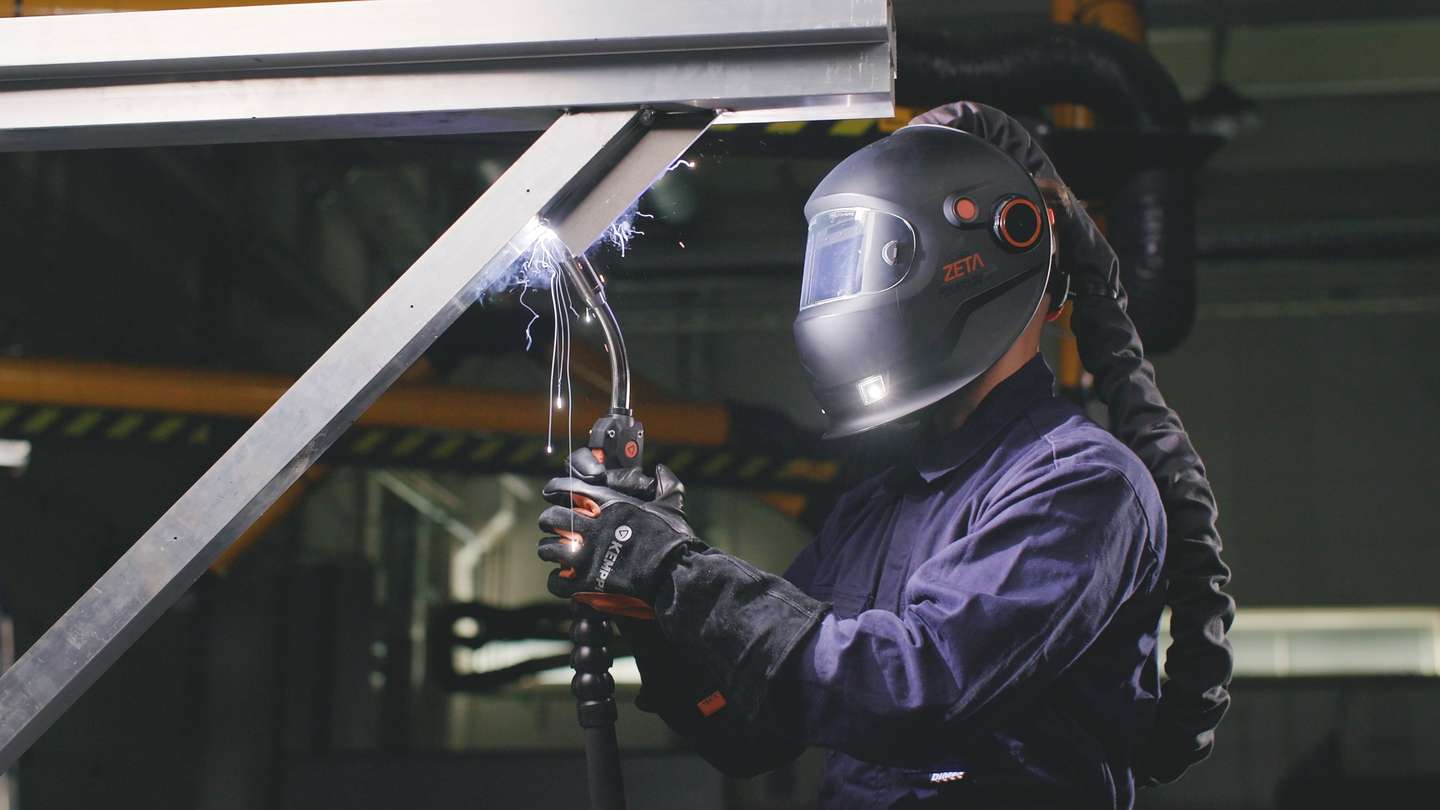
Safety that keeps up with welders' challenges and changing risks
Welding safety has become increasingly demanding. The hazards at the arc remain constant, but modern working conditions mean exposure can accumulate over longer shifts and in tighter indoor spaces. As a result, welding PPE needs to be treated as both protection for the welder and proof of compliance. At Kemppi, welding safety PPE is designed and validated in practice through clear requirements, welder-led feedback, and verified compliance with EU PPE Regulation 2016/425, CE marking processes, and relevant EN standards.
Safety, Welding ABC
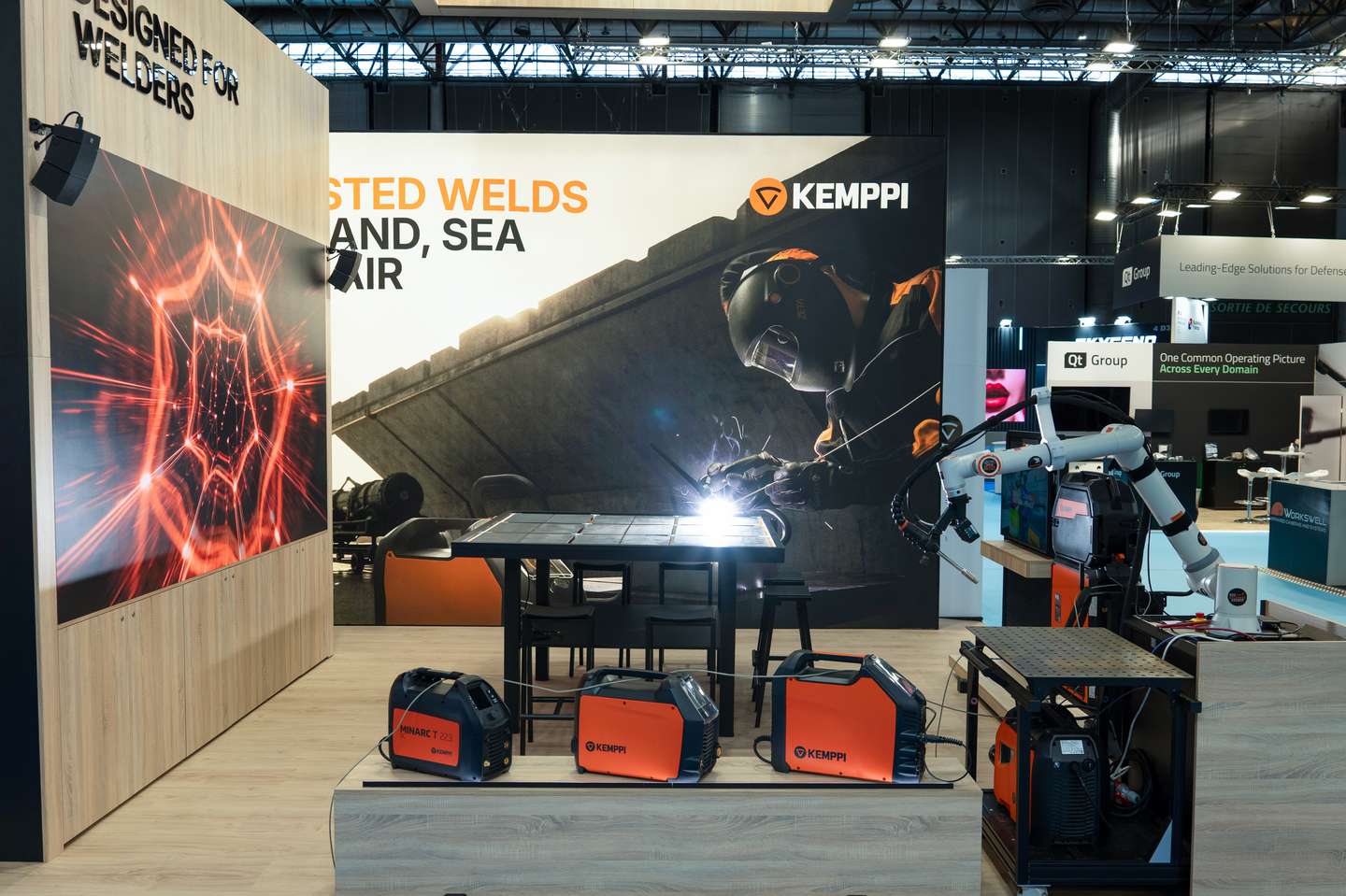
Eurosatory 2026 And the Future of Defence Manufacturing
Eurosatory 2026 highlighted a clear shift in modern defence manufacturing. While defence systems are becoming more digital, networked, and autonomous, their foundation remains physical. From armoured vehicles and artillery to industrial resilience, welding quality, steel structures, and production discipline remain paramount to defence readiness.
Digitalization, Innovation