Innovasjon
Inside Coherent, the technology powering Kemppi FastBeam 3
16. november 2026
What makes an industrial laser reliable enough for everyday production? The answer for us began at Coherent's manufacturing facility in Tampere, Finland. With more than two decades of expertise in fiber laser technology, Coherent manufactures and tests the laser modules that power demanding industrial applications. Now, that expertise meets Kemppi's welding know-how in FastBeam 3, bringing advanced Finnish laser engineering directly to the hands of welders.
Varsha Saraogi
A powerful laser can produce an impressive weld. Producing thousands of consistent welds under real manufacturing conditions, however, requires something more: stable optical power, precise process control and technology that can withstand prolonged industrial use.
For manufacturers investing in laser welding, these factors directly influence production quality, operating costs and the long-term value of their equipment.
That is also what makes the collaboration between Coherent and Kemppi significant. Behind FastBeam 3 is a partnership connecting two areas of Finnish industrial expertise, from the physics of generating high-power laser light to the practical requirements of welding on the factory floor.
Over two decades of expertise behind the beam
Coherent has manufactured fiber lasers in Tampere since 2003. In 2020, the company designated the site its Center of Excellence for Fiber Lasers, bringing critical optical component manufacturing, laser assembly, testing and application development closer together.
The expertise developed at Coherent reaches far beyond handheld welding. It supplies high-power laser technology for industries such as automotive manufacturing, electric vehicle production and energy storage. Its industrial laser portfolio includes systems delivering up to 20 kW, with advanced beam-control technologies developed for challenging materials and high-volume production. This experience is particularly valuable in applications where even small variations in laser performance can affect weld penetration, component quality and manufacturing yield.
For FastBeam 3, Coherent manufactures the 3 kW fiber laser module at the heart of the system, combining high optical power with an architecture suitable for a handheld industrial welding machine.
"The size is a big factor," explains Aku Antikainen, Laser Application Engineer at Coherent. The challenge, he says, is achieving sufficiently high power while keeping the system compact enough for practical industrial use.
Generating 3 kW from a single laser module requires overcoming significant engineering constraints. As optical power increases, unwanted nonlinear effects such as stimulated Raman scattering become more difficult to manage. Optical losses can also generate substantial heat inside sensitive components.
At an output of 3 kW, even a 1% optical loss represents 30 watts of energy that may be converted into heat. Maintaining high optical efficiency therefore requires careful fiber design, clean optical interfaces and effective thermal management.
Coherent's single-module approach provides FastBeam 3 with the required optical output without the additional complexity of combining several laser modules.
Why stable laser power matters to every weld
Power is one of the most visible specifications on a laser welding machine. Yet for consistent industrial welding, how precisely that power is delivered matters just as much as the maximum output.
A laser must reach its commanded power quickly, avoid excessive overshoot and maintain a stable output throughout the welding operation. "If the power fluctuates or degrades over time, then you're not going to get these consistent welds," Antikainen explains.
Changes in optical output can affect the molten pool, penetration depth and weld geometry. A fluctuating beam may lead to variations along a seam, while excessive or insufficient energy can increase the risk of defects.
Coherent has made repeatability a major focus of its industrial fiber laser development. In published testing of its separate ARM laser family, 90 individual lasers set to deliver 2.575 kW demonstrated a standard deviation of just 5.4 W in measured output power, equivalent to approximately 0.2%.
Although these results relate to a different Coherent laser platform, they illustrate the company's engineering capability in achieving consistent optical output across manufactured units.
That level of manufacturing discipline is important to industrial customers because process repeatability depends on having a predictable starting point. If laser characteristics vary significantly, welding parameters may need to be adjusted between machines or over time.
Antikainen explains that Coherent's testing pays particular attention to how rapidly the laser reaches its requested power and whether that output remains stable during sustained operation.
For a production manager, the implications are practical: fewer unexpected process variations, less time spent troubleshooting and greater confidence in the consistency of finished welds.
Tested and traceable in Tampere
At Coherent, reliability is built into the manufacturing process.
According to Antikainen, components are checked at different production stages, while completed laser modules undergo functional and performance testing before delivery. These tests include verifying output power and its stability during extended operation.
"There's a footprint of everything," Antikainen explains. If a component batch proves faulty, the company can trace the issue back through its manufacturing records.
For customers, this approach has value beyond quality assurance. Industrial equipment often operates within tightly scheduled production environments where unexpected failures can interrupt multiple downstream processes.
Traceability makes investigations more systematic, while thorough testing before delivery helps reduce the risk of equipment problems entering production.
For Antikainen, the confidence that comes from this process is also a source of professional pride. "I can stand behind our products," he says, reflecting on the testing and engineering behind the lasers manufactured in Tampere.
Coherent's technology meets Kemppi's welding expertise
The laser module is only one part of what makes FastBeam 3 an industrial welding solution.
While Coherent provides the technology for generating stable, high-power laser light, Kemppi integrates it into a complete system designed around welding performance, operator usability and industrial safety.
FastBeam 3 combines its water-cooled 3 kW laser source with Kemppi's Penetration Shape Control, allowing welders to adjust beam shape, balance, oscillation and power to suit different applications.
With adjustable beam oscillation from 0–5 mm at frequencies of 20–150 Hz, welders can control how energy is distributed across the joint and adapt the weld profile to different materials and joint geometries.
This is where optical performance becomes measurable production value. A stable laser source helps deliver predictable energy to the workpiece, while Kemppi's process controls determine how that energy is applied.
Concentrating heat precisely around the joint can reduce the heat-affected zone and limit distortion in suitable applications. Less distortion can mean fewer corrective operations, less finishing work and a lower cost per finished component.
FastBeam 3 also addresses the practical requirements of industrial operation. Weld Assist guides users toward suitable starting parameters, while the water-cooled LT3 torch, optional filler-wire feeding and external chiller support varied production tasks.
The external chiller can be positioned outside the welding enclosure using 5 m or 10 m cooling hoses, helping reduce heat and noise around the operator while improving maintenance access.
For manufacturers, the benefit extends to the combination of controlled weld quality, efficient job changes, reduced secondary work and equipment designed for dependable operation.
Finnish expertise at laser speed
The strength of the collaboration lies in what each company contributes. While Coherent produces and tests the laser module in Tampere, Kemppi develops and manufactures the complete FastBeam 3 system in Lahti, integrating the laser with welding process controls, safety functions and equipment designed for industrial use.
For manufacturers, this partnership brings something particularly valuable: confidence in what goes into the machine and what they can expect from it. FastBeam 3 includes automatic laser power cut-off with redundant protection, color-coded machine status indications and a limited start window after torch contact. These built-in functions support safe operation alongside the protective equipment, training and controlled working environment required for handheld Class 4 laser welding.
Antikainen believes further developments in optical fibers and laser wavelengths will continue expanding what industrial lasers can achieve. Different wavelengths can change how materials absorb laser energy, potentially opening opportunities to process materials that are currently difficult to weld or cut efficiently.
For Kemppi, FastBeam 3 represents an important step in bringing this technology into everyday industrial fabrication.

Varsha Saraogi
Varsha Saraogi
Hails from a background in journalism and editorial strategy and brings an international B2B perspective to content and communications at Kemppi. Passionate about creating stories that connect welding technology with the people and industries it serves, combining technical substance with a clear and engaging voice. Work has been published in specialist titles such as Airport Technology, Railway Technology, Ship Technology, FinTech Global, and RegTech Analyst, reflecting experience across a wide range of industrial and business sectors.
Relaterte produkter
Produktfamilie
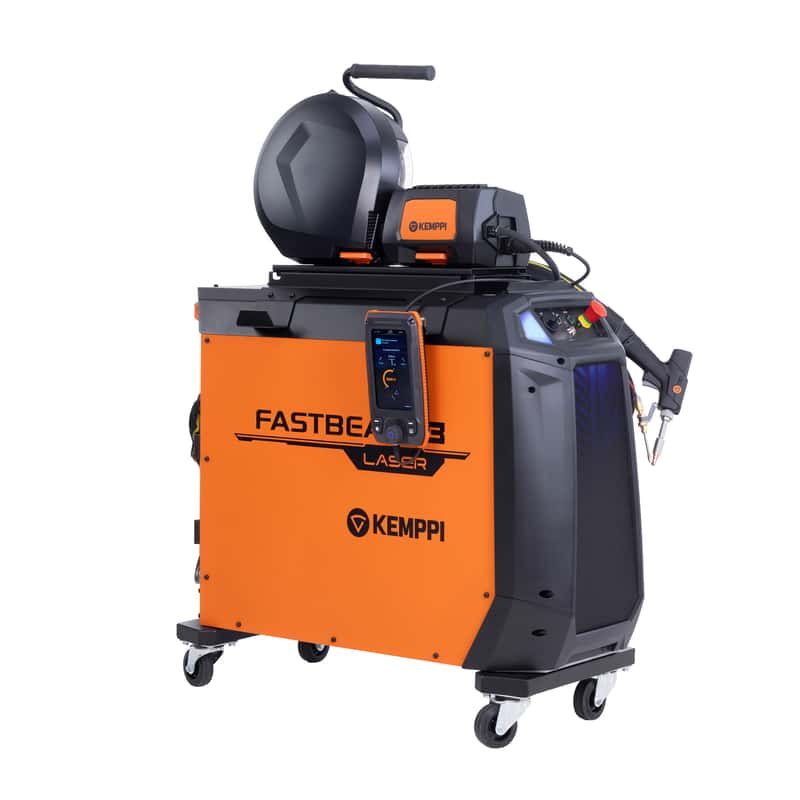
FastBeam 3 er en finskprodusert 3 kW håndholdt sveisemaskin med fiberlaser for rask, kontrollert sveising av stål, rustfritt stål og aluminium. Penetration Shape Control og integrert Weld Assist gir presis prosessjustering, raskere oppsett og digital sporbarhet ved industriell lasersveising.
Flere blogginnlegg
Slik kan lasersveising endre industriproduksjonen innen 2035
Lasersveising endrer allerede hvor raskt produsenter kan arbeide. Det større potensialet ligger i det som skjer rundt selve sveisen. Fra knapphet på kompetanse og raskere omstillinger til tidligere kvalitetskontroll og bedre utnyttelse av produksjonskapasiteten – vi ser på hvordan laser kan forme produksjonen frem mot 2035.
Manuell sveising, Innovasjon
Hva 10 000 sveiser avslører om produktiviteten ved lasersveising
Hva koster en sveis egentlig? Med utgangspunkt i Kemppis sammenligning av laser-, MAG- og TIG-sveising ser vi forbi sveisehastigheten og undersøker sveisetid, dekkgass, tilsatsmateriale, varmetilførsel og etterbehandling. Se hvordan små forskjeller kan vokse med produksjonsvolumet og påvirke kapasitet, produktivitet og lønnsomhet.
Innovasjon, Manuell sveising
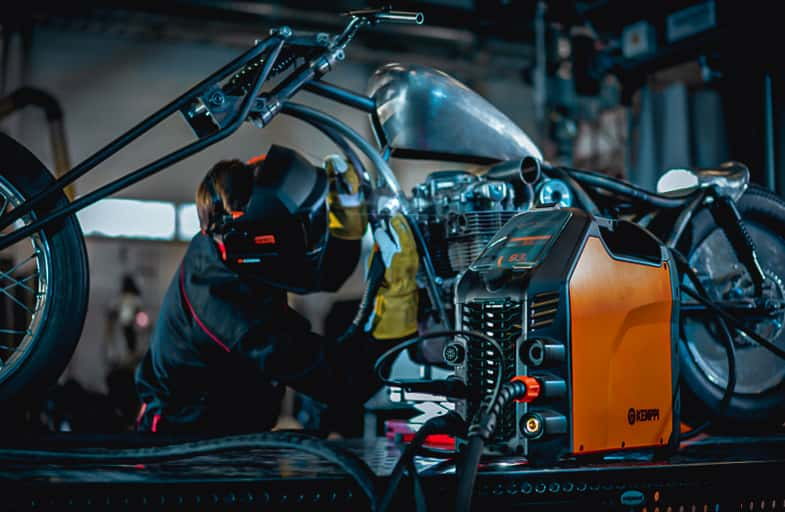
How Rapid Welding and Kemppi Built a Partnership That Lasts
Rapid Welding has worked with Kemppi since the company opened in 1990. Co-founder and Managing Director Roy Edwards highlighted the principles behind that 36-year partnership, from choosing the right welding solution and supporting equipment throughout its life to addressing the skills shortage and finding the right place for automation and laser welding.
Automatisering av sveising, Manuell sveising, Sveise-ABC
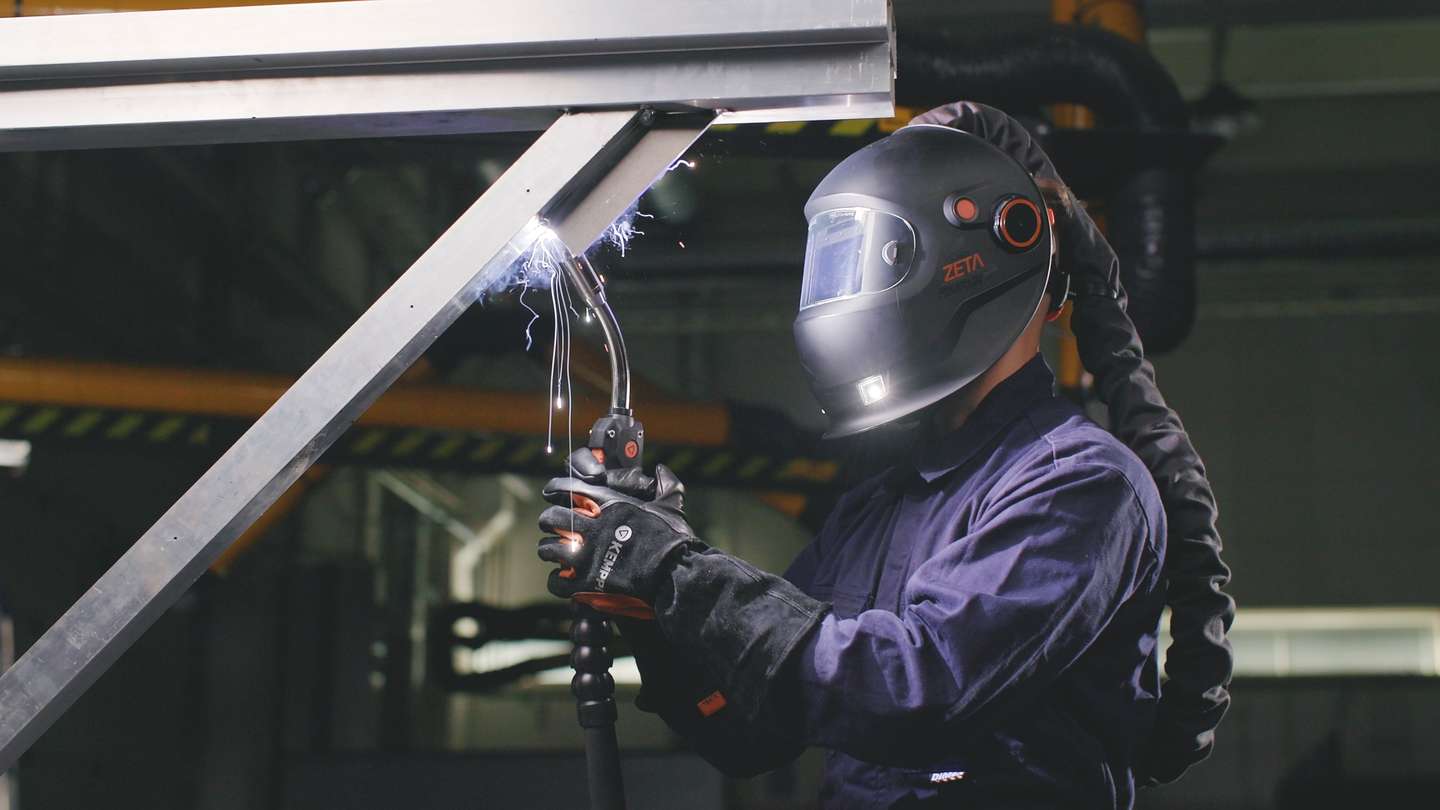
Safety that keeps up with welders' challenges and changing risks
Welding safety has become increasingly demanding. The hazards at the arc remain constant, but modern working conditions mean exposure can accumulate over longer shifts and in tighter indoor spaces. As a result, welding PPE needs to be treated as both protection for the welder and proof of compliance. At Kemppi, welding safety PPE is designed and validated in practice through clear requirements, welder-led feedback, and verified compliance with EU PPE Regulation 2016/425, CE marking processes, and relevant EN standards.
Sikkerhet, Sveise-ABC
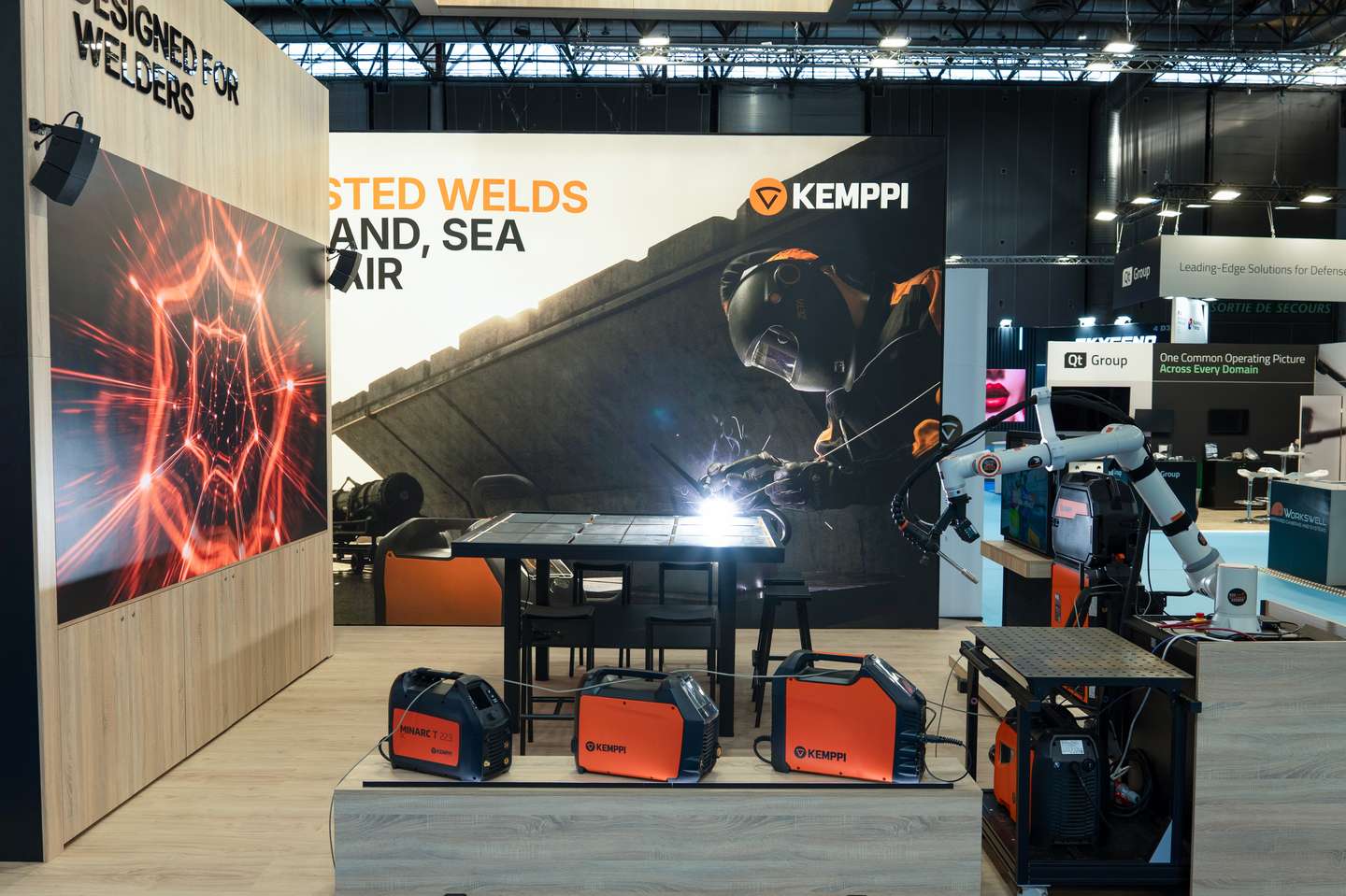
Eurosatory 2026 And the Future of Defence Manufacturing
Eurosatory 2026 highlighted a clear shift in modern defence manufacturing. While defence systems are becoming more digital, networked, and autonomous, their foundation remains physical. From armoured vehicles and artillery to industrial resilience, welding quality, steel structures, and production discipline remain paramount to defence readiness.
Digitalisering, Innovasjon