Automatisering av sveising
Three solutions for welding robotization
11. desember 2019
Welding robots are no longer just a treat for a few. The introduction of robust yet affordable welding robotization solutions to the market has lowered the threshold to improving welding productivity or quality through automation. There are several things to keep in mind when deciding on the best solution for your company – to help you make the choice I will outline three alternative approaches on this blog post.
Artturi Salmela
The most important criteria when choosing a welding robotization solution are the size and structure of the workpiece as well as production volume. The size of the workpiece is the most critical factor and largely determines how automation should be implemented. For example, it affects the size and reach of the robot and whether a turntable or a portal is also needed.
The structure of the workpiece must also be such that it can be welded by a robot. It is a good idea to ensure this right at the beginning of the automation project in order to save time and avoid unnecessary costs. Redesigning the product or making small adjustments to the structure can often ensure successful automation and better product quality.
When the production volume increases, logistics must also be taken into consideration to ensure that the workpiece is brought quickly to the robot and easily moved forward after welding.
Solution 1: Collaborative Robot
The lightest option for automation is to use a collaborative robot. These are suitable especially when the welds are more complex than usual, but production series are not very large and do not require high efficiency. Collaborative robots, or cobots, are lighter and more responsive than industrial robots and work together with humans. Safety systems are essential with collaborative robots too, but these are lighter and less expensive to implement compared to complete robot cells. Therefore, this solution does not take up much space or impose special requirements on the surroundings.
Solution 2: Compact Welding Cell
A more robust welding robotization solution is a compact welding cell. Various robot manufacturers supply standard welding cells, the smallest of which are the size of telephone booths. A compact welding cell is the perfect solution for raising productivity when the size of the workpiece remains constant. However, the smallest welding cells are limited by the fact that they do not include a turntable for rotating and moving the workpiece.
Solution 3: A Welding Cell Tailored To Your Needs
If a compact standard solution is not suitable for your situation, the robotic welding cell can be customized in collaboration with a professional automation integrator. It is not advisable to do the customization on your own, especially if you lack the experience. The best solution is to combine the welding equipment and know-how from a quality provider such as Kemppi with a complete automation solution provided by a professional integrator. We have successfully cooperated in such projects with Danish Inrotech, for example.
In this case, you will be faced with the choice of a robot as well as a turntable or a portal capable of meeting the requirements of the project. There is a wide range of turntables and so-called grilles available on the market. What is important is that the turntable is capable of handling not only the size but also the weight of the workpiece: the table must not bend during welding. The turntable must also be precise enough to be suitable for automation.
If the workpiece is too large to fit on a turntable, the robot can be connected to a portal. A portal enables the welding robot’s precise movements in relation to the length, depth, and height of a stationary workpiece. Of course, standard solutions are also available for larger cells and portals, but customization is often required as well.
Full benefits with the right welding equipment
Regardless of the scale of the solution, a robot always needs compatible welding equipment. Compatibility means that the welding equipment – welding torch, power source, and wire feeder – supports the robot both mechanically and electrically. For example, Kemppi's robotic welding power sources are compatible with virtually any robot model on the market thanks to fast Fieldbus communication and adapters. Therefore, they are suitable for all of the solution models described above.
From welding robotization, one expects repeatable and consistent welding quality, reliability, adjustability as well as ease of use. These are most securely achieved by using advanced technologies optimized for automated welding. For example, Kemppi's A7 MIG Welder features Wise special processes for efficiency and ease of use. Moreover, the possibility to adjust the power source through a modern browser interface simplifies and speeds up the operation while enabling system management and monitoring.
The right solution for welding robotization is the sum of many factors. Taking the right things into account will help you to avoid overinvestment or inadequate solutions. Reliable and advanced welding equipment brings the best value from both lightweight and heavy robotization solutions.
Discover Kemppi's robotic welding range for MIG/MAG welding automation

Artturi Salmela
Artturi Salmela
Product Manager, Automation at Kemppi Oy. A robotics expert with 20 years of experience in e.g. computer vision, user interfaces, offline programming, and robotic welding. Interested in the development of welding automation and its connectivity to digital systems.
Relaterte produkter
Produktfamilie
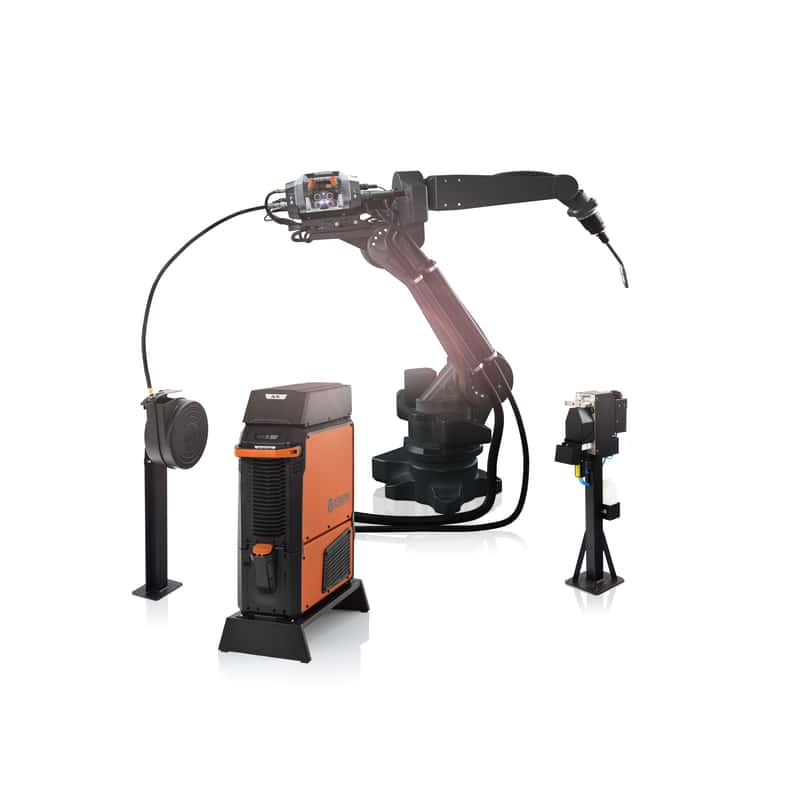
Kemppi AX MIG Welder tilfører kraftig avgir en kraftig ytelse og et maksimalt produktivitetspotensial til robotsveisesystemet ditt. Dra fordeler av enkel integrering og sikre repeterbare sveiser av høy kvalitet med lysbuesveising med høy ytelse.
Flere blogginnlegg
Automation and robotics on the rise as labor shortage continues
Robotics and welding automation have been on the agenda of manufacturing companies for quite a while. Welding robots are said to remove human error and even projected to learn with high endurance, speed and precision. In the past five years, we have also seen the addition of collaborative robots, cobots, to the market.
Automatisering av sveising
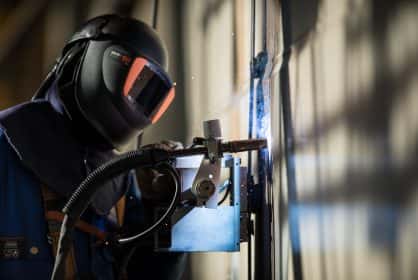
Up to 38 % savings with Reduced Gap Technology
The groove angle has a direct impact on the efficiency and productivity of welding heavy metal structures. Kemppi's new solution, Reduced Gap Technology (RGT) changes the understanding of narrow gap welding. The new technology challenges conventional joint design principles.
Innovasjon
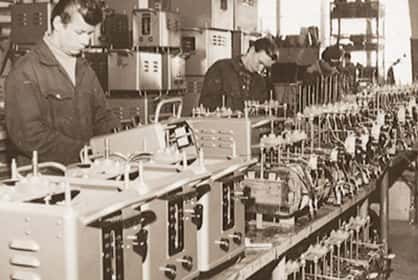
70 years of arc welding excellence
Over the span of the past 70 years, Finnish arc welding equipment manufacturer and software developer Kemppi has grown from a small family company to a global welding technology leader and a pioneer in its industry. In addition to the 70th anniversary of the company's founding, 2019 marks the 100th birthday of its late founder, Martti Kemppi.
Innovasjon
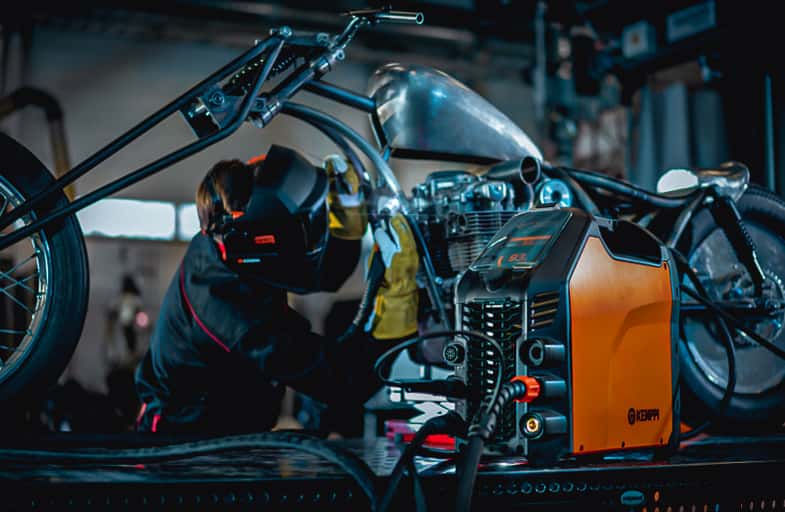
How Rapid Welding and Kemppi Built a Partnership That Lasts
Rapid Welding has worked with Kemppi since the company opened in 1990. Co-founder and Managing Director Roy Edwards highlighted the principles behind that 36-year partnership, from choosing the right welding solution and supporting equipment throughout its life to addressing the skills shortage and finding the right place for automation and laser welding.
Automatisering av sveising, Manuell sveising, Sveise-ABC
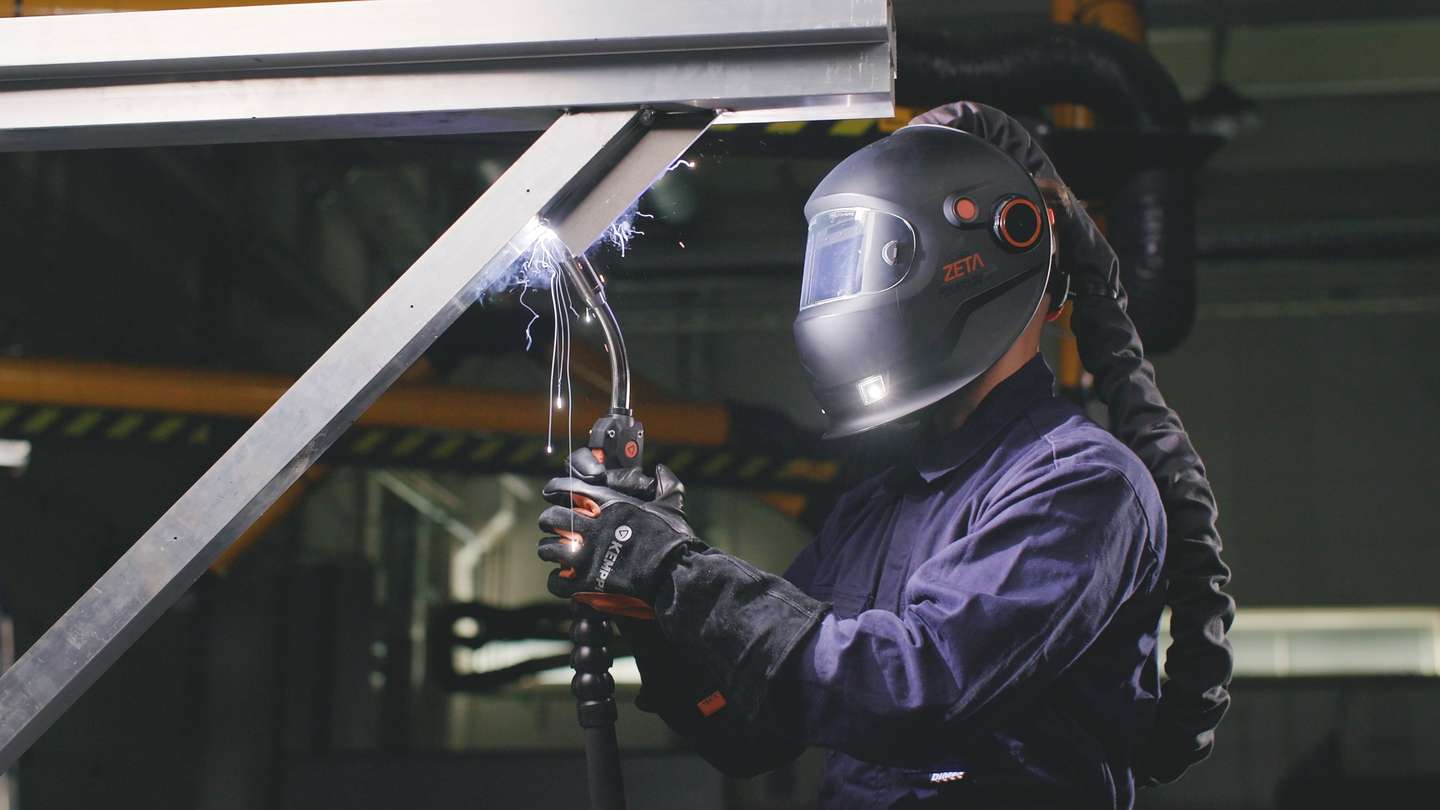
Safety that keeps up with welders' challenges and changing risks
Welding safety has become increasingly demanding. The hazards at the arc remain constant, but modern working conditions mean exposure can accumulate over longer shifts and in tighter indoor spaces. As a result, welding PPE needs to be treated as both protection for the welder and proof of compliance. At Kemppi, welding safety PPE is designed and validated in practice through clear requirements, welder-led feedback, and verified compliance with EU PPE Regulation 2016/425, CE marking processes, and relevant EN standards.
Sikkerhet, Sveise-ABC
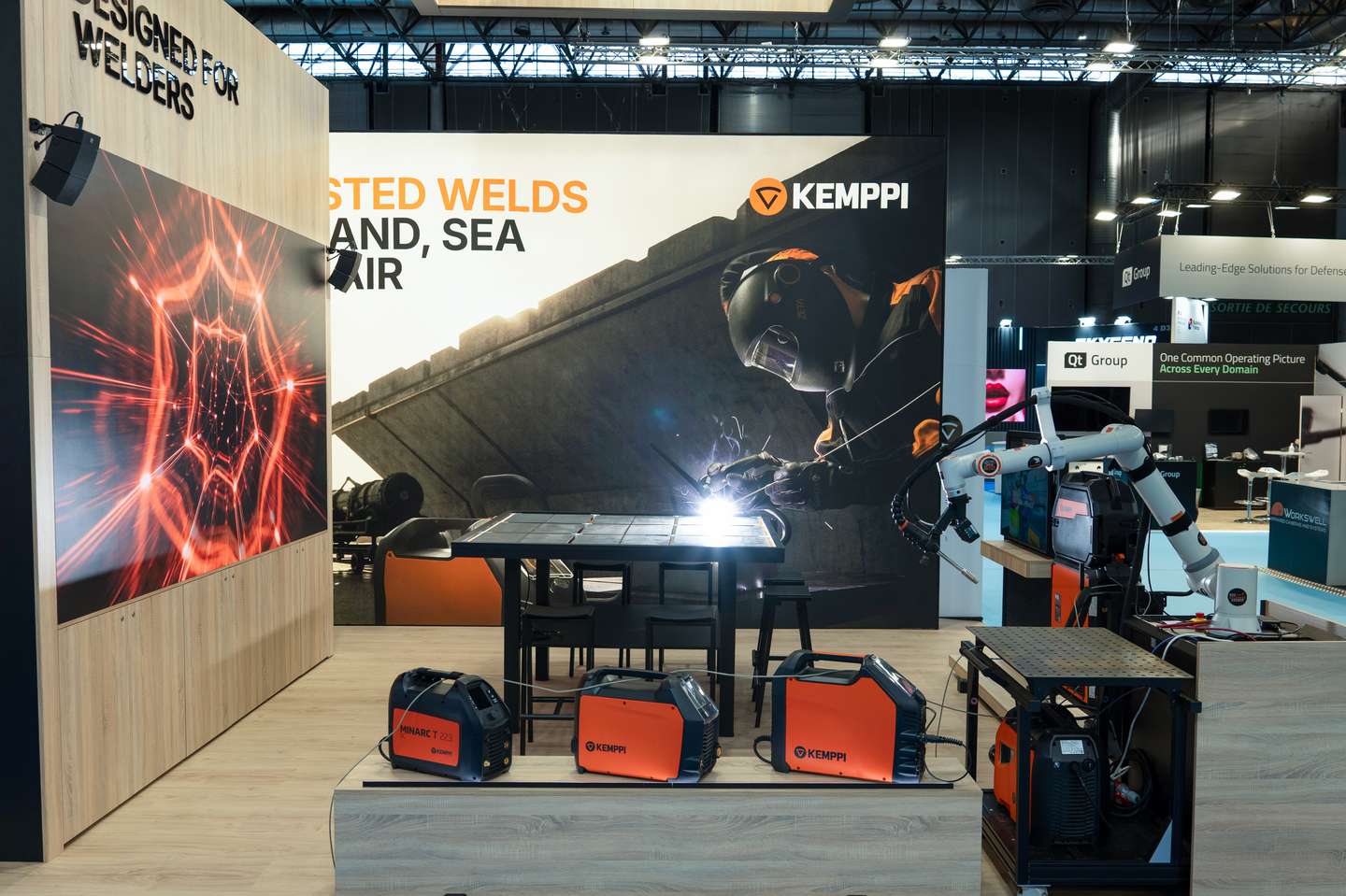
Eurosatory 2026 And the Future of Defence Manufacturing
Eurosatory 2026 highlighted a clear shift in modern defence manufacturing. While defence systems are becoming more digital, networked, and autonomous, their foundation remains physical. From armoured vehicles and artillery to industrial resilience, welding quality, steel structures, and production discipline remain paramount to defence readiness.
Digitalisering, Innovasjon