Innovation
Inside Coherent Fiber Laser, the technology powering Kemppi FastBeam 3
16 novembre 2026
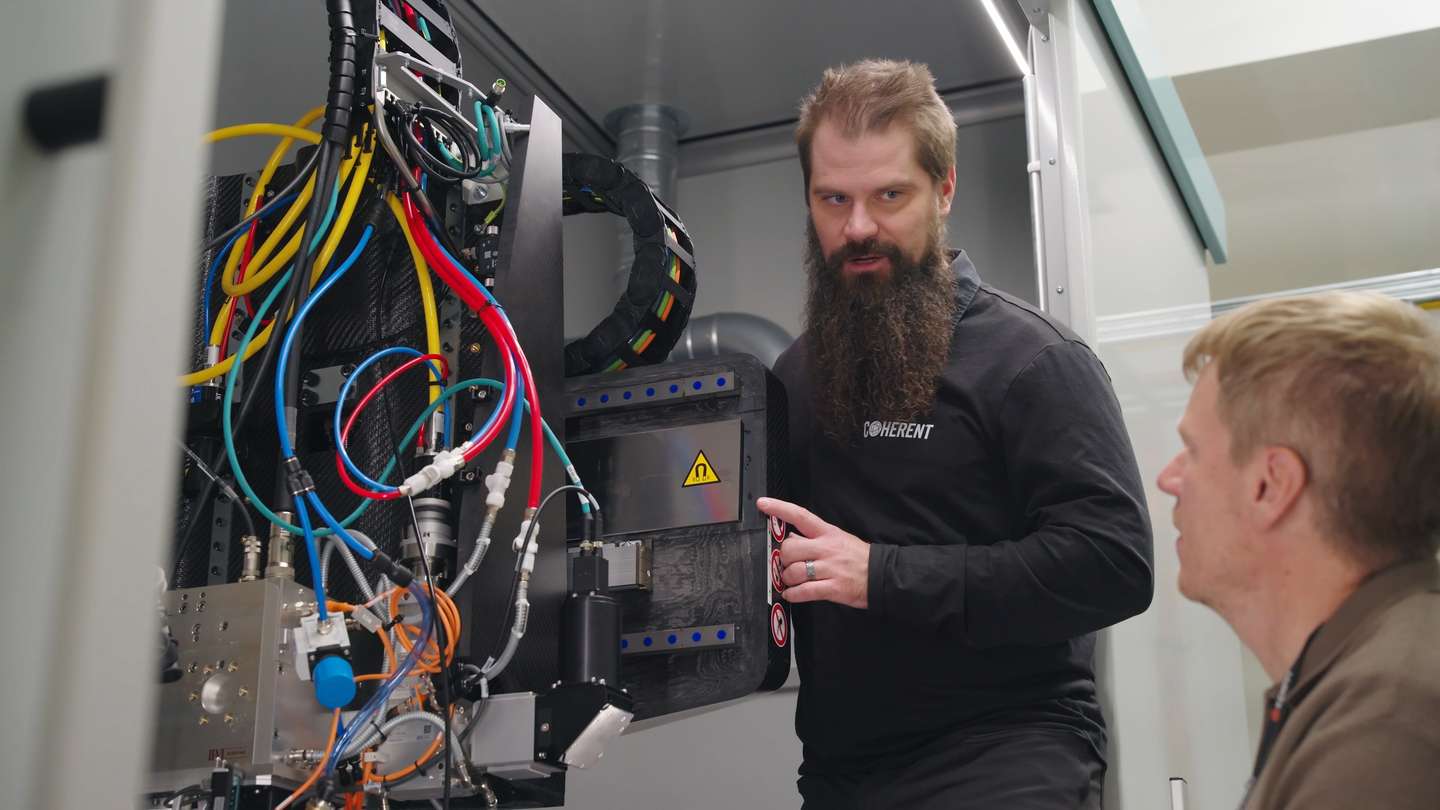
What makes an industrial laser reliable enough for everyday production? The answer for us began at Coherent Fiber Laser's manufacturing facility in Tampere, Finland who has more than two decades of expertise in fiber laser technology. Now, that expertise meets Kemppi's welding know-how in FastBeam 3, bringing advanced Finnish laser engineering directly to the hands of welders.
Varsha Saraogi
A powerful laser can produce an impressive weld. Producing thousands of consistent welds under real manufacturing conditions, however, requires something more: stable optical power, precise process control and technology that can withstand prolonged industrial use.
For manufacturers investing in laser welding, these factors directly influence production quality, operating costs and the long-term value of their equipment.
That is also what makes the collaboration between Coherent Fiber Laser and Kemppi significant. Behind FastBeam 3 is a partnership connecting two areas of Finnish industrial expertise, from the physics of generating high-power laser light to the practical requirements of welding on the factory floor.
Over two decades of expertise behind the beam
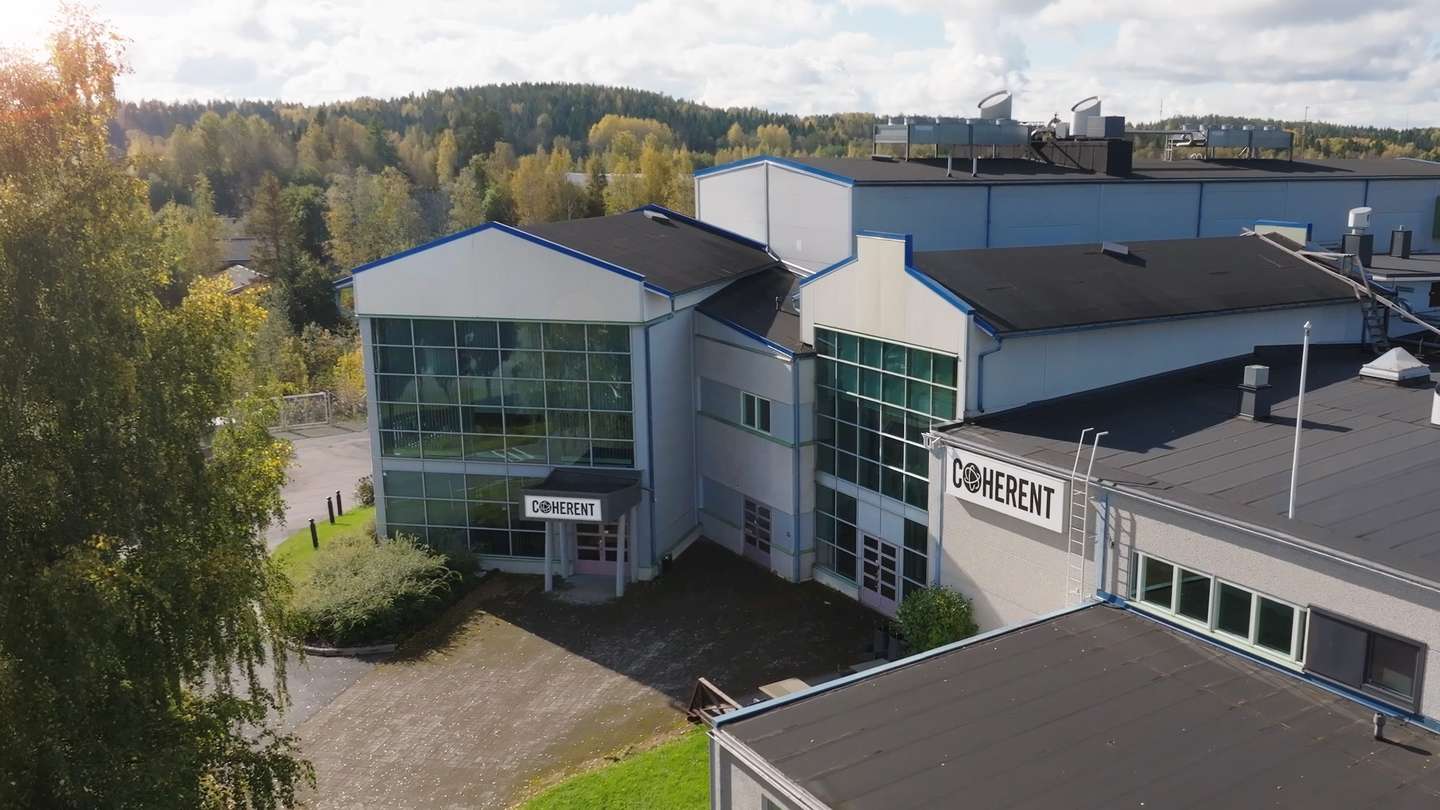
Coherent Fiber Laser has manufactured fiber lasers in Tampere since 2003. In 2020, the company designated the site its Center of Excellence for Fiber Lasers, bringing critical optical component manufacturing, laser assembly, testing and application development closer together.
The expertise developed at Coherent Fiber Laser reaches far beyond handheld welding. It supplies high-power laser technology for industries such as automotive manufacturing, electric vehicle production and energy storage. Its industrial laser portfolio includes systems delivering up to 20 kW, with advanced beam-control technologies developed for challenging materials and high-volume production. This experience is particularly valuable in applications where even small variations in laser performance can affect weld penetration, component quality and manufacturing yield.
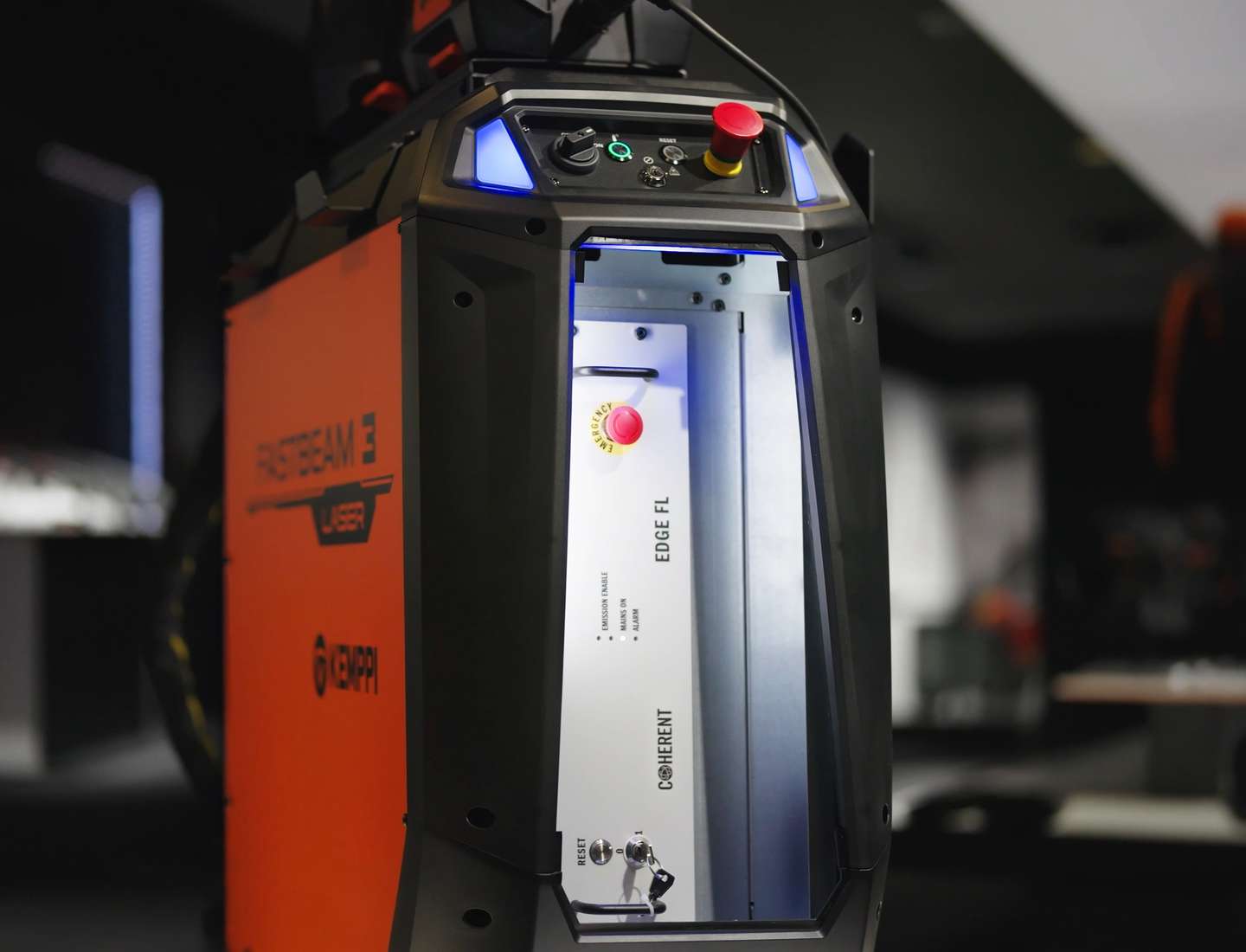
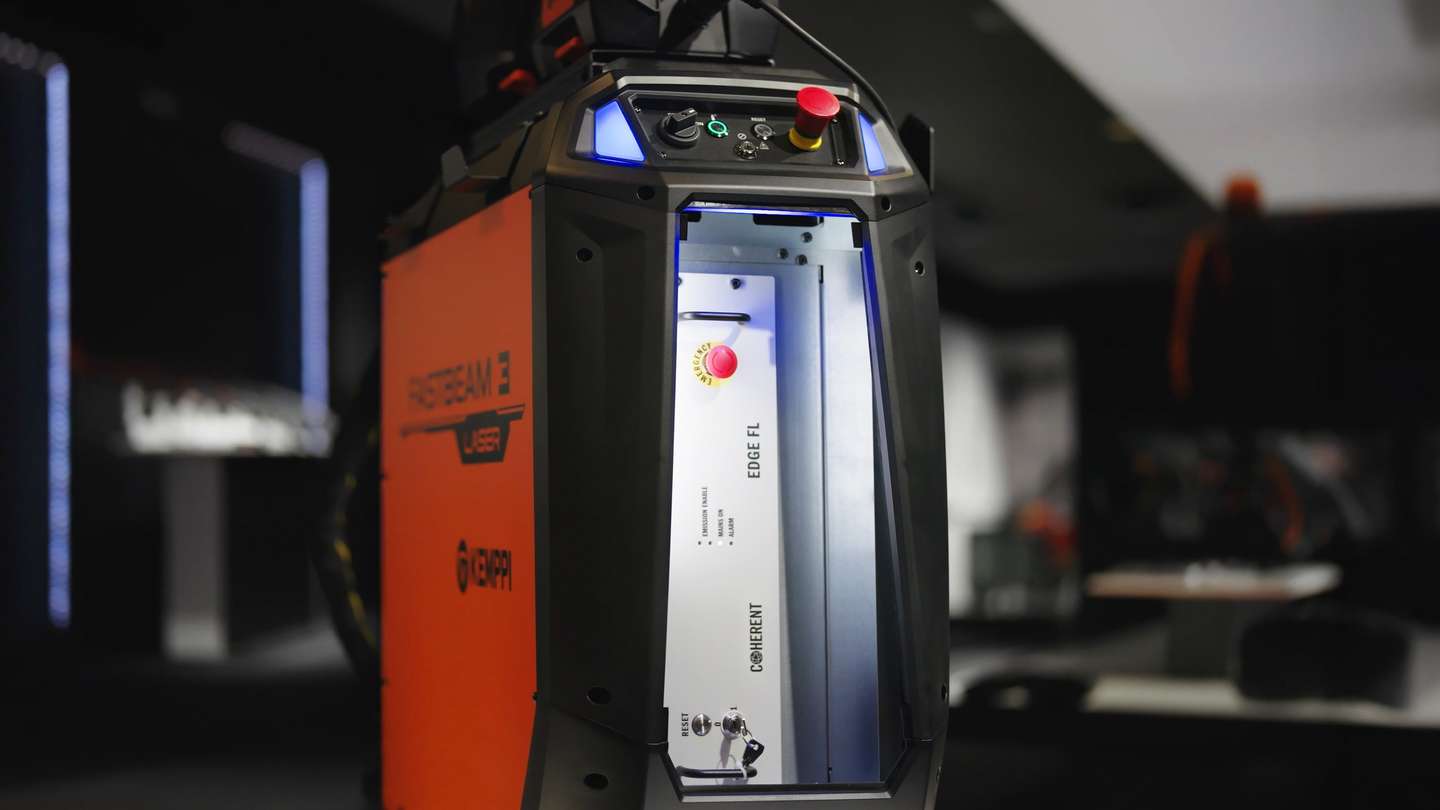
For FastBeam 3, Coherent Fiber Laser manufactures the 3 kW fiber laser module at the heart of the system, combining high optical power with an architecture suitable for a handheld industrial welding machine.
"The size is a big factor," explains Aku Antikainen, Laser Application Engineer at Coherent Fiber Laser. The challenge, he says, is achieving sufficiently high power while keeping the system compact enough for practical industrial use.
Generating 3 kW from a single laser module requires overcoming significant engineering constraints. As optical power increases, unwanted nonlinear effects such as stimulated Raman scattering become more difficult to manage. Optical losses can also generate substantial heat inside sensitive components.
At an output of 3 kW, even a 1% optical loss represents 30 watts of energy that may be converted into heat. Maintaining high optical efficiency therefore requires careful fiber design, clean optical interfaces and effective thermal management.
Coherent Fiber Laser's single-module approach provides FastBeam 3 with the required optical output without the additional complexity of combining several laser modules.
Why stable laser power matters to every weld
Power is one of the most visible specifications on a laser welding machine. Yet for consistent industrial welding, how precisely that power is delivered matters just as much as the maximum output.
A laser must reach its commanded power quickly, avoid excessive overshoot and maintain a stable output throughout the welding operation. "If the power fluctuates or degrades over time, then you're not going to get these consistent welds," Antikainen explains.
Changes in optical output can affect the molten pool, penetration depth and weld geometry. A fluctuating beam may lead to variations along a seam, while excessive or insufficient energy can increase the risk of defects.
Coherent Fiber Laser has made repeatability a major focus of its industrial fiber laser development. In published testing of its separate ARM laser family, 90 individual lasers set to deliver 2.575 kW demonstrated a standard deviation of just 5.4 W in measured output power, equivalent to approximately 0.2%.
Although these results relate to a different laser platform, they illustrate the company's engineering capability in achieving consistent optical output across manufactured units.
That level of manufacturing discipline is important to industrial customers because process repeatability depends on having a predictable starting point. If laser characteristics vary significantly, welding parameters may need to be adjusted between machines or over time.
Antikainen explains that Coherent Fiber Laser's testing pays particular attention to how rapidly the laser reaches its requested power and whether that output remains stable during sustained operation.
For a production manager, the implications are practical: fewer unexpected process variations, less time spent troubleshooting and greater confidence in the consistency of finished welds.
Tested and traceable in Tampere
At Coherent Fiber Laser, reliability is built into the manufacturing process.
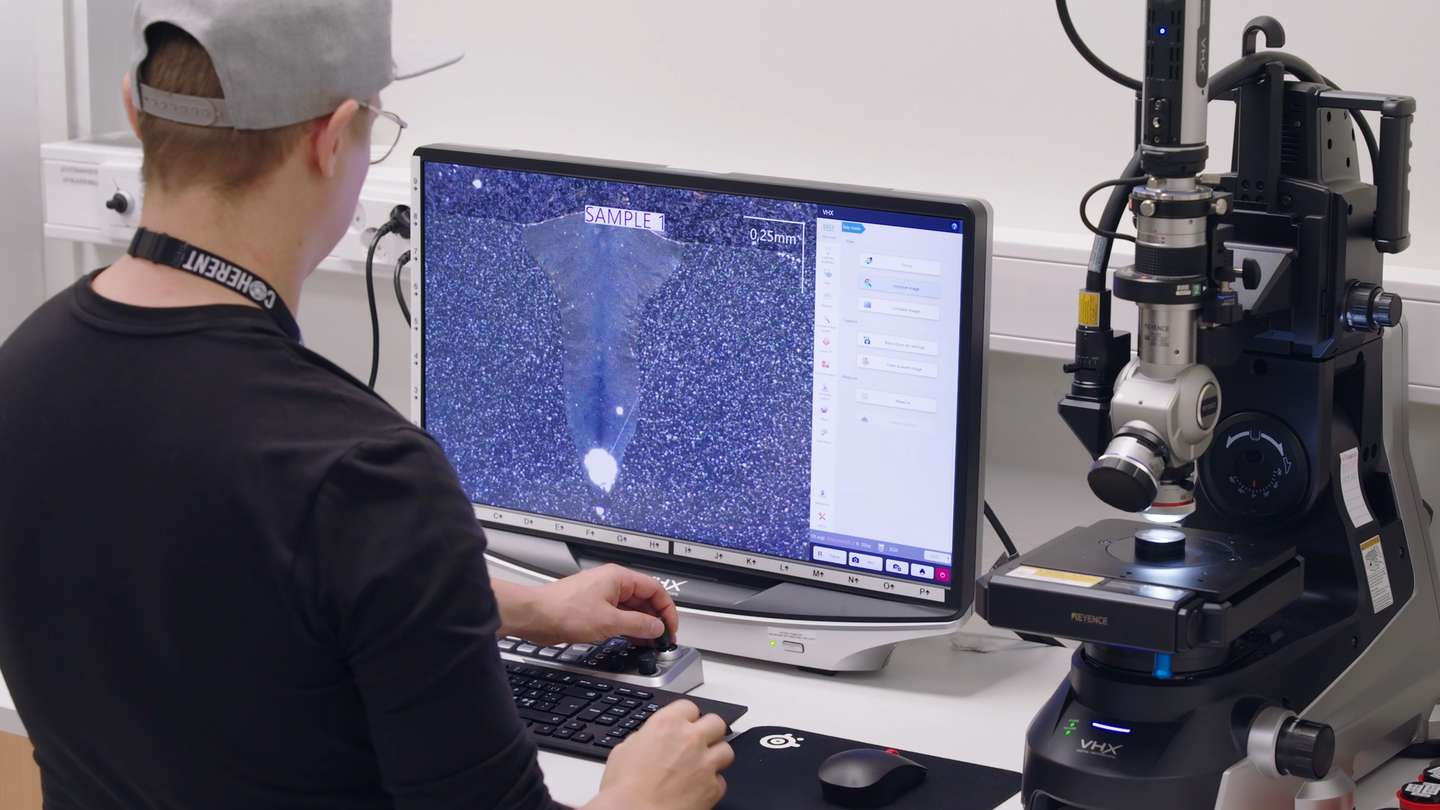
According to Antikainen, components are checked at different production stages, while completed laser modules undergo functional and performance testing before delivery. These tests include verifying output power and its stability during extended operation.
"There's a footprint of everything," Antikainen explains. If a component batch proves faulty, the company can trace the issue back through its manufacturing records.
For customers, this approach has value beyond quality assurance. Industrial equipment often operates within tightly scheduled production environments where unexpected failures can interrupt multiple downstream processes.
Traceability makes investigations more systematic, while thorough testing before delivery helps reduce the risk of equipment problems entering production.
For Antikainen, the confidence that comes from this process is also a source of professional pride. "I can stand behind our products," he says, reflecting on the testing and engineering behind the lasers manufactured in Tampere.
Coherent Fiber Laser's technology meets Kemppi's welding expertise
The laser module is only one part of what makes FastBeam 3 an industrial welding solution.
While Coherent Fiber Laser provides the technology for generating stable, high-power laser light, Kemppi integrates it into a complete system designed around welding performance, operator usability and industrial safety.
FastBeam 3 combines its water-cooled 3 kW laser source with Kemppi's Penetration Shape Control, allowing welders to adjust beam shape, balance, oscillation and power to suit different applications.
With adjustable beam oscillation from 0–5 mm at frequencies of 20–150 Hz, welders can control how energy is distributed across the joint and adapt the weld profile to different materials and joint geometries.
This is where optical performance becomes measurable production value. A stable laser source helps deliver predictable energy to the workpiece, while Kemppi's process controls determine how that energy is applied.
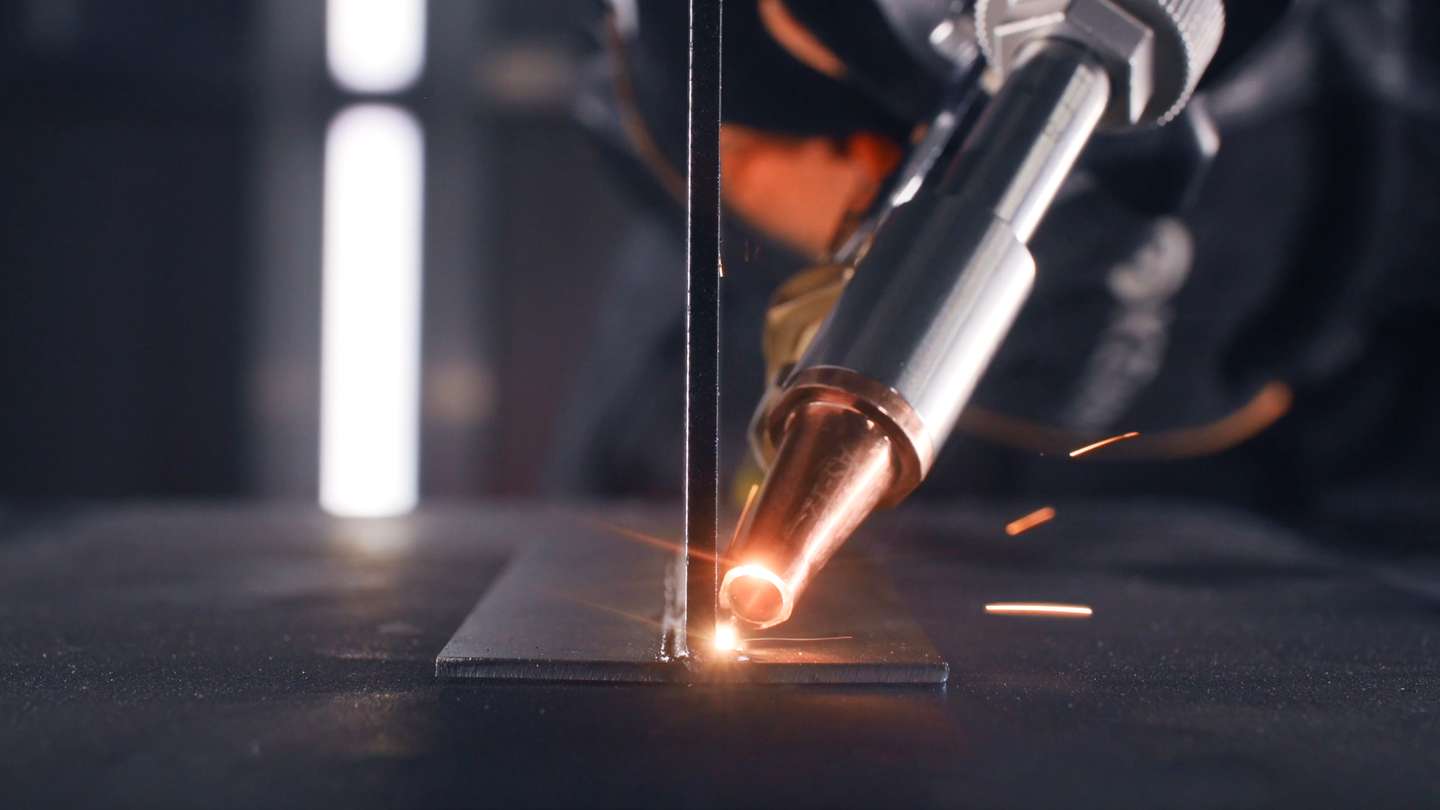
Concentrating heat precisely around the joint can reduce the heat-affected zone and limit distortion in suitable applications. Less distortion can mean fewer corrective operations, less finishing work and a lower cost per finished component.
FastBeam 3 also addresses the practical requirements of industrial operation. Weld Assist guides users toward suitable starting parameters, while the water-cooled LT3 torch, optional filler-wire feeding and external chiller support varied production tasks.
The external chiller can be positioned outside the welding enclosure using 5 m or 10 m cooling hoses, helping reduce heat and noise around the operator while improving maintenance access.
For manufacturers, the benefit extends to the combination of controlled weld quality, efficient job changes, reduced secondary work and equipment designed for dependable operation.
Finnish expertise at laser speed
The strength of the collaboration lies in what each company contributes. While Coherent Fiber Laser produces and tests the laser module in Tampere, Kemppi develops and manufactures the complete FastBeam 3 system in Lahti, integrating the laser with welding process controls, safety functions and equipment designed for industrial use.
For manufacturers, this partnership brings something particularly valuable: confidence in what goes into the machine and what they can expect from it. FastBeam 3 includes automatic laser power cut-off with redundant protection, color-coded machine status indications and a limited start window after torch contact. These built-in functions support safe operation alongside the protective equipment, training and controlled working environment required for handheld Class 4 laser welding.
Antikainen believes further developments in optical fibers and laser wavelengths will continue expanding what industrial lasers can achieve. Different wavelengths can change how materials absorb laser energy, potentially opening opportunities to process materials that are currently difficult to weld or cut efficiently.
For Kemppi, FastBeam 3 represents an important step in bringing this technology into everyday industrial fabrication.

Varsha Saraogi
Varsha Saraogi
Issue d’un parcours en journalisme et en stratégie éditoriale, Varsha apporte une vision internationale B2B au contenu et à la communication chez Kemppi. Passionnée par la création de récits à forte valeur ajoutée, elle s’attache à relier la technologie du soudage aux femmes, aux hommes et aux industries qu’elle accompagne. Son approche allie rigueur technique, clarté et sens de la narration, pour rendre des sujets complexes accessibles et engageants. Ses articles ont été publiés dans des médias spécialisés reconnus tels que Airport Technology, Railway Technology, Ship Technology, FinTech Global et RegTech Analyst, témoignant d’une expérience solide à l’intersection de multiples secteurs industriels et business.
Produits connexes
Famille de produits
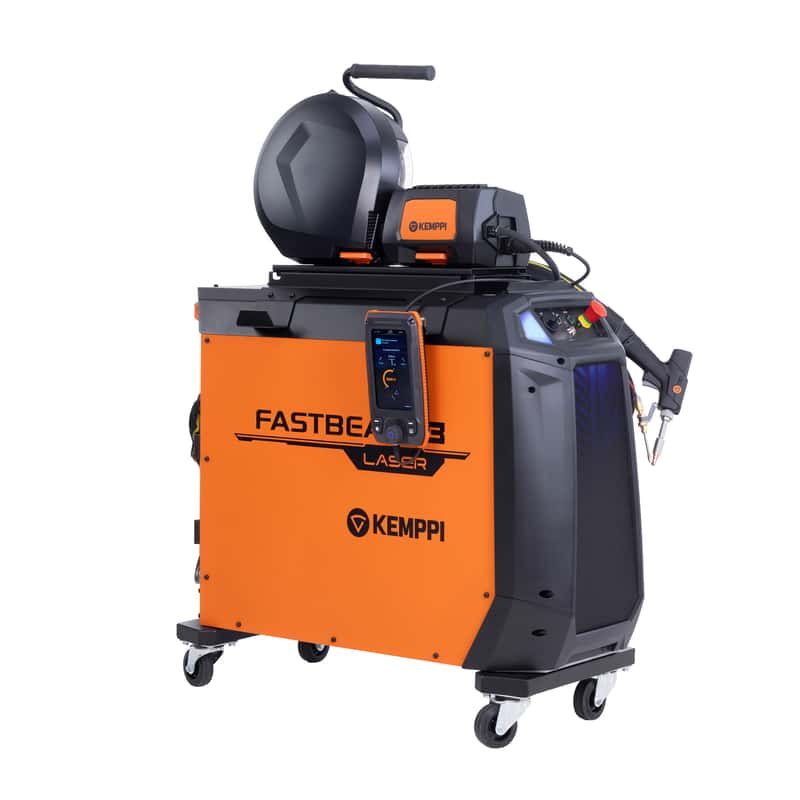
Fabriqué en Finlande, FastBeam 3 est un poste à souder laser à fibre de 3 kW à torche manuelle, conçu pour souder l'acier, l'acier inoxydable et l'aluminium avec rapidité et maîtrise. Grâce aux fonctions intégrées Penetration Shape Control et Weld Assist, le soudage au laser industriel bénéficie de réglages précis, d'une préparation plus rapide et d'une traçabilité numérique.
Plus d'articles de blog
Comment le soudage laser pourrait transformer la fabrication industrielle d’ici 2035
Le soudage laser transforme déjà la vitesse à laquelle les industriels peuvent travailler. Mais son potentiel le plus important réside dans tout ce qui se passe autour de la soudure. De la pénurie de compétences aux changements de série plus rapides, en passant par un contrôle qualité plus précoce et une meilleure utilisation des capacités de production, nous examinons comment le laser pourrait remodeler la fabrication d’ici 2035.
Soudage manuel, Innovation
Ce que 10 000 soudures révèlent sur la productivité du soudage laser
Quel est le véritable coût d’une soudure ? À partir des essais comparatifs de Kemppi sur le soudage laser, MAG et TIG, cet article va au-delà de la vitesse pour examiner le temps de soudage, le gaz de protection, le métal d’apport, l’apport thermique et les opérations de finition. Découvrez comment ces écarts peuvent peser sur la capacité de production, la productivité et la rentabilité.
Innovation, Soudage manuel
Comment Rapid Welding et Kemppi ont bâti un partenariat qui dure
Rapid Welding travaille avec Kemppi depuis la création de l'entreprise en 1990. Roy Edwards, cofondateur et directeur général, présente les principes qui sous-tendent ce partenariat de 36 ans : choisir la bonne solution de soudage, accompagner les équipements tout au long de leur durée de vie, répondre à la pénurie de compétences et déterminer la place appropriée de l'automatisation et du soudage laser.
Automatisation du soudage, Soudage manuel, ABC du soudage
Une sécurité qui s'adapte aux défis des soudeurs et à l'évolution des risques
Les exigences en matière de sécurité dans le domaine de soudage sont de plus en plus strictes. Les dangers à l’arc restent constants, mais les conditions de travail modernes font que l’exposition peut s’accumuler sur des périodes de travail plus longues et dans des espaces intérieurs plus confinés. Par conséquent, les EPI de soudage doivent être considérés à la fois comme une protection pour le soudeur et comme une preuve de conformité. Chez Kemppi, les EPI de sécurité pour le soudage sont conçus et validés en conditions réelles, sur la base d’exigences claires, des retours d'expérience des soudeurs, ainsi que d’une conformité vérifiée au Règlement européen EPI 2016/425, aux processus de marquage CE et aux normes EN applicables.
Sécurité, ABC du soudage
Eurosatory 2026 et l'avenir de l'industrie de la défense
Eurosatory 2026 a mis en lumière une évolution claire de l’industrie de défense moderne. Si les systèmes de défense deviennent de plus en plus numériques, connectés et autonomes, leur fondement reste profondément matériel. Des véhicules blindés aux systèmes d’artillerie, en passant par la résilience industrielle, la qualité des soudures et les structures métalliques, l’acier, les procédés de fabrication et la rigueur de production demeurent au cœur de la préparation opérationnelle.
Digitalisation, Innovation
How AI Supports Quality, Traceability, and Flexibility in Robotic Welding
The AITOOLS1 webinar explored how AI-assisted process control, machine vision, synchronized data, and machine learning models are advancing robotic welding automation, improving quality management, traceability, and production flexibility for demanding industrial production.
Automatisation du soudage, Innovation, Digitalisation