Автоматизация сварочных работ
What Nordic Welding Expo 2026 revealed: robotics, laser welding and the future of fabrication
26 марта 2026 г.
The Nordic Welding Expo 2026 highlighted where welding is heading. While automation and laser welding are accelerating, the real advantage lies in workflows that deliver repeatable results under real constraints and digital traceability is becoming part of everyday production
Varsha Saraogi
In the welding, robotic integration and manufacturing industries, the conversation is changing. At Nordic Welding Expo’s 20th edition in Tampere, that shift was impossible to miss: we’re moving from planning to implement automation to deploying technologies that can be integrated smoothly as well as survive production challenges such as changing variation, time pressure, mixed materials and the daily grind of getting consistent results.
We heard from some of the leading firms in robotics such as ABB, Yaskawa, Robomatik and Murri about what’s next in welding. Three themes came up: automation and laser welding with a refreshingly practical lens. And, how technology will change the role of the traditional welder.
1) Automation is no longer the question. Integration is the battleground.
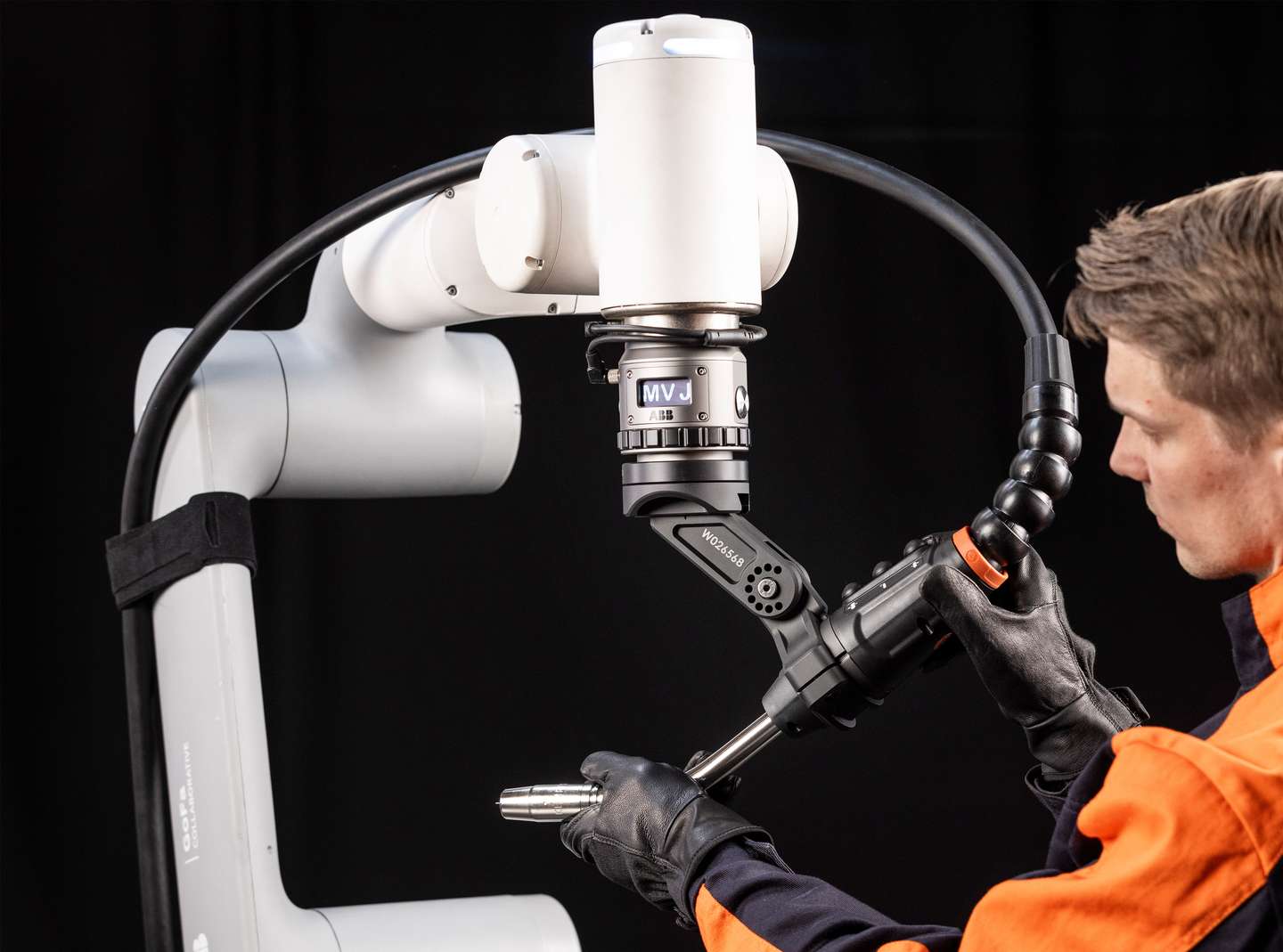
Industrial robots are already scaling globally. Per the International Federation of Robotics, 542,000 industrial robots were installed in 2024 worldwide, and annual installations have stayed above 500,000 for four straight years. Admittedly, the consistent theme in conversations across the expo was that while the robot is crucial, the real challenge is integration. The most prominent issues facing companies are:
Fixturing and part variation: can the cell tolerate production reality?
Changeovers and programming time: is it flexible enough for high-mix production?
Operator adoption: can it be run confidently on the shop floor by welders and not just by specialists?
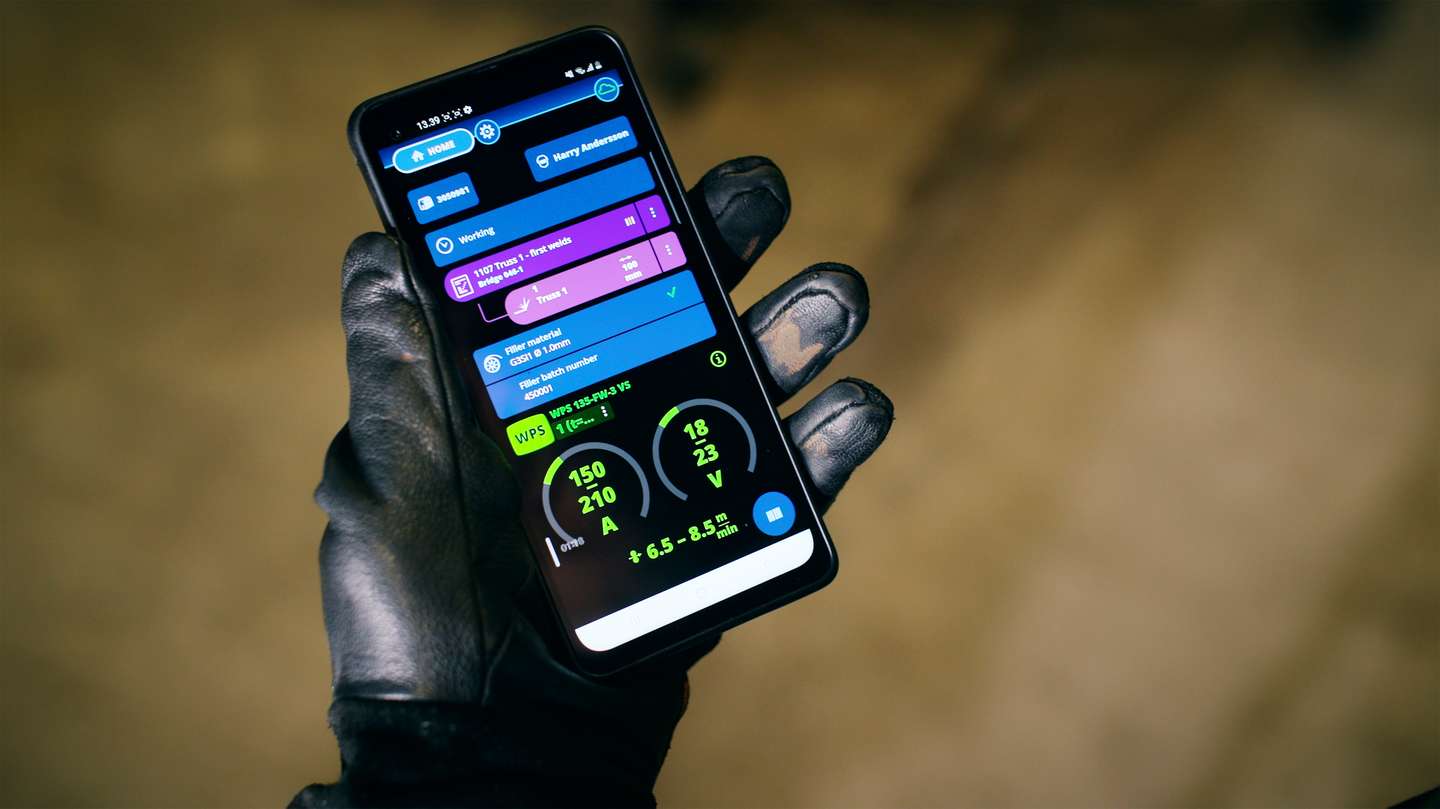
Traceability and proof: can one track the welds without creating admin overload?
Kemppi takeaway: Top priorities are repeatable arc performance, sensible parameter control, and tools that make it easier to standardize results across shifts and sites.
That’s why we design welding cells + workflows that tolerate the real production mess: part variation, awkward access, mixed batches, consumable wear. For Kemppi, helping customers turn automation and process choices into repeatable results, backed by traceability with WeldEye and training/services is what makes welding systems scalable.
2) Laser welding is moving from hype to strategy
Laser welding is already becoming a production strategy for manufacturers who chase tighter tolerances, higher throughput, and lower distortion, especially in high-volume environments where small improvements compound quickly.
Of course, arc processes remain the backbone of fabrication because they’re adaptable and more forgiving in the messy realities of gaps, variation, and positional work. Laser, by contrast, tends to win when the joint design and process control support it and where precision and low heat input translate into measurable gains.
Market signals back up that momentum. One major analysis values the laser welding machine market at USD 2.7B in 2024, projecting 5.2% CAGR through 2034, driven by advanced manufacturing needs, especially sectors like automotive, aerospace and medical devices.
3) Skills are still the multiplier
Even with automation rising, the craft isn’t going away, and neither is the need for skilled people. AWS-backed workforce data projects 320,500 new welding professionals needed in the U.S. by 2029, averaging 80,000 jobs to be filled annually by 2029. That shortage is exactly why companies should focus on: making quality repeatable, setups faster, and knowledge transferable across shifts.
The most exciting innovations go beyond new features. They are the things that help skilled welders scale quality so they can implement more stable results across positions and materials, better control the heat input, and get training in workflows that reduce variability and rework.
Kemppi takeaway: Modern welding systems demand disciplined setup, process understanding, and consistent execution. What we aim to solve through our structured training for welders: how quickly a new operator can produce a compliant weld; how consistently a team can follow WPS; how smoothly knowledge transfers across shifts and sites.
What stood out most was a clear north star: predictability. This means building welding systems defined by stable arc performance, intuitive parameter control, and digital workflows that remove friction from quality proof. Kemppi’s role sits right there - bringing equipment, WeldEye traceability, and hands-on support together so repeatable welding becomes repeatable output.

Varsha Saraogi
Varsha Saraogi
Hails from a background in journalism and editorial strategy and brings an international B2B perspective to content and communications at Kemppi. Passionate about creating stories that connect welding technology with the people and industries it serves, combining technical substance with a clear and engaging voice. Work has been published in specialist titles such as Airport Technology, Railway Technology, Ship Technology, FinTech Global, and RegTech Analyst, reflecting experience across a wide range of industrial and business sectors.
Связанные продукты

MSM358G
Продукт
Компактный сварочный аппарат MIG/MAG с возможностью ручной, синергетической (Auto) и импульсной (Auto Pulse) сварки, а также сварки двойным импульсом. Обеспечивает силу тока 350 А с продолжительностью включения 40 %. Интеллектуальная настройка параметров сварки с помощью Weld Assist. Полноцветный TFT-дисплей со встроенным цифровым подключением к WeldEye и светодиодными рабочими фонарями для удобства операторов. Включает в себя рабочие пакеты программного обеспечения для сварки, в том числе: Fe, Ss, Al, CuSi, CuAl, Fe металл, Fe рутил, FC-CrNiMo. Возможность использования с генератором.
MSM358GM
Продукт
Компактный сварочный аппарат MIG/MAG с возможностью ручной, синергетической (Auto) и импульсной (Auto Pulse) сварки, а также сварки двойным импульсом. Обеспечивает силу тока 350 А с продолжительностью включения 40 %. Интеллектуальная настройка параметров сварки с помощью Weld Assist. Полноцветный TFT-дисплей со встроенным цифровым подключением к WeldEye и светодиодными рабочими фонарями для удобства операторов. Включает в себя рабочие пакеты программного обеспечения для сварки, в том числе: Fe, Ss, Al, CuSi, CuAl, Fe металл, Fe рутил, FC-CrNiMo. Возможность работы от генератора и при различном напряжении питания.
Семейство продуктов
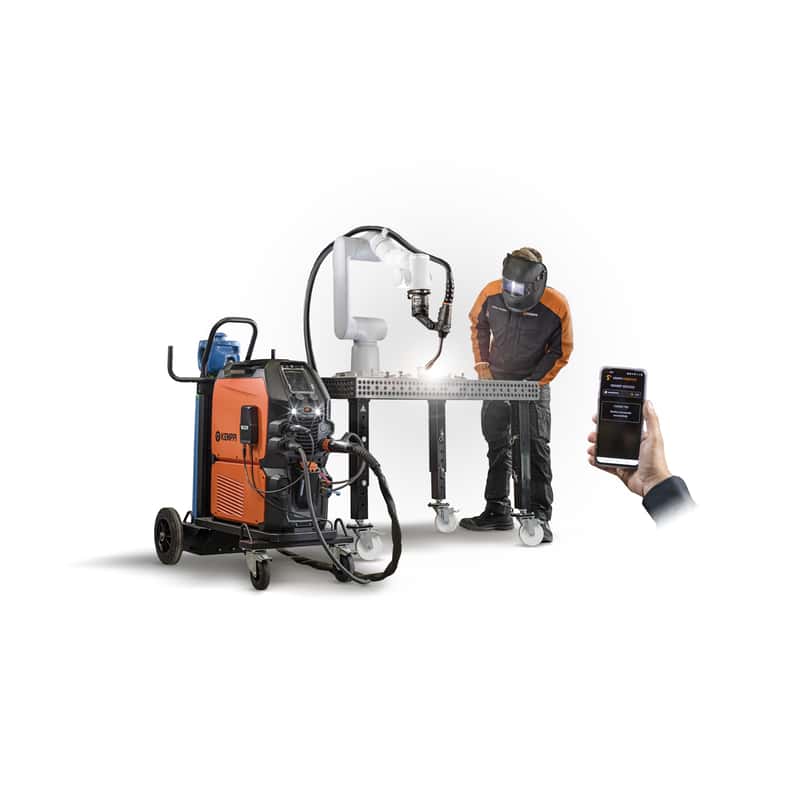
Решения Kemppi для кобот-сварки предлагают оптимизированный процесс настройки с гибкими опциями для различных областей применения автоматизированной сварки. Наше предложение создано для обеспечения надежности, точности и высокой производительности и включает модели Master M и X5 FastMig, а также систему кобот-сварки AX с расширенными возможностями автоматизации для интенсивного промышленного использования.
Другие посты блога
How Kemppi helps its partners succeed in cobot welding
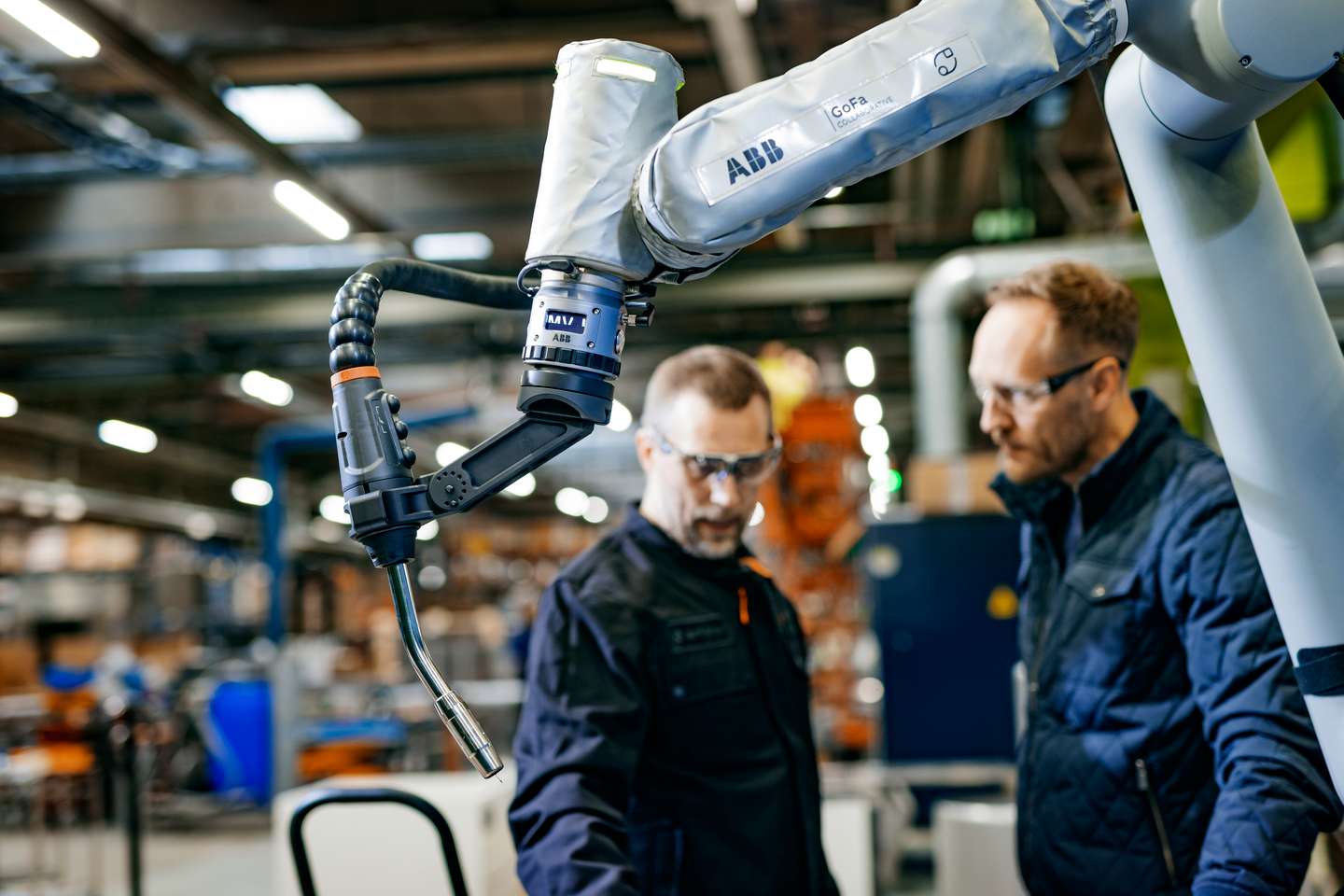
In this article, we discuss the evolving landscape of cobot welding with two industry experts: Alessio Cocchi, Global Cobot Sales & Marketing Manager from ABB, and Jakub Bancer, Key Account Manager from FANUC.
Автоматизация сварочных работ, Люди
How WeldEye welding management software sets the standard for welding traceability
Welding traceability is becoming an increasingly essential requirement in industries where safety, quality, and compliance are paramount.
Цифровизация
Kemppi’s Cobot Solution: Practical automation for modern welding needs
The welding industry is under constant pressure to improve productivity, maintain high quality, and address a growing shortage of skilled labor. Collaborative robots, or cobots, provide a flexible and efficient way to automate welding tasks without fully replacing the human operator. Kemppi’s cobot solution stands out with its unique approach: a practical, cost-effective combination of proven hand-welding technology and smart integration tools.
Автоматизация сварочных работ
How Rapid Welding and Kemppi Built a Partnership That Lasts
Rapid Welding has worked with Kemppi since the company opened in 1990. Co-founder and Managing Director Roy Edwards highlighted the principles behind that 36-year partnership, from choosing the right welding solution and supporting equipment throughout its life to addressing the skills shortage and finding the right place for automation and laser welding.
Автоматизация сварочных работ, Ручная сварка, Вводные сведения о сварке
Безопасность, соответствующая задачам сварщиков и меняющимся рискам
Требования к безопасности при сварке становятся все более строгими. Уровень опасности в зоне дуги остается неизменным, однако современные условия труда предполагают продолжительную работу в течение длительных смен и в тесных помещениях, что приводит к накоплению воздействия. Сварочные СИЗ должны рассматриваться как защита для сварщика и как доказательство соответствия требованиям. В компании Kemppi средства индивидуальной защиты для обеспечения безопасности при сварке разрабатываются и проходят практическую проверку на основе четких требований, отзывов сварщиков, а также подтвержденного соответствия Регламенту ЕС 2016/425 о СИЗ, процедурам маркировки CE и соответствующим стандартам EN.
Безопасность, Вводные сведения о сварке
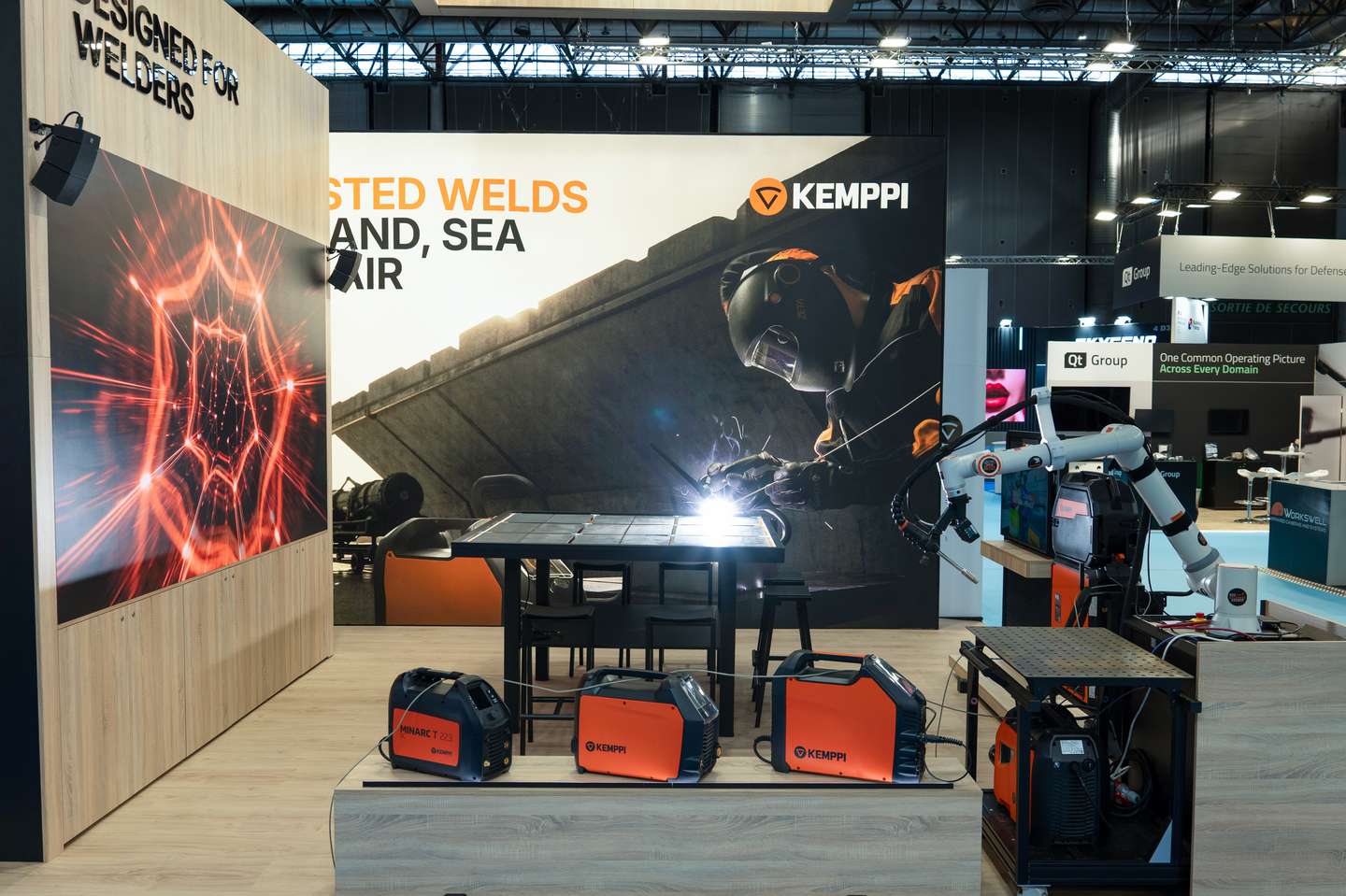
Eurosatory 2026 And the Future of Defence Manufacturing
Eurosatory 2026 highlighted a clear shift in modern defence manufacturing. While defence systems are becoming more digital, networked, and autonomous, their foundation remains physical. From armoured vehicles and artillery to industrial resilience, welding quality, steel structures, and production discipline remain paramount to defence readiness.
Цифровизация, Инновации