Ручная сварка
How Laser Welding Could Reshape Fabrication by 2035
30 октября 2026 г.
Laser welding is already changing how fast manufacturers can work. Its bigger potential lies in what happens around the weld. From scarce skills and faster changeovers to earlier quality control and better use of production capacity, we look at how laser could reshape fabrication by 2035.
Varsha Saraogi
The most obvious case for laser welding can be succinctly summarised: it’s fast. However, by 2035, speed may be one of its least interesting advantages.
Fabricators are being asked to handle more product variation, shorter production runs and tighter delivery schedules; while skilled welding capacity remains difficult to add. Equipment must move between jobs more quickly, quality problems need to be caught earlier, and existing production capacity has to work harder.
So, the defining question is: how can laser welding help remove the bottlenecks that limit production? Skills, changeovers, quality and capacity are four areas where the answer is already settled.
Bottleneck 1: Skilled capacity
Manufacturers can no longer assume labour will grow when production does.
The challenge extends well beyond welding. The World Economic Forum reports that 86% of employers expect AI and information-processing technologies to transform their businesses by 2030, while 63% identify skills gaps as the biggest barrier to transformation.
That points toward a different model for industrial work.
Repetitive, predictable tasks increasingly move toward automation or processes that require less manual intervention. Experienced professionals concentrate on exceptions, complex joints, process optimisation and quality.
A factory will always need welders.
Kemppi, for example, increasingly uses guided setup and process assistance to reduce the number of manual decisions needed before welding begins. FastBeam 3's Weld Assist follows the same principle for laser welding: technology supports the operator in reaching suitable starting parameters rather than expecting every setting to be built from scratch.
Bottleneck 2: Changeovers
Automation works when the same component is produced thousands of times. However, automation must continue to remain economical when the part changes.
That is why the next important productivity breakthrough goes beyond a robot that moves faster. It may be getting from one job to the next faster.
Kemppi is becoming part of that discussion because beam behaviour and process parameters can be precisely controlled in FastBeam 3. Penetration Shape Control allows adjustment of beam shape, balance, oscillation and power, while guided setup allow laser welding to be adapted to suitable applications without treating every job as identical.
For instance, if you receive an urgent order for 80 stainless-steel assemblies, the key concern will be how quickly the process can be prepared, validated and producing good parts. The competitive advantage will be the time between receiving the order and producing the first good part. That is a metric worth watching.
That matters especially where flexibility and smaller production runs can be as important as pure volume.
Bottleneck 3: Finding problems too late
A defect found during welding is a process problem. A defect found after 500 components have been produced is a business problem. The objective is straightforward: catch variation before it becomes rework.
By 2035, the sequence could increasingly become: weld → monitor → recognise → correct
Rather than: weld → inspect → discover → rework
The economic prize is obvious: less scrap, less rework and fewer batches produced under the wrong conditions.
The weld itself becomes a source of information. Kemppi's current approach encompasses controlled parameters, guided setup and digital welding information. The longer-term opportunity is to connect those elements more closely: helping welders set the process correctly as well as understand what happened during production.
Bottleneck 4: Improving productivity
Buying technology is easy. Connecting it to production, people, data, cybersecurity and existing workflows is considerably harder.
The lesson for laser welding is important. A business case cannot stop at welding speed. Manufacturers need to understand what happens to all the variables including capacity, setup, finishing, quality, labour utilisation, lead times and ultimately cost per finished part.
That is why Kemppi's move into laser is broader than adding another welding machine. FastBeam 3 adds laser to a portfolio that already includes manual welding, automation and digital solutions, allowing the conversation to begin with the production problem rather than a predetermined process.
Beyond the beam
While FastBeam 3 marks Kemppi's entry into handheld laser welding, the bigger shift is around the beam: easier setup, flexible production, smarter process control and a growing expectation that technology must improve the economics of the entire production flow.
By 2035, the best fabrication factories may still have highly skilled people. What it should also have less of is waiting, unnecessary repetition, avoidable rework and unused capacity.
To conclude, laser will not replace every welding process. MAG will remain the logical choice for many applications. TIG will remain valuable where its particular level of manual control is required. Manual welding and automation will continue to coexist.
What changes is the range of options manufacturers have for solving a production problem.

Varsha Saraogi
Varsha Saraogi
Hails from a background in journalism and editorial strategy and brings an international B2B perspective to content and communications at Kemppi. Passionate about creating stories that connect welding technology with the people and industries it serves, combining technical substance with a clear and engaging voice. Work has been published in specialist titles such as Airport Technology, Railway Technology, Ship Technology, FinTech Global, and RegTech Analyst, reflecting experience across a wide range of industrial and business sectors.
Связанные продукты
Семейство продуктов
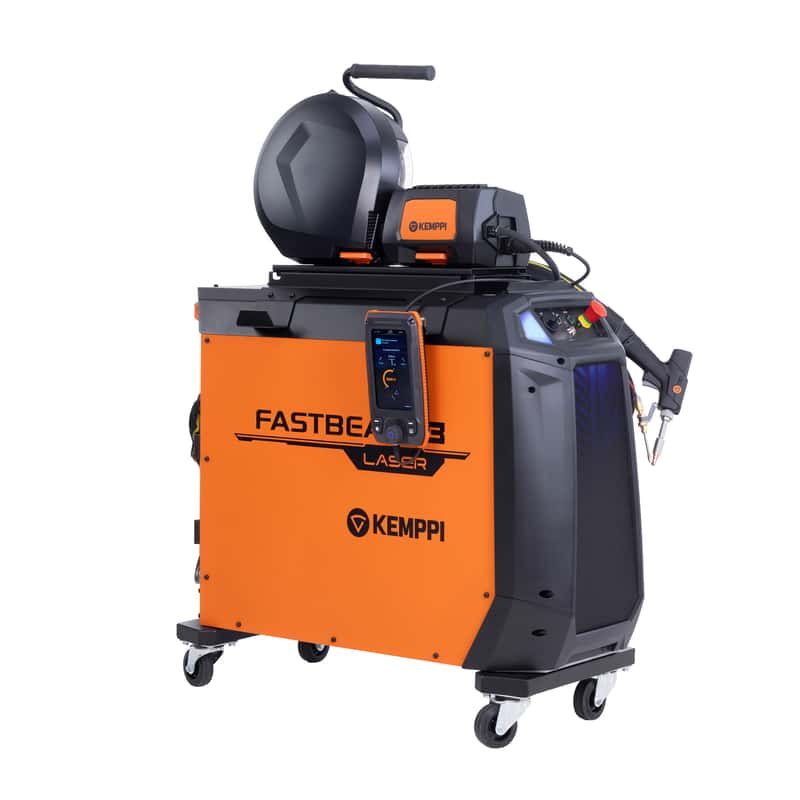
FastBeam 3 — это произведенный в Финляндии портативный волоконно-лазерный сварочный аппарат мощностью 3 кВт, предназначенный для быстрой и контролируемой сварки стали, нержавеющей стали и алюминия. Интеграция функций контроля формы провара и системы Weld Assist обеспечивает точную настройку технологического процесса, более быструю настройку оборудования и цифровую прослеживаемость в промышленной лазерной сварке.
Другие посты блога
What 10,000 Welds Reveal About Laser Welding Productivity
What is the real cost of a weld? Kemppi's comparison of laser, MAG and TIG welding goes beyond welding speed to examine the factors that shape production costs, from labour hours and consumables to heat input, finishing and rework. Discover how seemingly small differences can add up across thousands of welds, freeing production capacity, improving efficiency and strengthening the business case for laser welding.
Инновации, Ручная сварка
What Built to Last Really Means in Defence and Marine Welding
Critical defence and military vessels and marine structures are built for decades of demanding service. This article explores what 'built to last' means in welding, from harsh-condition reliability and repeatable weld quality to traceability across long vessel lifecycles.
Инновации, Цифровизация
How does steel welding benefit from special processes?
Welding mild steels may often be considered a simple task. However, welding these steels has specific characteristics that can make the welding process challenging.
Ручная сварка, Вводные сведения о сварке
How Rapid Welding and Kemppi Built a Partnership That Lasts
Rapid Welding has worked with Kemppi since the company opened in 1990. Co-founder and Managing Director Roy Edwards highlighted the principles behind that 36-year partnership, from choosing the right welding solution and supporting equipment throughout its life to addressing the skills shortage and finding the right place for automation and laser welding.
Автоматизация сварочных работ, Ручная сварка, Вводные сведения о сварке
Безопасность, соответствующая задачам сварщиков и меняющимся рискам
Требования к безопасности при сварке становятся все более строгими. Уровень опасности в зоне дуги остается неизменным, однако современные условия труда предполагают продолжительную работу в течение длительных смен и в тесных помещениях, что приводит к накоплению воздействия. Сварочные СИЗ должны рассматриваться как защита для сварщика и как доказательство соответствия требованиям. В компании Kemppi средства индивидуальной защиты для обеспечения безопасности при сварке разрабатываются и проходят практическую проверку на основе четких требований, отзывов сварщиков, а также подтвержденного соответствия Регламенту ЕС 2016/425 о СИЗ, процедурам маркировки CE и соответствующим стандартам EN.
Безопасность, Вводные сведения о сварке
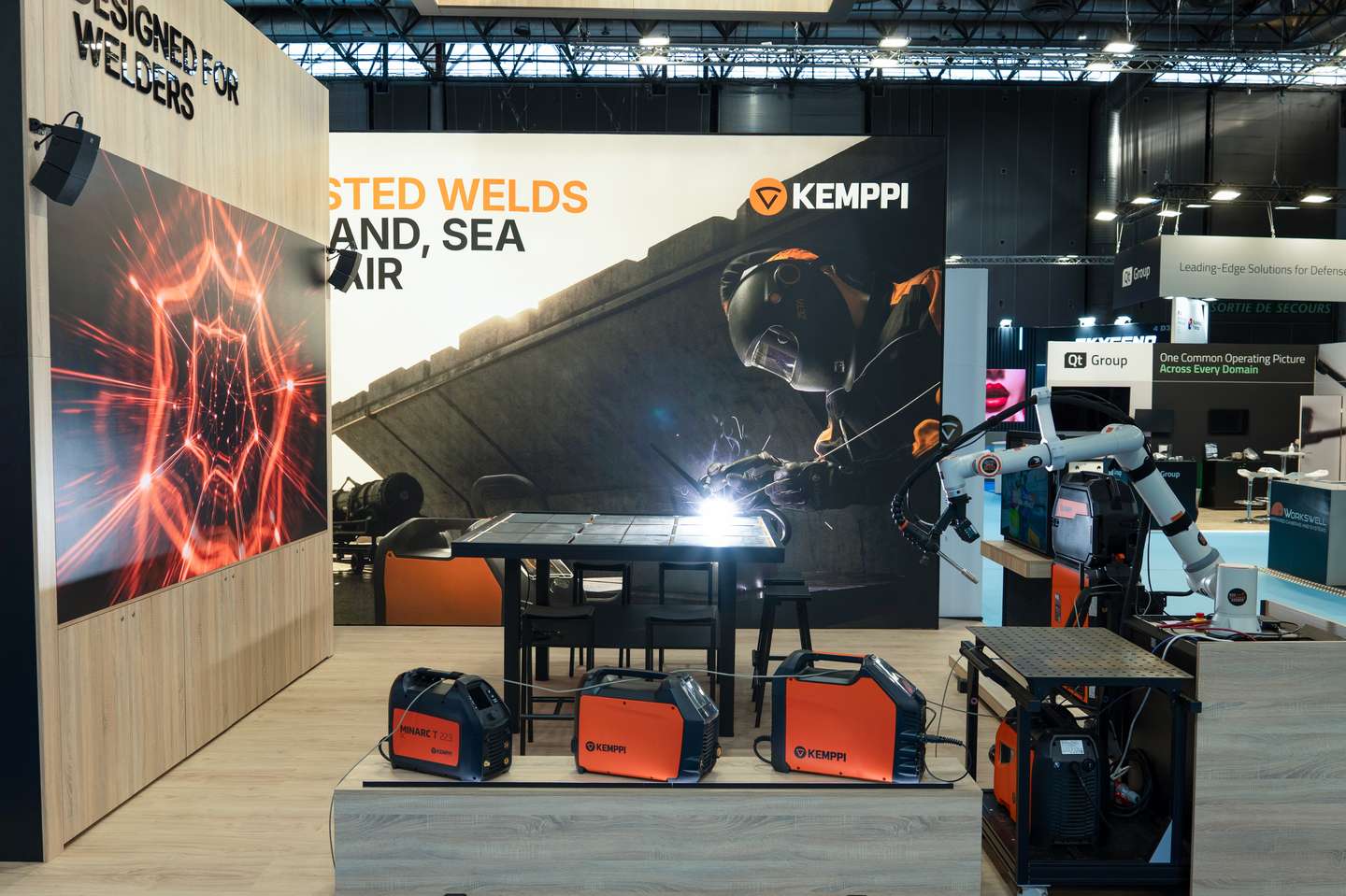
Eurosatory 2026 And the Future of Defence Manufacturing
Eurosatory 2026 highlighted a clear shift in modern defence manufacturing. While defence systems are becoming more digital, networked, and autonomous, their foundation remains physical. From armoured vehicles and artillery to industrial resilience, welding quality, steel structures, and production discipline remain paramount to defence readiness.
Цифровизация, Инновации