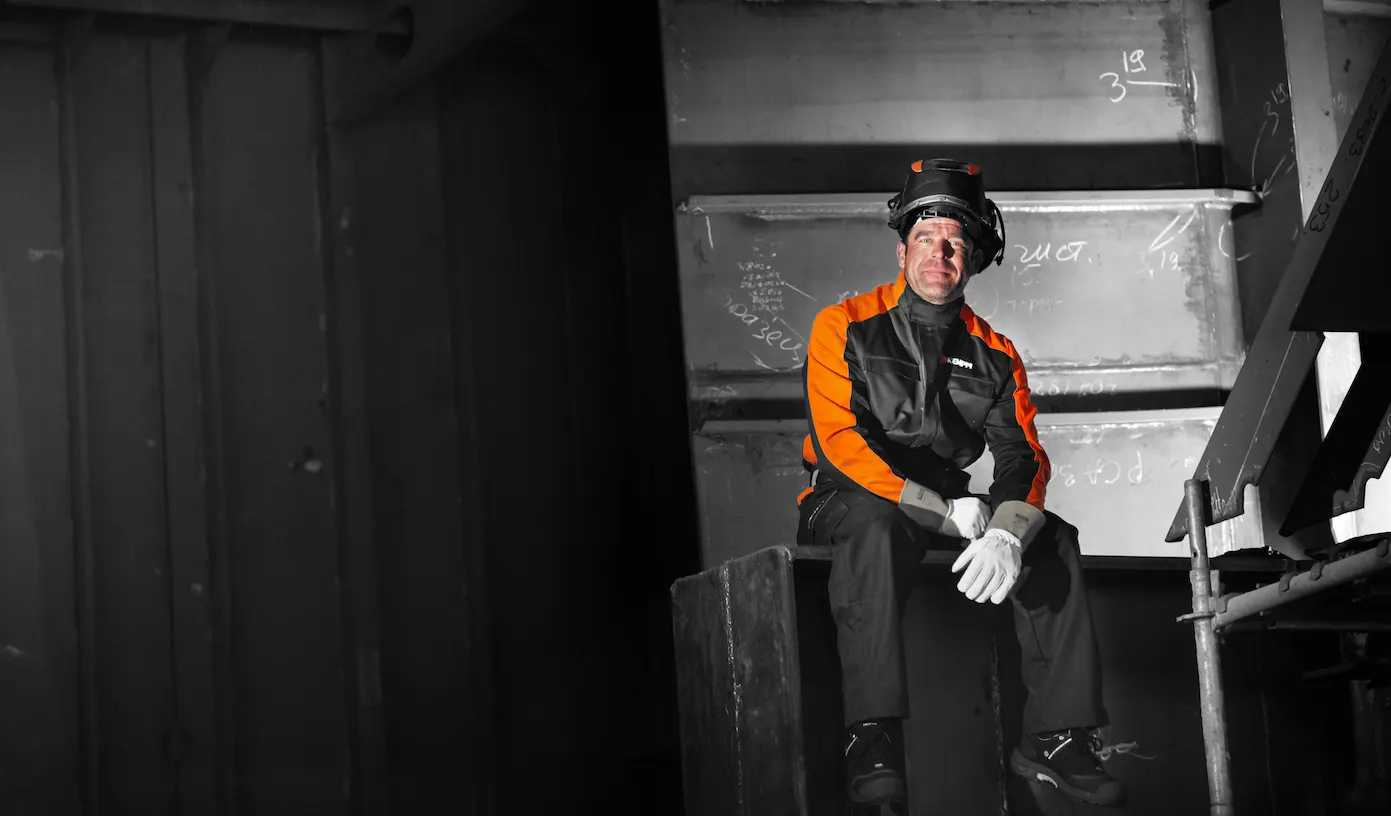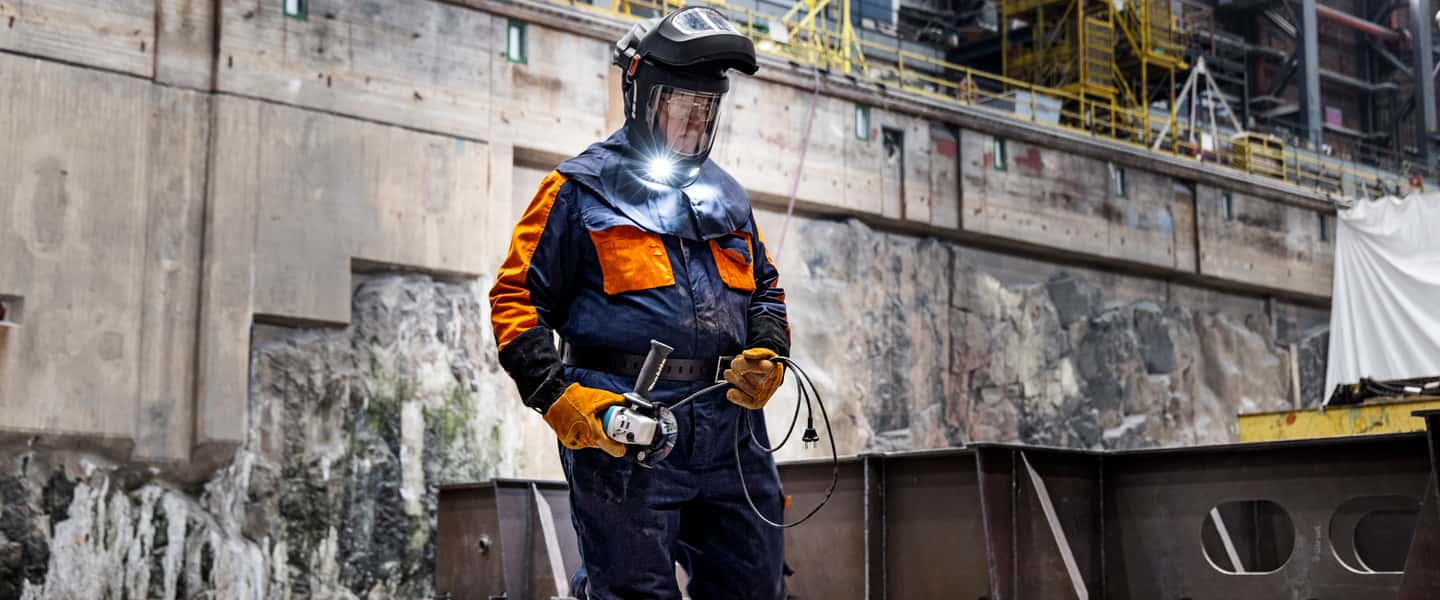
Helsinki Shipyard
Helsinki Shipyard welders gain clearer vision and filtered air with Kemppi Epsilon
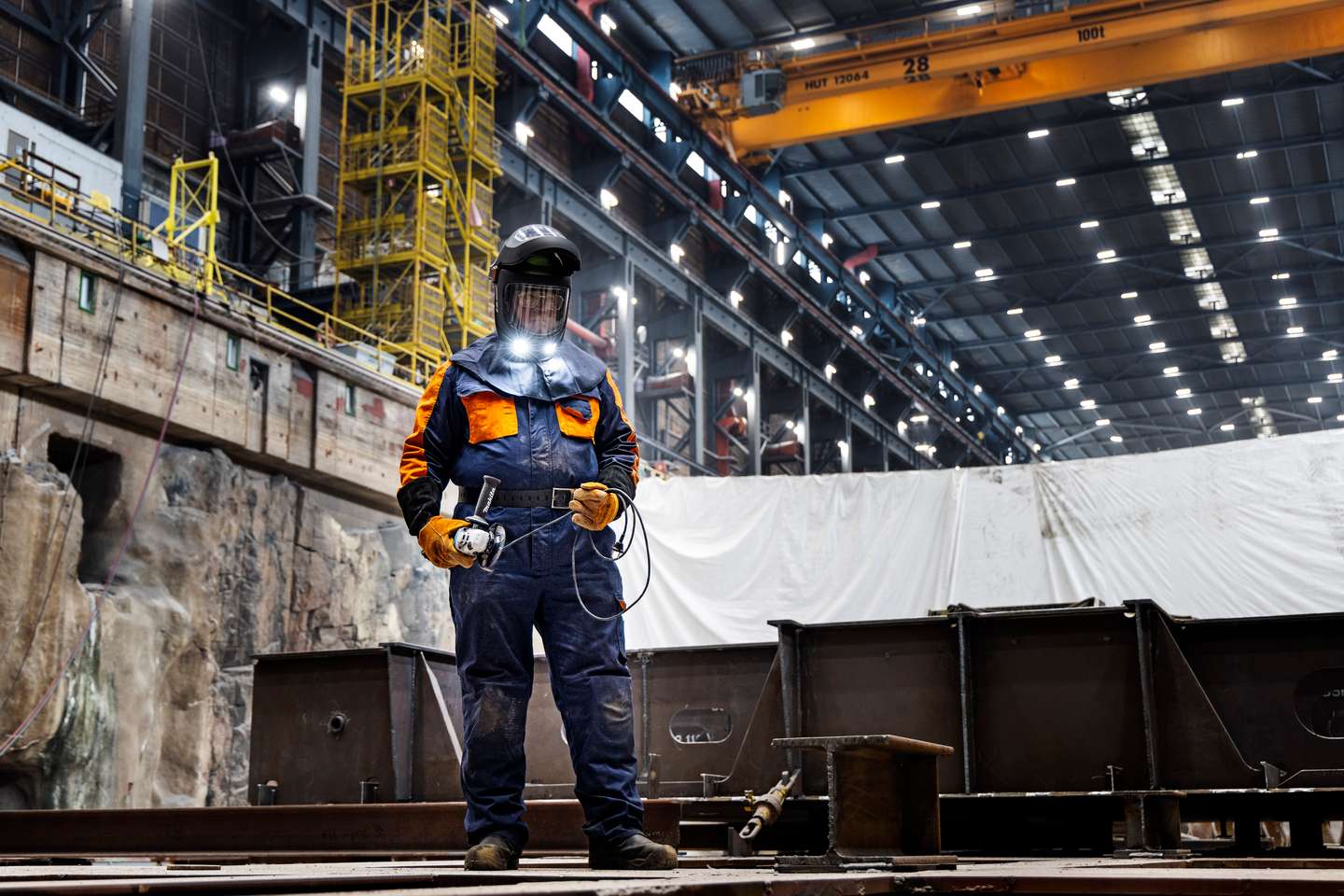
From welding and grinding to final inspection, shipyard work requires protection that adapts as tasks and conditions change. At Helsinki Shipyard, welders put the Kemppi Epsilon fresh-air welding helmet to work, assessing its field of view, filtered breathing air and task-specific visor options that perform together in one adaptable protection system.
Company
Helsinki Shipyard
Website
helsinkishipyard.fiIndustry
Shipbuilding
Location
Helsinki, Finland
Base material
AI, Fe, Ss
Helsinki Shipyard builds vessels for some of the world's most demanding operating environments. Around half of the world's operating icebreaker fleet has been built at the site.
Behind every ice-class vessel are long hours of welding in enclosed spaces where fumes may not disperse easily. For a welder, protective equipment is essential and must provide a clear view of the joint, dependable airflow and a stable fit throughout the working day.
Ali Al‑Obaidi, who has worked as a welder at Helsinki Shipyard since 2021, covers different welding processes, materials and positions. Some assignments require him to remain at the same weld location for an entire shift or return to it over several days.
"Sometimes I weld in one place all day, or for several days. In enclosed areas, the fumes do not clear easily, so good respiratory protection is very important," Ali explains.
Helsinki Shipyard puts Epsilon to the test
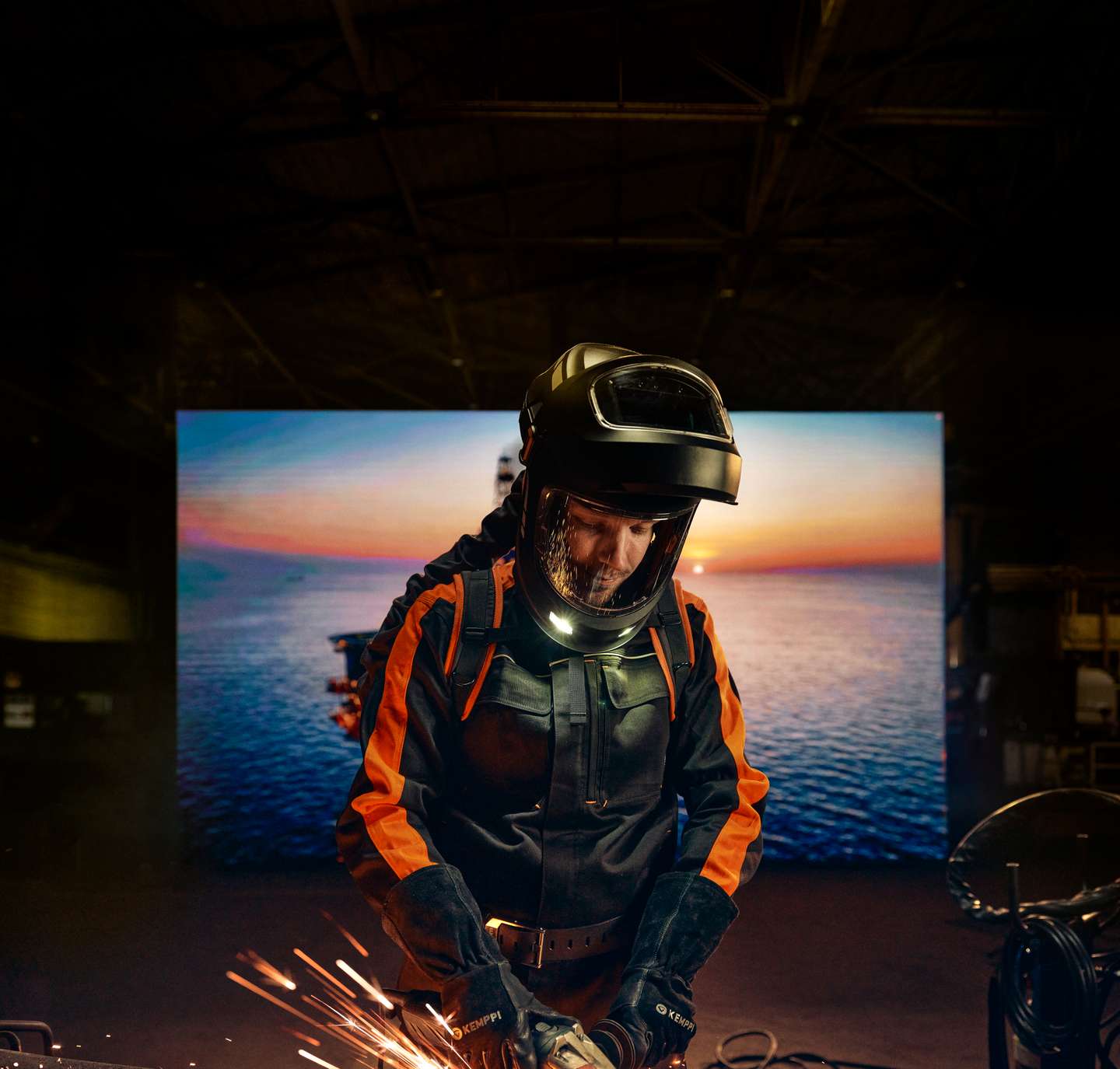
At the time of the trial, Ali was working on pipe sections. Welding position and joint geometry can bring fumes close to the welder's face, while residues from cutting or surface treatments may add to the airborne contaminants. Local extraction remains an essential control, but a fresh-air welding helmet provides an additional layer of personal protection at the breathing zone.
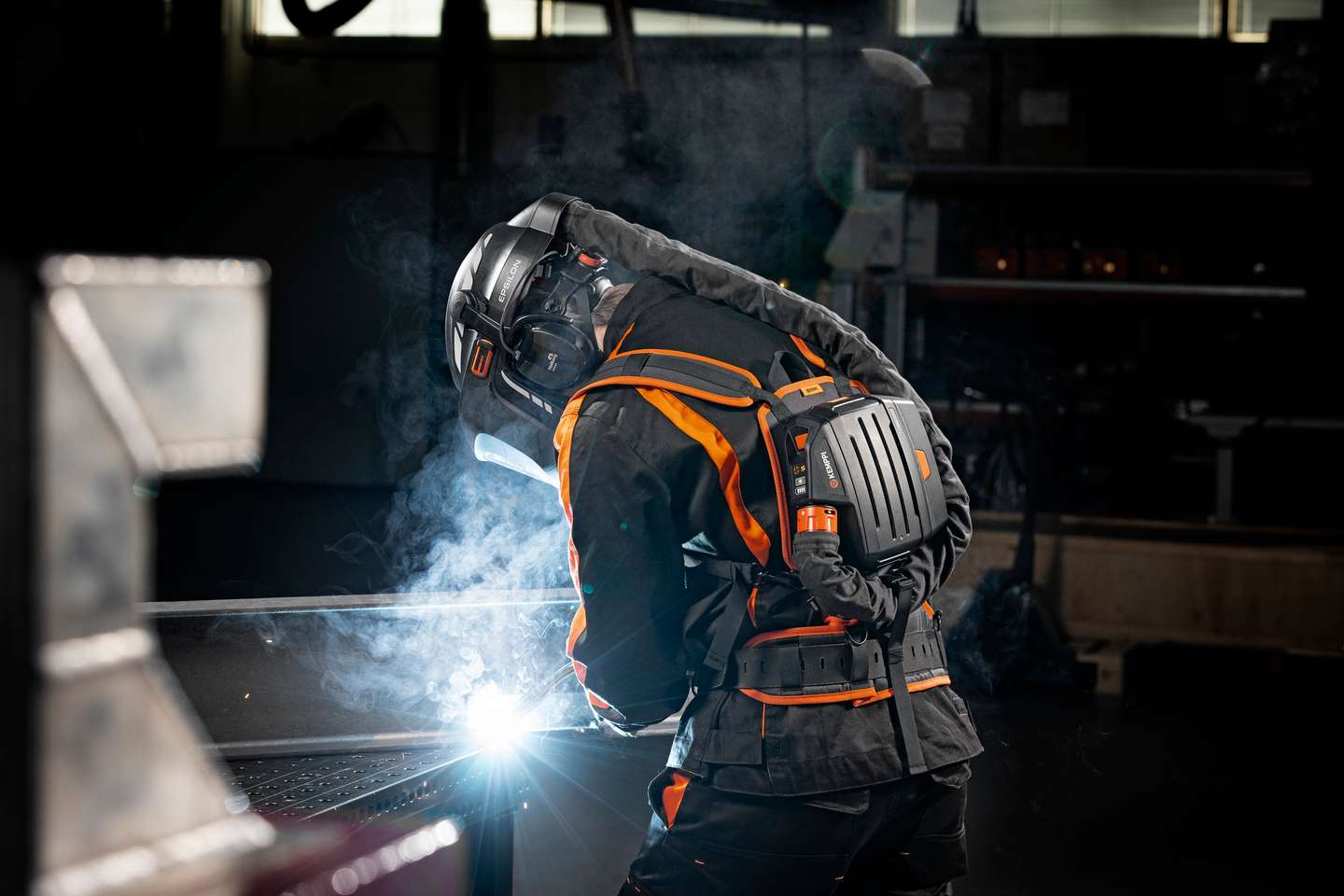
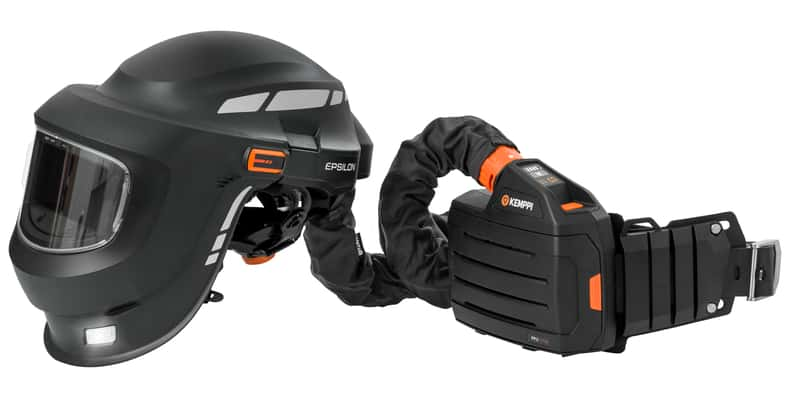
Ali tested Epsilon with the Kemppi PFU 210e powered air-purifying respirator. In its approved configuration, the system provides TH3-level respiratory protection by filtering ambient air and supplying it to the helmet. Ali found the unit straightforward to use and the airflow comfortable during his work.
PFU 210e offers selectable airflow levels of 160 and 210 l/min, together with battery and filter status indicators for daily checks. In approved Epsilon configurations, the system is classified as TH3P with a particle filter or TH3A1B1E1P with the approved combined filter. The filter and complete configuration must be selected according to the workplace risk assessment and operating instructions.
"The PFU is easy to use, and the air pressure is good," he says. "The battery lasts long, and I did not need to charge it all the time which is an important feature for us."
A clear view of where the weld is going
Visibility was the most immediate benefit for Ali. The Epsilon enabled him to see the joint clearly before striking the arc and follow the weld as it progressed.
"The most important thing for me is that I can see where I am going," Ali says. "With Epsilon, I could weld comfortably and see both behind and in front of the weld." He found the auto-darkening filter quick and reliable at arc ignition, without a noticeable delay during welding. Strong external light could occasionally activate the filter before the arc was struck, an observation recorded as part of the practical trial.
The SA 60E auto-darkening welding visor has a 115 x 60 mm viewing area, a light state of shade 3 and a continuously adjustable dark shade range of 5-14. Large controls at the bottom of the filter support adjustments while wearing welding gloves, and the shade-lock function can keep the filter dark when the task requires it.
Practical performance across the shift
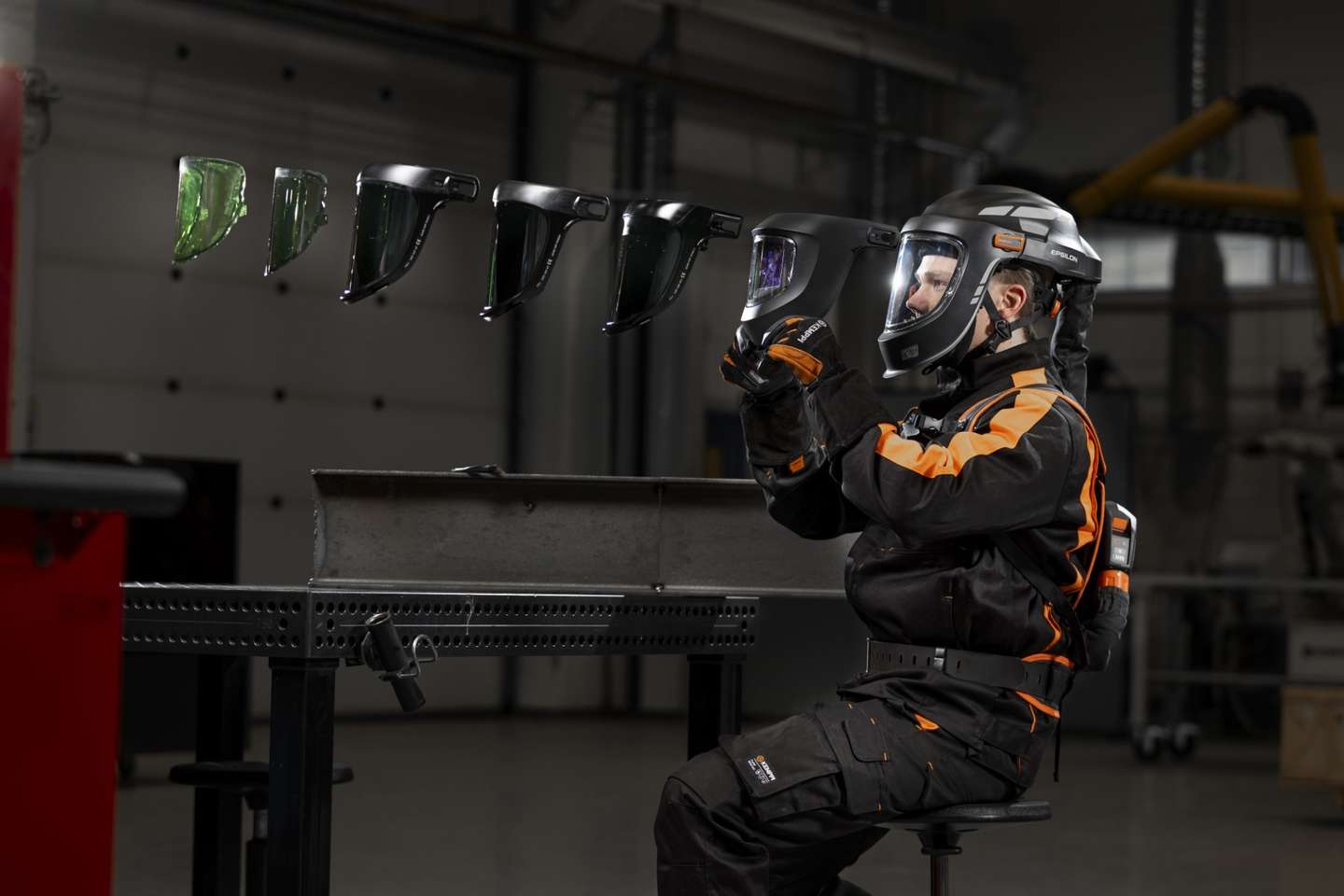
Epsilon's configurable design supports welding, grinding and inspection using the same helmet platform. Its tool-free Quick Switch System lets users slide the auto-darkening or passive welding visor into the hinge mechanism without removing the helmet. "Faster changes helps me reduce interruptions and keep the required protection in place when the location or task changes,” Ali adds.
The 177 x 125 mm grinding visor is available in clear or shades. For welding, users can select the SA 60E auto-darkening visor or a passive visor in shade 7, 9 or 11. When a tinted grinding visor and passive welding visor are combined, the final DIN shade is the sum of the two shades. “The visor remained clear during indoor work, with no fogging.”
In terms of ergonomics, Ali found the helmet stable on his head and the settings easy to adjust. He also found routine cleaning and visor handling straightforward. Although the outer surface collected minor scratches in shipyard use which is expected, they did not interfere with visibility or require immediate replacement.
Compared with other systems, Ali also valued the battery performance and the helmet's durable feel in a working environment where equipment is exposed to dust, spatter and frequent handling.
Filtered airflow for demanding work
For Ali, Epsilon proved most valuable during longer welding assignments where clear visibility, filtered airflow and dependable battery performance all matter. The combination allowed him to concentrate on following the joint while the respiratory system supported his breathing protection.
Epsilon's configurable platform can simplify transitions between welding, grinding and inspection while supporting a more consistent approach to head, face, eye and respiratory protection.
The platform includes a Type 1 industrial protective helmet adjustable from 52 to 63 cm and a four-point chin strap. Approved European configurations are PPE Category III and include certification to EN 397:2025 for industrial head protection and EN ISO 16321-1:2022 and EN ISO 16321-2:2021 for eye, face and welding protection. Certification applies to the complete approved configuration.
"I am very pleased with the Epsilon helmet," Ali concludes.
Featured solutions
Product family
Multipurpose helmet with head, respiratory, eye, face, and hearing protection.